
Daily Bible Devotionals
written by
Pastor Steve Wiggins
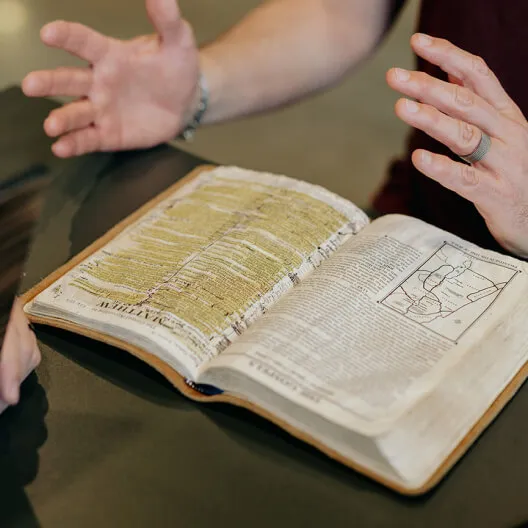


Daily Bible Devotionals


Isaiah 16
“We have heard of Moab’s pride – how very proud he is – his haughtiness, his pride, his arrogance, and his empty boasting.” Isaiah 16:6 (HCSB)
Isaiah’s prophecy concerning the Moabites covers two chapters: 15-16. Chapter 15 gives a picture of total destruction. 16 gives some of the causes of Moab’s downfall. The devastation is complete, and the story receives even fuller treatment in Jeremiah 48. Within a short period, Isaiah’s words were fulfilled. Assyria came onto Moab, marching southward and driving those that escaped the sword into the territory of Edom. City after city had fallen, and most of the places mentioned can still be located. The picture of Moab that the Lord wants us to remember is of their arrogance.
Living in Israel 100 years after Isaiah, Jeremiah repeats Isaiah’s charge, adding for further clarity that God’s patience had run out:
“Make him drunk, because he has exalted himself against the Lord. Moab will wallow in his own vomit, and he will also become a laughingstock.” Jeremiah 48:26 (HCSB)
Moab had wealth in terms of sheep. We find this in 2 Kings 3:4. In Isaiah 16:1, Moab is asked to send tribute to Jerusalem. The picture of the Moabites crossing the border into Edom with their family treasures is a graphic portrayal of the insecurity of riches.
Hysterical women are running southward, away from the aggressor; they are like young birds shaken out of their nests and fluttering about on the floor below. (16:2)
Those who defy God turn to religion for justification. Man’s religions are his greatest crimes. Moab is no different, but even as she presents herself at high places, it is only to wear herself out. Her praying is to no avail. Jesus said the same thing about pagan religion:
“And when you pray, do not babble on like pagans, for they think that by their many words they will be heard.” Matthew 6:7 (BSB)
Nothing but grief comes to those who defy God. And this is only a PICTURE of what awaits all who ultimately defy Him.
But all is not dark. In a display of Divine pity, God cries out for Moab. (15:5; 16:7, 9, 11) Isaiah is an evangelist as much as he is a prophet of judgment. He, unlike Jonah, longs that his enemies turn to God and find salvation. He takes no delight in the death of the wicked. Isaiah speaks more than the facts of the gospel; he speaks God’s heart for sinners, as well.
“‘Do I take any pleasure in the death of the wicked?’ This is the declaration of the Lord God. ‘Instead, don’t I take pleasure when he turns from his ways and lives?’” Ezekiel 18:23 (HCSB)
Isaiah 17
“An oracle against Damascus: Look, Damascus is no longer a city. It has become a ruined heap. The cities of Aroer are forsaken; they will be places for flocks. They will lie down without fear. The fortress disappears from Ephraim, and a kingdom from Damascus. The remnant of Aram will be like the splendor of the Israelites. This is the declaration of the Lord of Hosts.” Isaiah 17:1-3 (HCSB)
Anyone involved in ministry has experienced the trial of laboring in a difficult situation with little or no fruit. Sometimes, we convince ourselves that our “mission field” is incapable of producing fruit, but we are wrong. God can produce trophies of grace from the most unpromising of conditions. This is what chapters 17-19 are all about.
If these chapters seem like difficult reading, it is probably because it is difficult for us to be confronted with the reality of how abhorrent sin is to Almighty God. He detests it and will not pass it by as though it were not there. The fact that this sustained judgment annoys us says more about us than it does about the narrative. Perhaps it is just in this area that we need to re-evaluate ourselves as God sees us.
Isaiah continues to pronounce judgments on surrounding nations…Damascus (Syria), Cush (Ethiopia), and Egypt. You may ask, “If God is the God of Israel, why is He judging other nations?” It is because God is not ONLY the God of Israel…He is Lord of all! He is Lord, whether people accept Him or not. It is not as if He is Lord because we accept and worship Him as such. He IS Lord, regardless of mankind’s recognition of His Lordship.
That is what is so offensive to the world about God: Man has no choice as to Who is Lord. Deny Him and invent your own god if you want. Yahweh is still Lord of all! And it is only a matter of time before He exposes all other worship as false.
Damascas was Syria’s capital city. Syria’s future was to be one of ruin and lonely forsakenness. The picture is of flocks grazing with nobody to look after them. It is a vivid picture of what life is like for those who don’t know God when the glory has departed because their “idols” have proven to be mere, powerless, lifeless objects.
Whatever is left of Aram, after the Assyrians have raided it, will be like Israel’s so-called “glory” once God has departed. It will be no more than the few gleanings left in the field after the harvest or the few olives on an olive tree once it has been shaken. Because Israel (aka Ephraim) and Syria were allies (right down to the idolatry), that meant Israel was going to share the same fate as the Syrians.
Western society cannot expect a different future from what happened to Syria or Ephraim. But there is Hope. Assyria’s power will come to an end, and even in the most unlikely places, God has a faithful remnant: a few “gleanings,” but His, nonetheless. (Amos 4:11)
Isaiah 18
“Ah! The land of buzzing insect wings beyond the rivers of Cush sends couriers by sea, in reed vessels on the waters. Go, swift messengers, to a nation tall and smooth-skinned, to a people feared far and near, a powerful nation with a strange language, whose land is divided by rivers. All you inhabitants of the world and you who live on the earth, when a banner is raised on the mountains, look! When the trumpet sounds, listen!” Isaiah 18:1-3 (HCSB)
Tsetse flies are buzzing beside the Nile River. We are in the heat of a Sudanese summer. Today’s passage takes us southwest of Israel and almost to the equator. We might be tempted to think that a country so far away from Jerusalem would not come into God’s reckoning, but we would be mistaken. Nothing escapes His notice, no matter how far away it is. Cush is called to account.
Cush (aka Ethiopia) is in trouble. A flurry of ambassadors is bent on achieving diplomatic solutions to the oncoming Assyrian aggressor, but to no avail. On the surface, Isaiah’s message to the Cushites is encouraging. It brings out the truth that God is in absolute control of events. The Cushites have no reason to be concerned about war: God will allow the Assyrians to come only as far as Egypt and no further. A trumpet (shofar) will sound in the mountains of Judah, proclaiming the limits of Assyria’s power.
God is never taken by surprise because He is Lord of all, and the nations rise and fall at His command. Isaiah predicts Assyria’s end with graphic imagery: wild birds and animals devour them. This teaching is repeated by the Apostle Paul in his sermon in Athens:
“From one man He made every nationality to live over the whole earth and has determined their appointed times and the boundaries of where they live.” Acts 17:26 (HCSB)
We find the same message in the Book of Job. Satan is allowed to bring so much devastation into Job’s life, but there are limits. It is the same lesson that lies behind the “chain” that currently binds Satan. (Revelation 20:1-2)
Just as Damascus and Ephraim (Israel) will return to the Lord as a result of His chastisements, so too will there be Cushites (Ethiopians) who will come and present Him gifts. (Psalm 68:31-35)
We cannot help but be reminded of the story (Acts 8) of the salvation of the Eunuch servant of Queen Candice of Ethiopia. Most likely, a dispersed Jew who found himself pressed into the service of the Ethiopian queen, the Eunuch would have been in Jerusalem during the Pesach (Passover) crucifixion of Jesus. No doubt, he heard the testimony of other dispersed Jews who heard the gospel proclaimed in their own language during the festival of Shavuot (Pentecost) 50 days after Pesach. God sent Philip to the Eunuch, who was reading Isaiah 53. No doubt, when they reached Isaiah 56, its message of grace and mercy towards eunuchs was the trigger for the Eunuch’s faith in Jesus. Praise the Lord that His Word can be trusted and His salvation endures forever!
Isaiah 19
“On that day, there will be an altar to the Lord in the center of the land of Egypt and a pillar to the Lord near her border. It will be a sign and witness to the Lord of Hosts in the land of Egypt. When they cry out to the Lord, because of their oppressors, He will send them a savior and a leader, and he will rescue them.” Isaiah 19:19-20 (HCSB)
In the first half of chapter 19, we see (in Egypt) the people were looking for meaning in their lives. It is a picture of modern civilization. Is it any wonder that one of the top-selling books of our time is The Purpose Driven Life? People are still looking for purpose almost everywhere except in Jesus. Ours is a culture of men with sore eyes. They find the light painful and consider darkness (which permits them to see nothing) as restful and agreeable.
In 19:16-25, we are given another picture of Egypt. It refers to events in the future and is signified by a six-fold repetition of “On that day...” We have seen Isaiah’s concern for Gentiles before, but it is breathtaking to consider the idea that Egypt, Israel’s cruelest oppressor in days gone by, should now be promised a place alongside Israel. Egypt’s progression from sin to salvation is worth noting. There appear to be five elements involved in their transition:
1) A state of fear
2) A state of submission
3) A state of access into God’s presence
4) A state of fellowship
5) A state of complete acceptance
Paul describes the calling of the Gentiles and their inclusion in the greater community of Messiah (the Church) as a breaking down of the wall that once separated Jews and Gentiles. (Ephesians 2:14) It is similar to what happened to East and West Germans when the Berlin Wall came down. They became simply “Germans” again.
The fellowship that binds followers of Jesus together is much more profound. Believers share the promise of Heaven. (Romans 8:17; Galatians 3:29) This is a mystery, in that through the Gospel, Gentile believers are heirs together with Jewish believers, members of one body, ONE in Messiah, Jesus. (Ephesians 3:6)
What these past few chapters have been about is that God can raise children from the most unlikely sources: Ruth from Moab, Naaman from Damascus, a Eunuch from Ethiopia, or an Athanasius from Alexandria in Egypt. Oh, yes, and then there’s us.
In this understanding, we get a foretaste of Heaven.
“And after this, I looked, and there was a vast multitude from every nation, tribe, people, and language, which no one could number, standing before the throne and before the Lamb.” Revelation 7:9 (HCSB)
Isaiah 20
“In the year that the commander-in-chief, sent by Sargon King of Assyria, came to Ashdod and attacked and captured it – during that time the Lord had spoken through Isaiah son of Amoz, saying, ‘Go, take off your sackcloth and remove the sandals from your feet,’ and he did so, going naked and barefoot – the Lord said, ‘As My servant Isaiah has gone naked and barefoot three years as a sign and omen against Egypt and Cush, so the king of Assyria will lead the captives of Egypt and the exiles of Cush, young and old alike, naked and barefoot with bared buttocks, to Egypt’s shame.” Isaiah 20:1-4 (HCSB)
We are a third of the way through the book of Isaiah. So far, we know almost nothing about Isaiah himself! We know he had a wife and two sons. But what kind of person was Isaiah, the man? He was obedient.
The cost of obedience to God’s will is high, and the follower of Jesus knows that. But few have gone to the lengths to which Isaiah was commanded. Have you ever felt that you were called to do something that was just a little below your dignity? Many followers of Jesus feel just like that. I have. When the congregation’s building needs cleaning, we insist God has gifted us with theological insights, not the skill to use a vacuum cleaner. It is along these lines that David once said:
“Better is one day in Your courts than a thousand elsewhere; I would rather be a doorkeeper in the house of my God than dwell in the tents of the wicked.” Psalm 84:10 (NIV)
Paul urged the Philippians not to think too highly of themselves. (Philippians 2:3)
God’s message (through the media of Isaiah’s “performance art”) is not primarily for Egypt, Ashod, or Cush. It is for Judah and especially for King Hezekiah, who was tempted to look to other nations for military deliverance from the Assyrian menace.
It is foolish to trust anyone apart from God. Though Hezekiah was essentially a godly king, given to reform, he was also prone to compromise in a crisis. Sound familiar? It is the essence of world politics today! Hezekiah’s glances at Egypt for help did not win him favors with Isaiah. This is a message Hezekiah will have to hear again. (30:1-3) The attraction of Egyptian/Philistine military expertise might bring short-term benefits, but as guardians of the truth, God’s people are to be separate from ALL forms of unbelief.
“Some trust in chariots and some in horses, but we trust in the Name of the Lord our God. They are brought to their knees and fall, but we will rise up and stand firm.” Psalm 20:7-8 (ESV)
The promise of God’s Word compels us to endure His calling, standing firm even when He beckons us to humiliating circumstances.
Isaiah 21
“Therefore I am filled with anguish. Pain grips me, like the pain of a woman in labor. I am too perplexed to hear, too dismayed to see. My heart staggers; horror terrifies me. He has turned my last glimmer of hope into sheer terror. Prepare a table, and spread out a carpet! Eat and drink! Rise up, you princes, and oil the shields! For the Lord has said to me, ‘Go, post a lookout; let him report what he sees.’” Isaiah 21:3-6 (HCSB)
In today’s chapter, we get somewhat of a glimpse of Isaiah’s personality. The focus of his attention is further away, both geographically and historically. So far, Isaiah has concerned himself with Judah’s near neighbors. Babylon, on the other hand, was about as far away as the Bible world ever knew. Not only that, but the events of which he speaks did not take place until almost 200 years after Isaiah’s time.
Isaiah calls, as it were, for watchmen to be posted on the city walls of Jerusalem. They were to look out for messengers coming from Babylon with the news that Babylon had indeed fallen. The fall of Babylon is of great significance in the Bible because it symbolizes the fall of everything evil. Henceforth, all the way through to the end of the book of the Revelation, “Babylon” becomes a metaphor for evil. We also learn here that whenever “Babylon” and God’s people become intimately intertwined, God will purge the evil, even to the shame of His children and (in the short term) His own Name. Still, we also learn that God will not allow His people to be ultimately destroyed in the process, and His Name will be exalted in the end. It just may feel otherwise at times.
In terms of Isaiah’s personality, what emerges clearly from this chapter is Isaiah’s reaction to what he sees. Clearly, Isaiah is a sensitive man, deeply affected by the destruction he saw ahead for the Babylonians. A similar picture emerges in the next chapter when he asks to be left alone so that he might weep. In short, Isaiah was empathetic. He genuinely felt remorse on behalf of the sinner and longed for their repentance.
Isaiah’s heart reminds us of Jesus, Who, when beholding the sinful state of Jerusalem, wept over it. (Luke 19:41; Mathew 23:37) The Apostle Paul also experienced such emotions when he thought of the lost condition of his non-Messianic Jewish countrymen. (Romans 9:3) Question: Do you mourn for the sinner or simply scoff?
David Hume was an 18th-century British deistic philosopher who rejected Christianity. One day, a friend saw Hume hurrying down a London street and asked where he was going. “To hear George Whitefield preach," he replied. His friend was amazed and asked, “But surely you don’t believe what Whitefield preaches, do you?” “No, I don’t,” answered Hume, “but he does.” Hume would have gone to hear Isaiah, too, I believe.
This leaves us with two questions: 1) Does your knowledge of God’s Word lead you to humble empathy or puff up your spiritual pride? 2) Who is hurrying to hear you preach?

Isaiah 23
“And at the end of the 70 years, the Lord will restore Tyre and she will go back into business, prostituting herself with all the kingdoms of the world on the face of the earth. But her profits and wages will be dedicated to the Lord. They will not be stored or saved, for her profit will go to those who live in the Lord’s presence, to provide them with ample food and sacred clothing.” Isaiah 23:17-18 (HCSB)
Isaiah 23 is a prophecy about the downfall of Tyre’s influence in commercial trading on the high seas. These prophecies against the nations began with Babylon and ended with Tyre. If Babylon symbolizes power, then Tyre stands for commerce. The connection between them is clear: both represent the attempts of man to live without God. In the Revelation, chapters 17 and 18, the two nations are combined as representatives of the world’s seductive and oppressive powers. Tyre is portrayed as a prostitute plying her trade. Other prophets had things to say about Tyre: Ezekiel and Amos, for instance.
Two things emerge here and deserve closer inspection. The FIRST has to do with the danger of MATERIALISM. Tyre’s commercial activity is compared to that of a prostitute. The figure seems apt: commercialism can easily assume the policy of the highest profit, regardless of the means. It is this characteristic of idolatry/spiritual adultery which is underlined in the book of Revelation.
“For all the nations have drunk the maddening wine of her adulteries. The kings of the earth committed adultery with her, and the merchants of the earth grew rich from her excessive luxuries” Revelation 18:3 (NIV)
Few businesses run on principles that seek first the kingdom and glory of God. Consider Chick-fil-A, the only major Christian-owned business that has taken the idea of observing the Sabbath seriously. We need to take heed to Jesus’ warning about the seductiveness of material things.
“Do not store up for yourselves treasures on earth, where moth and rust destroy, and where thieves break in and steal. But store up for yourselves treasures in heaven, where neither moth and nor rust destroys, and where thieves do not break in or steal.” Matthew 6:19-20 (NASB)
The SECOND danger mentioned in today’s chapter has to do with God’s OWNERSHIP of all property. Isaiah gives us a glimpse of things to come. He sees a day when Tyre’s earnings will be given to the Lord’s treasury. What appears to have happened is that Tyre has converted to the Lord. The Lord then uses her to bless Israel.
If our culture would recognize that God owns everything, perhaps we would be less obsessed with prostituting ourselves to obtain stuff. Instead, we would approach the Lord and ask Him to provide for us according to His great knowledge and plan. At least, that was what Isaiah was trying to convince Judah.
Isaiah 24
“On that day the Lord will punish the host of heaven, in heaven, and kings of the earth, on the earth. They will be gathered together as prisoners in a pit; they will be shut up in a prison, and after many days they will be punished. The moon will be confounded and the sun ashamed, for the Lord of hosts reigns on Mount Zion and in Jerusalem, and his glory will be before his elders.” Isaiah 24:21-23 (ESV)
One thing is clear: No one should be complacent about the future. Isaiah, in his youth, may well have heard Amos preach. Both share certain themes, and in this chapter, certain verses are identical. (compare Isaiah 24:17-18 with Amos 5:19) Amos warned the Northern Israelites about complacency, saying:
“Woe to you who long for the day of the Lord! Why do you long for the day of the Lord? That day will be darkness, not light.” Amos 5:18 (NIV)
History is moving toward its inevitable goal: The Day of the Lord. For those who are in fellowship with God, this is a matter of supreme joy.
“They raise their voices, they sing out; they proclaim to the west the majesty of the Lord. Therefore, in the east honor the Lord! In the islands of the west honor the name of Yahweh, the God of Israel. From the ends of the earth we hear songs: The Splendor of the Righteous One. But I said, ‘I waste away! I waste away! Woe is me!’ The treacherous act treacherously; the treacherous deal very treacherously.” Isaiah 24:14-16 (HCSB)
For those who are not in fellowship with the Lord, the Day of the Lord is, indeed, a day of darkness. According to Isaiah’s words in today’s chapter, it will be a day of judgment that:
1) is final (Luke 16:26).
2) includes Satan and his angels (1 Corinthians 6:2-3; 2 Peter 2:4).
3) takes place after a period of imprisonment (Revelation 20:1-3).
4) concludes in sheer glory (Revelation 21:22-24; Isaiah 60:19-20).
The big question on all of our minds should, perhaps, be, “How will I survive that Day?”
There is a way. Salvation is offered exclusively through Messiah, Jesus, and it is freely offered to all who would accept it.
“For God loved the world in this way: He gave His One and Only Son, so that everyone who believes in Him will not perish but have eternal life. For God did not send His Son into the world that He might condemn the world, but that the world might be saved through Him. Anyone who believes in Him is not condemned, but anyone who does not believe is already condemned, because he has not believed in the name of the One and Only Son of God.” John 3:16-18 (HCSB)
Isaiah 25
“Lord, You are my God; I will exalt You, I will give thanks to Your name; for You have worked wonders, plans formed long ago, with perfect faithfulness. For You have turned a city into a heap, a fortified city into a ruin; a palace of strangers is no longer a city, it will never be rebuilt. Therefore, a strong people will glorify You; cities of ruthless nations will revere You. For You have been a stronghold for the helpless, a stronghold for the helpless, a stronghold for the poor in this distress, a refuge from the storm, a shade from the heat; for the breath of the ruthless is like a rain storm against a wall. Like heat in a dry land, You subdue the uproar of foreigners; like heat by the shadow of a cloud, the song of the ruthless is silenced.” Isaiah 25:1-5 (NASB)
Isaiah’s words in today’s passage are very similar to Mary’s praise in the Gospel of Luke: “And Mary said, ‘My soul magnifies the Lord, and my spirit has rejoiced in God my Savior. For He has regarded the lowly state of His maidservant; for behold henceforth all generations will call me blessed. For He who is mighty has done great things for me, and holy is His name. And His mercy is on those who fear Him from generation to generation. He has shown strength with His arm; He has scattered the proud in the imagination of their hearts. He has put down the mighty from their thrones, and exalted the lowly. He has filled the hungry with good things, and the rich He has sent away empty. He has helped His servant Israel, in remembrance of His mercy, as He spoke to our fathers, to Abraham and to his seed forever.’ And Mary remained with her about three months, and returned to her house.” Luke1:46-56 (NKJV)
The remnant was pitifully small – like the gleanings left in the corner of a field or a few olives missed at the top of a tree (Isaiah 24:13). Amos compared the remnant to a single coal left glowing after a campfire or to legs and ears left from a lion’s kill.
But after the storm comes a bright rainbow of promise. God will not only deliver His people; He will take away their hearts of stone and give them new ones: “I will give you a new heart and put a new spirit within you; I will take the heart of stone out of your flesh and give you a heart of flesh. I will put My Spirit within you and cause you to walk in My statutes, and you will keep My judgments and do them.” Ezekiel 36:26-27 (NKJV)
He also promised to establish a new covenant with His people: “’Look, the days are coming’ – this is the Lord’s declaration – ‘When I will make a new covenant with the house of Israel and with the house of Judah. This one will not be like the covenant I made with their ancestors when I took them by the hand to bring them out of the land of Egypt – a covenant they broke even though I had married them’ – the Lord’s declaration. ‘Instead, this is the covenant I will make with the house of Israel after those days’ – the Lord’s declaration. “I will put My teaching within them and write it on their hearts. I will be their God, and they will be My people. No longer will one teach his neighbor or his brother, saying, ‘Know the Lord,’ for they will all know Me, from the least to the greatest of them.” – this is the Lord’s declaration. ‘For I will forgive their wrongdoing and never again remember their sin.’” Jeremiah 31:31-34 (HCSB)
Today, we remember that God is faithful (even to His most ancient promises). He helps the helpless, and He is immutable. His character never changes.
Isaiah 26
“In that day this song will be sung in the land of Judah: ‘We have a strong city; he sets up salvation as walls and bulwarks. Open the gates, that the righteous nation that keeps faith may enter in. You keep him in perfect peace whose mind is stayed on you, because he trusts in you. Trust in the Lord forever, for the Lord God is an everlasting rock. For he has humbled the inhabitants of the height, the lofty city. He lays it low, lays it low to the ground, casts it to the dust. The foot tramples it, the feet of the poor, the steps of the needy.’” Isaiah 26:1-6 (ESV)
Isaiah depicts pilgrims coming from far off, arriving at the gates of the city, and calling out in song for the doors to be opened wide to receive them. Jerusalem’s strength, the peace enjoyed by its inhabitants, comes from the salvation God has caused to make known within its walls.
The song is not only a testimony of what those who sing it have come to know. It is also an exhortation to others to put their trust in the Lord and experience the same transformation in their own lives. For that matter, it should be the passionate cry of all believers! While we may not all be called to be “evangelists,” per se, we are all called to evangelize.
Several points are worth noting in today’s chapter, distinctive features of those who “occupy the city of God.”
1) They are righteous. (26:2, 7) Those who are righteous have received their righteousness from the Lord.
2) They are blessed. (26:7) The way they travel is level and smooth. It makes John the Baptist’s message more understandable: “Prepare the way for the Lord; make His paths straight…” It also clarifies that fire consumes the wicked. (26:11)
3) They long for His presence. (26:8-10) Even in times of judgment, the righteous learn repentance. The wicked remain in unbelief despite God’s warnings.
4) They enjoy peace. (26:14) Isaiah sees the wicked as being denied resurrection into God’s kingdom. This does not mean that Isaiah denied the resurrection of the dead as such. His point was merely that those who trouble the righteous will trouble them no more. This is especially so in Heaven.
5) They confess past failure and frustration. (26:16-19) Evidently, Israel had been in such distress that they were barely able to pray. It reminds me of the silent prayer Hannah prayed in Eli’s presence. (1 Samuel 1:9-20) Now we see the resurrection of the righteous.
6) They wait patiently and quietly for the Lord’s coming. (26:20-21) The exhortation is for us to faithfully believe His Word and promise. He will deliver!
Isaiah 27
“On that day the Lord will thresh grain from the Euphrates River as far as the Wadi of Egypt, and you Israelites will be gathered one by one. On that day a great trumpet will be blown and those lost in the land of Assyria will come, as well as those dispersed in the land of Egypt; and they will worship the Lord at Jerusalem on the holy mountain.” Isaiah 27:12-13 (HCSB)
Isaiah’s Apocalypse (Isaiah 24-26) has shown the coming judgment for the world, the downfall of God’s enemies, and of death itself. It has spoken of the safety of God’s people within its own eternal city, promising complete deliverance from His wrath and eventual bodily resurrection.
The aim of God for His people is not only their salvation from sin and its curse; it is that they might be fruitful. The passage in chapter 27 depicting a vineyard must be read in parallel with chapter 5, where we were shown the picture of Israel as having been unfruitful. The Vinedresser had come to His vineyard only to find “bad fruit.” All the attention given to the vineyard had been to no effect. The coming exile into Babylon was God’s chastisement for their backsliding. Interesting, then, the words of Jesus:
“I am the vine; you are the branches. The one who remains in Me and I in Him produces much fruit, because you can do nothing without Me.” John 15:5 (HCSB)
Jesus is the restoring agent for both Israel and the nations. He is the TRUE vine. In addition, salvation comes exclusively through Him.
“Jesus told him, ‘I am the way, the truth, and the life. No one comes to the Father except through me.’” John 14:6 (HCSB)
Today’s chapter ends with a summons to the dispersed Jewish exiles to come home from Assyria and Egypt. A great trumpet sounds, summoning their return. The words are echoed to this day in synagogue worship in the tenth of the Eighteen Benedictions, “Sound the great trumpet for our liberation; lift up the ensign to gather our exiles…” The language is picked up by Paul, who describes the ushering-in of the end:
“For the Lord Himself will descend from Heaven with a shout, with the archangel’s voice, and with the trumpet of God, and the dead in Christ [Messiah] will rise first.” 1 Thessalonians 4:16 (HCSB)
We find the same picture in Psalm 47:5: “God has ascended amid shouts of joy, the Lord amid the sounding of trumpets.” In fulfillment of His plan and purpose, God is going to spread a feast for all kinds of people, including all “Israel,” but not all Jews. (Romans 9:6-7; 11:25-26) Messiah-followers are diverse and cosmopolitan. Heaven and glory await God’s people: those who are the redeemed through Messiah Jesus. And what will our occupations be? Worship leaders, singing His praises!
“On that day sing about a desirable vineyard!” Isaiah 27:2 (HCSB)
Isaiah 28
“Listen and hear my voice. Pay attention and hear my words. Does the farmer plow continually to plant seed? Does he continually turn and break up his ground? Does he not level its surface and sow dill and scatter cumin and plant wheat in rows, barley in its place and rye within its area? For his God instructs and teaches him properly. For dill is not threshed with a threshing sledge, nor is the cartwheel driven over cumin; but dill is beaten out with a rod, and cumin with a club. Grain for bread is crushed, indeed, he does not continue to thresh it forever. Because the wheel of his cart and his horses eventually damage it, He does not thresh it longer. This also comes from the Lord of armies. Who has made His counsel wonderful and His wisdom great.” Isaiah 28:23-29 (NASB)
Today’s chapter ends with a more promising note. A farmer doesn’t keep on plowing indefinitely. He sows in order to reap.
Has God been “turning your soil,” lately perhaps, mixing in a bit of “manure” to boot? God is preparing you as a farmer prepares the land to yield a bountiful crop of spiritual fruit! Spiritual discipline is what this chapter has all been about. Those who see the Father’s hand in it will profit. Yes, it involves hardship.
“Endure suffering as discipline: God is dealing with you as sons. For what son is there that a father does not discipline?” Hebrews 12:7 (HCSB)
It is also unpleasant and painful.
“No discipline seems enjoyable at the time, but painful. Later on, however, it yields the fruit of peace and righteousness to those who have been trained by it.” Hebrews 12:11 (HCSB)
God’s discipline is revealed in a variety of ways; like a farmer who plows and sows, The Lord deals differently with particular children in order to produce a harvest of grace. He may rebuke us through the reading of His Word. (2 Timothy 4:2) He may use sickness. (Romans 5:3-4) Sometimes, He even uses Satan himself. Paul’s “thorn in the flesh” was also a “messenger of Satan.” (2 Corinthians 12:7) That is the lesson of the book of Job.
To those who have eyes to see, there is a smiling face below the surface of a (seemingly) frowning God. Our lives, even when under discipline, are ordered by a God who is “wonderful in counsel” and “gives great wisdom.” God is preparing us, teaching us to faithfully endure pain and trust in Him so that we can stand firm to administer the gospel at a time when others are being crushed by the weight of this World.
Endure His training. Nobody trusts when a poorly trained, out-of-shape soldier says, “I got your back!” Nor do they heed the rhetoric of the undisciplined Christian.
“Consider it great joy, my brothers, whenever you experience various trials, knowing that the testing of your faith produces endurance. But endurance must do its complete work, so that you may be mature and complete, lacking nothing.” James 1:2-4 (HCSB)
Isaiah 30
“Therefore the Lord is waiting to show you mercy, and is rising up to show you compassion, for the Lord is a just God. All who wait patiently for Him are happy. For you people will live on Zion in Jerusalem and will never cry again. He will show favor to you at the sound of your cry; when He hears, He will answer you. The Lord will give you meager bread and water during oppression, but your Teacher will not hide Himself any longer. Your eyes will see your Teacher, and whenever you turn to the right or to the left, your ears will hear this command behind you: ‘This is the way. Walk in it.’ Then you will defile your silver-plated idols and your gold-plated images. You will throw them away like menstrual cloths, and call them filth.” Isaiah 30:18-22 (HCSB)
There is a recent UCLA survey on “spirituality on college campuses,” conducted over a number of years, polling over 1400 higher learning institutions. As it were, spirituality is on the rise on college campuses. But a sobering statistic stands out among the thick pages of data. When asked, “Do you seek spirituality to know what God requires of you?” only 13% said “Yes.” That answer tells us that most people are seeking God for what He will do for them, not what He requires of them.
Given that statistic, it makes sense that many followers of Messiah Jesus find themselves disappointed with God. We often assume that God exists to make us wealthy, successful, or popular. In short, we generally believe He exists for our happiness. The truth is that we exist for HIS pleasure, not the other way around. He is more concerned with our spiritual prosperity than our earthly wealth.
So, if we expect “good standing” with God to mean wealth and prosperity for us, we will experience mostly disappointed lives. Consider the words of today’s passage:
“He will show favor to you at the sound of your cry; when He hears, He will answer you. The Lord will give you meager bread and water during your oppression, but your Teacher will not hide Himself any longer…” Isaiah 30:19b-20a (HCSB)
Israel has turned to the Lord, crying out, and He will hear her cry. But His response was not to shower her with earthly wealth to reward her repentance. No, He gave Israel what was necessary for physical survival and spiritual wealth: Bread, water, and His guidance (His Word). It makes Jesus’ reply to Satan during His desert temptation more stirring:
“Man does not live by bread alone but on every Word that comes from the mouth of God.” Deuteronomy 8:3b, Luke 4:4 (HCSB)
Only after Israel had learned what God required of them (and proved faithful in heeding His Word) did He allow earthly blessings to return to them. So, keep heeding His Word.
“Then He will send rain for your seed that you have sown in the ground, and the food, the produce of the ground, will be rich and plentiful. On that day your cattle will graze in open pastures.” Isaiah 30:23 (HCSB)
Isaiah 31
“Woe to those who go down to Egypt for help and who rely on horses! They trust in the abundance of chariots, and in the large number of horsemen. They do not look to the Holy One of Israel and do not seek the Lord’s help. But He also is wise and will bring disaster. He does not go back on what He says; He will rise up against the house of wicked men and against the allies of evildoers. Egyptians are men, not God; their horses are flesh, not spirit. When the Lord raises His hand to strike, the helper will stumble and the one who is helped will fall; both will perish together.” Isaiah 31:1-3 (HCSB)
Isaiah’s warning to Israel was also prophesied generations prior in Psalm 20.
“May the Lord answer you in the day of trouble; may the name of the God of Jacob defend you; may He send you help from the sanctuary, and strengthen you out of Zion; may He remember all your offerings, and accept your burnt sacrifice. – Selah - May He grant you according to your heart’s desire, and fulfill all your purpose. We will rejoice in your salvation, and in the name of our God we will set up our banners! May the Lord fulfill all your petitions. Now I know that the Lord saves His anointed; He will answer him from His holy heaven with the saving strength of His right hand. Some trust in chariots, and some in horses; but we will remember the name of the Lord our God. They have bowed down and fallen; but we have risen and stand upright. Save, Lord! May the King answer us when we call.” Psalm 20:1-9 (NKJV)
100 + years later, Jeremiah was the on-the-scene reporter, testifying that everything Isaiah had prophesied was coming to pass, exactly as predicted. Still, on the verge of judgment, Israel had a choice to repent. The same could be said of America today!
“Thus says the Lord, the God of Israel, to whom you sent me to present your petition before Him: ‘If you will still remain in this land, then I will build you and not pull you down, and I will plant you and not pluck you up. For I relent concerning the disaster that I have brought upon you. Do not be afraid of the king of Babylon, of whom you are afraid; do not be afraid of him,’ says the Lord, ‘for I am with you, to save you and deliver you from his hand. And I will show you mercy, that he may have mercy on you and cause you to return to your own land.’ But if you say, ‘We will not dwell in this land,’ disobeying the voice of the Lord your God, saying, ‘No, but we will go to the land of Egypt where we shall see no war, nor hear the sound of the trumpet, nor be hungry for bread, and there we will dwell’ - Then hear now the word of the Lord, O remnant of Judah! Thus says the Lord of hosts, the God of Israel: ‘If you wholly set your faces to enter Egypt, and go to dwell there, then it shall be that the sword which you feared shall overtake you there in the land of Egypt; the famine of which you were afraid shall follow close after you there in Egypt; and there you shall die. So shall it be with all the men who set their faces to go to Egypt to dwell there. They shall die by the sword, by famine, and by pestilence. And none of them shall remain or escape from the disaster that I will bring upon them.’” Jeremiah 42:9b-17 (NKJV)
Isaiah 32
“Indeed, a king will reign righteously, and rulers will rule justly. Each will be like a shelter from the wind, a refuge from the rain, like streams of water in a dry land and the shade of a massive rock in an arid land. Then the eyes of those who see will not be closed, and the ears of those who hear will listen. The reckless mind will gain knowledge, and the stammering tongue will speak clearly and fluently. A fool will no longer be called a noble, nor a scoundrel said to be important.” Isaiah 32:1-5 (HCSB)
No fools or scoundrels? Sounds like bad news for Washington DC! The unbeliever is a fool. The foolish enjoy the company of folly; their perception is twisted. The folly and confusion which characterized Isaiah’s day changed with the coming of a king.
Having introduced the idea of a new order in chapter 31, Isaiah now launches into a description of the righteous rule of that era’s king. As to the identity of the “king,” commentators have been divided. It seems clear enough, however, that it cannot be Hezekiah, for the king Isaiah has in mind is completely righteous. Isaiah must, therefore, be speaking about a Messianic rule: the righteous government of Messiah Jesus.
But what of this king’s subjects, described by Isaiah as “rulers”? (Which makes sense, because we will reign with Messiah. 2 Timothy 2:12) Whereas the foolish are crafty and cunning, dedicated to doing evil things, using all kinds of tricks and plots to deceive, the disciples of Messiah will be enlightened and noble. Salvation changes men’s minds and makes them wise. This is something God promised to do in Isaiah 29.
“Therefore I will again confound these people with wonder after wonder. The wisdom of their wise men will vanish, and the understanding of the perceptive will be hidden.” Isaiah 29:14 (HCSB) (See also: 1 Corinthians 1:19)
In just over a year's time, things will change drastically for Jerusalem. The description of Jerusalem’s transformation seems to transcend anything that happened in Isaiah’s time. Once again, the prophet is using the events of his day to teach greater truths. Following the judgment of Jerusalem comes the outpouring of the Spirit. Shavuot (Pentecost) naturally comes to mind. (Also see: Joel 2:28; Acts 2:17-18, 33; 10:45)
But there are even greater things here: A new order of things will be established where there is fruitfulness, peace, righteousness, quietness, security, and rest. These “attributes” are descriptive of the new earth, the home of the righteous. They are also given to believers as a deposit of sorts, distinguishing us from the World and reminding us to live in hope of that glorious day when the “New Jerusalem” will be revealed.
“But the fruit of the Spirit is love, joy, peace, patience, kindness, goodness, faith, gentleness, self control. Against such things there is no law.” Galatians 5:22-23 (HCSB)
Isaiah 33
“The sinners in Zion are afraid; trembling seizes the ungodly: ‘Who among us can dwell with a consuming fire? Who among us can dwell with everlasting flames?’ The one who lives righteously and speaks rightly, who refuses gain from extortion, whose hand never takes a bribe, who stops his ears from listening to murderous plots and shuts his eyes to avoid endorsing evil – he will dwell on the heights; his refuge will be the rocky fortress, his food provided, his water assured.” Isaiah 33:14-16 (HCSB)
Isaiah 33 is an “emergency psalm” of sorts. It seems to have three clear divisions: A prayer for the promised destruction of Assyria (2-9), God’s challenging answer (10-16), and the future Messianic kingdom (17-24).
The reason I chose today’s passage is because it deals directly with a very sensitive issue as it pertains to Jewish evangelism. Isaiah answers the volatile question: What happens to those Jewish people who reject Messiah Jesus? It also delineates between those (within Judaism) whom Isaiah describes as “sinners” and those who are “righteous.” And Isaiah reveals their representative consequences: blessing or everlasting flames.
You see, there are some in the “Church-at-large” who believe we should not evangelize the Jewish people because, in the apostle Paul’s words, “All Israel will be saved.” But that argument fails to consider the proper context of Paul’s statement.
“So that you will not be conceited, brothers, I do not want you to be unaware of this mystery: A partial hardening has come to Israel until the full number of the Gentiles has come in. And in this way, all Israel will be saved, as it is written: The Liberator will come from Zion; He will turn away godlessness from Jacob. And this will be My covenant with them, when I take away their sins.” Romans 11:25-27 (HCSB)
Paul had already made a distinction that “Israel,” in a Messianic saving sense, is defined as those Jews who believe Messiah Jesus by faith. Salvation is a choice and not bestowed simply because one comes from Hebrew physical descent. Both Gentiles and Jews must choose to trust Jesus in order to be saved. But Paul does not infer that all people who are Jewish (aka physical Israel) will enter into that saving relationship. That was Isaiah’s message to his all-Jewish audience. Paul simply reinforced Isaiah’s words.
“But it is not as though the word of God has failed. For not all who are descended from Israel are Israel. Neither are they all children because they are all children Abraham’s because descendants.” (Romans 9:6-7a) Salvation is by Grace through Faith. (Ephesians 2:8-9)
Since today’s chapter is also predicting the days of Messiah Jesus, it is important to point out that many Jewish people believed in/followed Jesus during His earthly ministry (He fed 5000 at one point). At the same time, many Jews rejected Him, namely Judas, Caiaphas, and the Sanhedrin. Neither Isaiah nor any other Bible writer would assume the same eternities await both groups. That reality makes our evangelical efforts even more urgent! (See also: John 7:50-53; 9:16; 10:19-21; 12:10-11, 19, 42-43)
Isaiah 34
“You nations, come here and listen; you peoples, pay attention! Let all the earth hear, and all that fills it, the world and all that comes from it. The Lord is angry with all the nations – furious with all their armies. He will set them apart for destruction, giving them over to slaughter. Their slain will be thrown out, and the stench of their corpses will rise; the mountains will flow with their blood. All the heavenly bodies will dissolve. The skies will roll up like a scroll, and their stars will all wither as leaves wither on the vine, and foliage on the fig tree.” Isaiah 34:1-5 (HCSB)
Isaiah once more turns matters far removed from the events of the seventh century B.C. Chapter 33 closed with a glimpse of the new heavens and the new earth. Chapters 34-35 concentrate on the universal judgment of the wicked surrounding the “day of the Lord” and the endless joy of the redeemed, portrayed in terms of the “flowering of the desert.”
The portrayal of the “day of the Lord” focuses (initially at least) on the negative side: it is “…a day of vengeance, a year of retribution…” God is angry with the nations whom He has called before Him. He threatens their total destruction, and the language is apocalyptic.
The apostle John confirms that the Day of the Lord is upon us.
“Then I saw Him open the sixth seal. A violent earthquake occurred; the sun turned black like sackcloth made of goat hair; the entire moon became like blood; the stars of heaven fell to the earth as a fig tree drops its unripe figs when shaken by a high wind; the sky separated like a scroll being rolled up; and every mountain and island was moved from its place. Then the kings of the earth, the nobles, the military commanders, the rich, the powerful, and every slave and free person hid in caves and among the rocks of the mountains. And they said to the mountains and to the rocks, ‘Fall on us and hide us from the face of the One seated on the throne and from the wrath of the Lamb, because the great day of Their wrath has come! And who is able to stand?’” Revelation 6:12-16 (HCSB)
Israel had comfortably forgotten the “vengeance of the covenant,” the jealousy of God at work within the confines of His chosen people to punish transgression, to discipline them unto greater holiness, and to purge evil from His people.
The broad truth is that God’s saving work, the bringing of His people into a covenant of grace, is not intended to induce a spirit of moral complacency. Rather, we should enter into a spirit of determined ambition to be holy to obey God’s Word. Disobedience must expect rebuke and punishment if the disobedience hard-heartedly continues. God loves His people and will never forsake them, but He will chastise us when we fall into sinful ways. Today’s passage is a strong reminder of the predictable end of those who “receive the Lord’s Name” in vain. If He is truly our Bridegroom, shouldn’t we be faithful brides?
God keeps His Word: He is both faithful to judge and faithful to save. How would you choose Him to be faithful toward you?
Isaiah 35
“Strengthen the weak hands, steady the shaking knees! Say to the cowardly: ‘Be strong; do not fear! Here is your God; vengeance is coming. God’s retribution is coming; He will save you.’ Then the eyes of the blind will be opened, and the ears of the deaf unstopped. Then the lame will leap like a deer, and the tongue of the mute will sing for joy, for water will gush in the wilderness, and streams in the desert; the parched ground will become a pool of water, and the thirsty land springs of water. In the haunt of jackals, in their lairs, there will be grass, reeds, and papyrus.” Isaiah 35:3-7 (HCSB)
It has been said that people are like tea bags. You never know what is on the inside until you put them into hot water! I have had many “tea bag” moments in my life. Moments where the Lord, by His grace, dropped me into hot water. And I would like to report that I always steeped righteousness into those hot water pots. But I did not.
I know that the concept of the Lord willingly bringing hardship upon His faithful children seems foreign to some believers. We would rather believe He will spare us from hardship because we choose to follow Him closely. But in His wisdom, He chooses from time to time to allow us to experience difficulty. The therapeutic nature of hardship reveals to us (and to onlookers) how deep our faith really is. More often than not, through hardship, God reveals the difference between our aspirational faith and our core faith. The difference between how faithful we believe we are versus how faithful we actually are.
John the Baptist had a “tea bag” moment. He was in prison and facing execution. He began to doubt, or at the least needed reassurance, that the One whom he had declared, “The Lamb of God, Who takes away the sin of the world,” was really worth dying for.
“When John heard in prison what the Messiah was doing, he sent a message by his disciples and asked Him, ‘Are You the One who is to come, or should we expect someone else?’ Jesus replied to them, ‘Go and report to John what you hear and see: the blind see, the lame walk, those with skin diseases are healed, the deaf hear, the dead are raised, and the poor are told the good news. And if anyone is not offended because of Me, he is blessed.’” Mathew 11:2-6 (HCSB)
Interestingly, Jesus did not answer, “Hold on, John! There, I’ll dispatch a band of angels to rescue you!” He simply quoted today’s Isaiah passage, titled in my Bible “The Future Glory Of Zion.” Jesus reminded John, the “Baptizer,” of God’s promise from His Word. **As concerned as Jesus may have been with John’s reassurance, He was also concerned with John’s followers’ testimonies! Notice how He told John’s disciples, “Go and report to John what YOU hear and see.” That is a valuable lesson! In the midst of suffering, we need to be encouraged by other faithful believers. Furthermore, we can be an encouragement in the midst of our own suffering. Remember: salvation doesn’t always mean the end of earthly suffering. Someday, we will all be liberated from the bonds of earthly suffering and enter the eternal “Glory of Zion,” the New Jerusalem.
Isaiah 37
“Hezekiah took the letter from the messengers, read it, then went up to the Lord’s temple and spread it out before the Lord. Then Hezekiah prayed to the Lord: Lord of Hosts, God of Israel, who is enthroned above the cherubim, You are God – You alone – of all the kingdoms of the earth. You made the heavens and the earth. Listen closely, Lord, and hear; open Your eyes, Lord, and see. Hear all the words that Sennacherib has sent to mock the living God. Lord, it is true that the kings of Assyria have devastated all these countries and their lands. They have thrown their gods into the fire, for they were not gods but made by human hands – wood and stone. So they have destroyed them. Now, Lord our God, save us from his power so that all the kingdoms of the earth may know that You are the Lord – You alone.’” Isaiah 37:14-20 (HCSB)
Sennacherib’s envoys returned from the outskirts of Jerusalem to find that the Assyrian army had left Lachish to attack the nearby city of Libna, a military fortress in the lowland between the Mediterranean and the hills of Judah. (2 Kings 19:8)
The threat from King Tirhakah forced Sennacherib to retreat, but not before firing a final “missile” threat at Hezekiah. It came in the form of a letter, probably very lengthy and taking up several leather or papyrus scrolls. Sennacherib had nothing new to say, apart from the all-important fact that initially, he had accused Hezekiah of deceiving the people of Jerusalem; now he was accusing the Lord of deceiving Hezekiah.
“Say this to Hezekiah king of Judah: Don’t let your God, whom you trust, deceive you by promising that Jerusalem won’t be handed over to the king of Assyria.” Isaiah 37:10 (HCSB)
Hezekiah’s response was to return to the Temple to engage once more in prayer to the Lord. By spreading out the letter, Hezekiah was making a gesture as if to say, “Lord, look at this!” His prayer is a model, containing both adoration and petition. Hezekiah weaves what he knows about God’s character into worship. Prayer should begin with worship, as Jesus Himself taught in the Lord’s Prayer. (Matthew 6:9-13; Luke 11:2-4)
Even when we are pressed into a corner (as many of us are today), worship should come first when we approach the Lord in prayer. I am not talking about music, which has become synonymous with “worship” in our church culture. I am speaking of approaching the Lord with the attitude that recognizes that God saves men: He hears our prayers, has the power to deliver, is present in our lives, and has a consistent character (as revealed through Scripture) that we can trust.
Isaiah’s friendship and ministry to King Hezekiah, urging prayer as the way of deliverance, won the day. God gave Judah a God-fearing leader (Isaiah) at its most crucial time, and Isaiah has also been given to us by way of the Bible. Will you heed his counsel, as did Hezekiah? Will you worshipfully approach the Lord with your requests?
Isaiah 38
“In those days Hezekiah became terminally ill. The prophet Isaiah son of Amoz came and said to him, ‘This is what the Lord says: “Put your affairs in order, for you are about to die; you will not recover.”’ Then Hezekiah turned his face to the wall and prayed to the Lord. He said, ‘Please, Lord, remember how I have walked before You faithfully and wholeheartedly, and have done what pleases You.’ And Hezekiah wept bitterly. Then the word of the Lord came to Isaiah: ‘Go and tell Hezekiah that this is what the Lord God of your ancestor David says: I have heard your prayer; I have seen your tears. Look, I am going to add 15 years to your life.” Isaiah 38:1-6 (HCSB)
I’ve known countless people who have clung to today’s passage as an anchor verse on the effectiveness of healing prayer. From one angle, that is true, but in Hezekiah’s case, he really should have heeded the Word of the Lord, set his house in order, and passed away. After all, the message of his impending death did not come from a secular doctor; it came from the Lord’s spokesman, the prophet Isaiah. Two major negative consequences occurred as a result of Hezekiah’s healing.
1) Babylon
“At that time Merodach-baladan son of Baladan, king of Babylon, sent letters and a gift to Hezekiah since he heard that he had been sick. Hezekiah gave them a hearing and showed them his whole treasure house – the silver, the gold, the spices, and the precious oil - and his armory, and everything that was found in his treasures. There was nothing in his palace and in all his realm that Hezekiah did not show them. Then the prophet Isaiah came to King Hezekiah and asked him, ‘Where did these men come from and what did they say to you?’ Hezekiah replied, ‘They came from a distant country, from Babylon.’ Isaiah asked, ‘What have they seen in your palace?’ Hezekiah answered, ‘They have seen everything in my palace. There isn’t anything in my treasuries that I didn’t show them.’” 2 Kings 20:12-15 (HCSB)
2) Manasseh
Born after Hezekiah’s healing, Manasseh was Israel’s most evil king, vigorously reinstating idolatry. Ironically, he defied Hezekiah’s own words about legacy: “…a father will make Your faithfulness known to children.” Isaiah 38:19
“Then Hezekiah said to Isaiah, ‘The word of the Lord that you have spoken is good,’ for he thought: Why not, if there will be peace and security during my lifetime? The rest of the events of Hezekiah’s reign, along with all his might and how he made the pool and the tunnel and brought water into the city, are written in the Historical Record of Judah’s Kings. Hezekiah rested with his fathers, and his son Manasseh became king in his place.” 2 Kings 20:19-21 (HCSB)
“Manasseh was 12 years old when he became king and reigned 55 years in Jerusalem. His mother’s name was Hephzibah. He did what was evil in the Lord’s sight, imitating the detestable practices of the nations that the Lord had dispossessed before the Israelites.” 2 Kings 21:1-2 (HCSB)
Isaiah 39
“Then Isaiah said to Hezekiah, ‘Hear the word of the Lord of Hosts: ‘The time will certainly come when everything in your palace and all that your fathers have stored-up until this day will be carried off to Babylon; nothing will be left,’ says the Lord. ‘Some of your descendants who come from you will be taken away, and they will be eunuchs in the palace of the king of Babylon.’ Then Hezekiah said to Isaiah, ‘The word of the Lord that you have spoken is good.’ For he thought: There will be peace and security during my lifetime.” Isaiah 39:5-8 (HCSB)
Sadly, Hezekiah’s greatness is clouded by the sin of pride that developed in his closing years. Merodach-Baladan, the king of Babylon, wanted (according to the Jewish historian Josephus) aid for a rebellion against Assyria. He is identified with Mardukhabaliddina (bummer of a name), who seized the Babylonian throne in 721 B.C., was deposed by Sargon of Assyria, and then came back to rule again for a short time about 704 B.C.
He sent letters and a present to Hezekiah because he had heard about his illness. After having recovered so wonderfully, Hezekiah was congratulated by the Babylonian king. The flattery was too much for Hezekiah. He fell for it, and in a moment of incredible stupidity, he showed the foreign ruler’s envoys all the treasure in his storehouses. It was an act of folly for which Isaiah gave him a severe reprimand. There is a strong hint of boasting in verse 3, as though Hezekiah wanted to underline just how important he was that such great leaders should show him so much honor. There is only one explanation for Hezekiah’s folly: Pride had grown in his heart.
“But Hezekiah’s heart was proud, and he did not respond to the kindness shown him; therefore, the Lord’s wrath was on him and on Judah and Jerusalem.” 2 Chronicles 32:25 (NIV)
Pride is a vice that clinches so tightly to the hearts of men that if we were to strip ourselves of all faults, one by one, we should, no doubt, find it the very last and hardest thing to rip away. It would have been better, had Hezekiah died at the time the Lord appointed, than for him to live and spoil his testimony in this way. After all, Manasseh, the worst king Judah ever experienced, was born during Hezekiah’s “borrowed” time.
Hezekiah made no opportunity to witness to the Babylonian visitors. Instead, he boasted, leading to Babylon’s eventual overthrow of Judah. I believe Hezekiah’s great folly was not restricted to showing off the kingdom treasures. His great folly was actually the fact that he sought his own glory above the well-being of the Kingdom. Once the judgment was pronounced against him, he concurred that it was “good .”But in his mind, the “goodness” had less to do with justice and more with the fact that he escaped direct punishment for his sin. He harbored no remorse for his descendants.
I have met Messianic (Christian) leaders who seemed more concerned with their personal fame than protecting & equipping the next generation. It is incumbent upon us to not just do great things for God but also to prepare the next generation for greatness.
Isaiah 40
“Jacob, why do you say, and Israel why do you assert: ‘My ways are hidden from the Lord and my claim is ignored by my God?’ Do you not know? Have you not heard? YHWH is the everlasting God, the Creator of the whole earth. He never grows faint or weary; there is no limit to His understanding. He gives strength to the weary and strengthens the powerless. Youths may faint and grow weary, and young men may stumble and fall, but those who trust in the Lord will renew their strength; they will soar on wings like eagles; they will run and not grow weary; they will walk and not faint.” Isaiah 40:27-31 (HCSB)
Wrong thoughts of God twist our perspective on life. Everything can get bent out of shape and do great harm to the Lord’s cause. In today’s chapter, Isaiah sought to lift our eyes toward heaven and behold God in all His glory. If things are not working out as we would like, it is precisely because life is not all about what we want. Life is about what God intends for us. Waiting on God – His ways, His thoughts, His timing – is the key to spiritual growth and maturity.
Let’s be honest. Have you ever felt that God does not care about you? Trials can make us lose sight of God’s majesty and cause us to feel sorry for ourselves. Some of the people in Isaiah’s time could not reckon God’s timing with His love. They felt that if God loved them, there should be no problems in their lives.
Coping with spiritual depression can be difficult. Almost all of Israel was in the doldrums during Isaiah’s day. The people complained, “God either does not know what we are passing through; or He does not care.” In times such as these, it is important that we recognize certain realities of God: He is Omnipotent, Omnipresent, Omniscient, and His Character never changes.
The problem with Israel’s theology was that they sought religion for what God could do for them and not the other way around. As long as we feel God exists for our pleasure, we will probably be disappointed. But the reason we exist is for God’s pleasure. If we have a proper understanding of mankind’s relationship to God, we will understand that God receives pleasure when we faithfully worship Him through difficult times, as well as easier ones.
The way God dealt with depressed believers in Isaiah’s day was to talk about eagles! It is as if He was saying, “You may feel like a bedraggled sparrow, but if you pay attention to what I’m saying, you will mount up with wings like eagles.” We must remain faithful and wait patiently upon the Lord. If rebuke is necessary, we must accept it. If trials come our way, we must endure them, waiting on God to fulfill His gracious promises.
Isaiah 41
“Be silent before Me, islands! And let peoples renew their strength. Let them approach, then let them testify; let us come together for the trial. Who has stirred him up from the east? He calls righteousness to his feet. The Lord hands nations over to him, and he subdues kings. He makes them like dust with his sword, like wind-driven stubble with his bow. He pursues them going on safely, hardly touching the path with his feet. Who has performed and done this, calling the generations from the beginning? I, the Lord, am first, and with the last – I am He.” Isaiah 41:1-4 (HCSB)
In the ancient Near East, whenever a vassal failed to satisfy the obligations of a sworn treaty, the suzerain (usually the king) would take out legal proceedings against him by means of a covenant lawsuit. The legal process was conducted by means of messengers. Messengers delivered one or more warnings in the first of its two distinct phases. These were worded in such a way as to reflect non-negotiable terms of the original treaty.
The vassal would be reminded of what he had promised and would be asked to give an explanation for his offense. The vassal would be told to mend his ways. Just in case he did not take the point, the consequences of continued offense would be stated. The curses (retributions) of the covenant would have formed part of the original agreement. Such a procedure as this was an ultimatum. Unless the vassal recruited a neighbor state to help them fight the ensuing battle that would result from their breaking the treaty, wise vassals would quickly mend their ways.
Sometimes, a messenger sent to deliver this ultimatum was rejected, imprisoned, or even killed! The matter would then move on to the next and final phase. This would take the form of a declaration of war.
“Therefore, when the owner of the vineyard comes, what will he do to those farmers?’ ‘He will completely destroy those terrible men,’ they told Him, ‘And lease his vineyard to other farmers who will give him his produce at the harvest.’ Jesus said to them, ‘Have you never read in the Scriptures: The stone that the builders rejected has become the cornerstone. This came from the Lord and is wonderful in our eyes. Therefore, I tell you, the kingdom of God will be taken away from you and given to a nation producing its fruit. Whoever falls on this stone will be broken to pieces; but on whomever it falls, it will grind him to powder!’” Matthew 21:40-44 (HCSB)
When Jesus told the parable of the vineyard, seeing Himself as the last in a succession of messengers, most of whom had been stoned and killed, He had this same judicial process in mind. It is what Isaiah described, with God calling Israel and Judah to account. In Jesus’ day, Israel had rejected God’s Word (as in Isaiah’s day). They were also about to reject the Son of God.
Isaiah 41 begins in a courtroom. At the sight of a conquering king approaching, instead of turning to the Lord, the nations (Israel included) turned to their idols. When faced with difficult times, where do you turn?
Isaiah 42
“Who gave Jacob for plunder, and Israel to the robbers? Was it not the Lord, He against Whom we have sinned? For they would not walk in His ways, nor were they obedient to His Law. Therefore, He has poured out His anger and the strength of His battle; it has set him on fire all around, yet he did not know; and it burned him, yet he did not take it to heart.” Isaiah 42:24-25 (NKJV)
Isaiah is prophesying about the coming judgment upon Israel and Judah for having abandoned God by turning to idols. The Jewish mindset, during the days in which Isaiah prophesied, was of the opinion that no matter how greatly His people sinned, God would not utterly destroy them because of His covenant promise. While that is correct to assume, Israel and Judah had no idea the extent His rebuke was about to take. They could not fathom how small of a remnant He would allow to remain of His people. And they could not imagine that God, Whom they called upon for deliverance, was actually the One who was fighting against them; it would be at His command that foreign armies would destroy Jerusalem, the one city they assumed would stand as “home base,” off-limits to foreign reign.
Why would a loving God do such a thing to His people? Because His grace and mercy only have value when set against the backdrop of His standard, which validates His judgment. However, do not assume the Lord has abandoned His people! His rebuke, while strong and determined, is intended to turn His people back to worshipping Him, not to destroy them utterly. If you find yourself under the rebuke of the Lord, it helps to remember that His goal is your repentance. That is His goal for Israel AND the Gentiles, and always has been.
“’Do I take any pleasure in the death of the wicked?’ This is the declaration of the Lord God. ‘Instead, don’t I take pleasure when he turns from his ways and lives?’” Ezekiel 18:23 (HCSB)
"Otherwise, I am going to send all My plagues against you,[a] your officials, and your people. Then you will know there is no one like Me in all the earth.” Exodus 9:14 (HCSB)
Consider Pharaoh’s response to God’s rebuke in contrast with King David’s. Will you harden your heart or humble yourself and be restored?
“And when Pharaoh saw that the rain, the hail, and the thunder had ceased, he sinned yet more; and he hardened his heart, he and his servants.” Exodus 9:34 (NKJV)
“When David saw that his servants were whispering, David perceived that the child was dead. Therefore David said to his servants, ‘Is the child dead?’ And they said, ‘He is dead.’ So David arose from the ground, washed and anointed himself and changed his clothes; and he went into the house of the Lord and worshiped.” 2 Samuel 12:19-20a (NKJV)
Isaiah 44
“And now listen Jacob My servant, Israel whom I have chosen. This is the Word of the Lord your Maker who shaped you from birth: He will help you: do not fear; Jacob is My servant; I have chosen Jeshurun. For I will pour water on the thirsty land and streams on the dry ground; I will pour out My Spirit on your descendants and My blessing on your offspring. They will sprout among the grass like poplars by the streambeds. The one will say: I am the Lord’s; another will call himself by the name of Jacob; still another will write on his hand: The Lord’s, and name himself by the name of Israel.” Isaiah 44:1-5
Chapter 43 began with redemption and ended with a rebuke. Just a few verses earlier the Lord had promised, “I, even I, am He who blots out your transgressions, for My own sake and remembers your sins no more.” Isaiah 43:25
Isaiah develops this idea in chapter 44. The chapter can be divided into two sections: a promise of revival to God’s true “people”, (His greater Messianic Community, both Jew and Gentile, one in Messiah) and, a contrast between the true God (Who alone can promise salvation/revival) and the dumb, worthless idols of men.
Promises like these in today’s passage, the promise of His Spirit, provision and salvation, abound in Isaiah’s prophecy. We will read later, in chapters 63-64, how Isaiah speaks about the possibility of global revival, including both Israel and the nations.
Consider the Bible’s descriptions of the experience of God’s blessings. (Isaiah 12:3; 55:1; Psalm 42:1; Jeremiah 2:13; John 4:14; 7:37; Revelation 7:17) I have experienced seasons where I felt spiritually parched, and in those times, the Lord’s blessing is truly like refreshing water. The blessing Isaiah now speaks of is the revival of God’s people from their current morbid condition.
The Lord discloses in the Bible how, throughout history, He has advanced His people of faith by intermittent revivals. That is the primary purpose of the book of Judges. Perhaps, the most recent “revival” in our time would have been the “Jesus Movement” in the late 60’-70’s. Isaiah describes such times as periods of great blessing, underlined by the use of the name: Jeshurun, to describe not only Israel but also the community of “upright” believers-at-large. That term was used by Moses when he described the blessedness that redeemed people could expect from God. Deuteronomy 33:5, 26
I believe our generation is ripe for revival, and your getting intimate with God’s Word will no doubt play a part in your ability to be a contributor to that revival. One thing to note is WHO Isaiah says will be affected by the revival. First, there are those among the Nations who reject the gospel. Then, there are those of Israel who worship God’s Servant, Messiah Jesus, who say, “I am the Lord’s”. Next, there are those of Israel who reject Messiah, who identify with “Jacob”, Isaiah’s moniker for apostate Israel. Finally, there are those from among the Nations who believe in Jesus and take determined steps to be identified with the Lord, through faith in Him. So, which group most describes you, and what part is God preparing YOU to play in the forthcoming “revival”?
Isaiah 45
“Woe to him who quarrels with his Maker, to him who is but a potsherd among the potsherds on the ground. Does the clay say to the Potter, ‘What are you making?’ Does your work say, ‘He has no hands’?” Isaiah 45:9 (HCSB)
Isaiah 44:28 introduced us once more to Cyrus. It would be difficult to overestimate the importance of Cyrus The Great in Israel’s ancient history. The successive victories of Cyrus against the Medes, Lydians, and Babylonians, ratified in secular history sources, bring into focus the astonishing accuracy of Isaiah’s prophecies given 150 years earlier. It was the Lord who called Cyrus and gave him these victories.
It has been argued that Cyrus was a believer, a convert of sorts, but Scripture indicates that was not the case. He was a pagan who saw the favor of Israel’s God as something to add to his collection of gods. That is not to say that Cyrus was not “used by the Lord.” He was “anointed” and empowered to succeed because the Lord had willed it to accomplish His purposes.
Put bluntly, it is possible to be used of the Lord and not know Him personally, just as it is possible to know Him in a saving way but not be used…shelved because of unrepentant sin. God’s using a person is not always a clear indicator of their salvation…nor is His rebuke of believers a true indicator that He has rejected them. Salvation is by grace through faith. (Ephesians 2:8-9) God is about the business of accomplishing His purposes, and any tool among His creation is at His Disposal. See also Balaam’s donkey and Jonah’s whale.
Everything that happens, even in international affairs, is according to the Lord’s plan. There is no panic in Heaven, only planning. No emergency sessions of the Trinity because we are messing things up! When everything seems shaking all around, God’s sovereignty is of enormous encouragement. This brings us to today’s passage.
The “clay-to-the-Potter” dialogue is the arrogance of unbelief. It questions what God is doing. The Lord who made the stars in the universe can order the course of history. What is this foolishness that questions God’s ability to raise up a Cyrus some 150 years later? It is nothing less than unbelief. This type of unbelief will always be in opposition to prophecy. It questions not only the prophet but also the core reality that the prophet is simply delivering the message of God, who can call His shots 150 years in advance.
Before Israel went into exile, Isaiah was delivering God’s invitation of Grace.
The same level of faith that Israel was commanded to display is required of followers of Jesus. We must believe that Jesus died and was resurrected, a past event, a prophecy already fulfilled, and that He is coming again to gather His followers and judge the unrepentant.
Isaiah 46
“Bel crouches; Nebo cowers. Their idols are consigned to beasts and cattle. The images you carry are loaded, as a burden for the weary animal. The gods cower; they crouch together; they are not able to rescue the burden, but they themselves go into captivity. ‘Listen to me house of Jacob, all the remnant of the house of Israel, who have been sustained from the womb, carried along since birth. I will be the same until your old age, and I will bear you up when you turn gray. I have made you, and I will carry you; I will bear and save you.’” Isaiah 46:1-4 (HCSB)
Having been reintroduced to the figure of Cyrus in chapters 46-47, we are taken a little beyond that horizon to the eventual downfall of Babylon itself. Behind Babylon’s collapse lies her idolatry. Idolatry and collapse are always intimately bound together.
The kingdoms of this world are notoriously unstable. Babylon’s power was awesome, but it disappeared in a moment. Perhaps this is also a warning to our United States. We should take heed lest we stray from the reality that Jesus is Lord and the truth that apart from God, there is no salvation, revelation of spiritual truth, or true justice. Man’s empires exist only so long as God allows.
In a sermon titled “God’s Providence,” C.H. Spurgeon said, “Napoleon once heard it said that man proposes, and God disposes. ‘Ah,’ said Napoleon, ‘but I propose and dispose, too.’ How do you think he proposed and disposed? He proposed to go and take Russia; he proposed to make all Europe his. He proposed to destroy that power, and how did he come back again? How had he disposed it? He came back solitary and alone, his mighty men perished and wasted, having well-nigh eaten and devoured one another through hunger.” Man proposes, and God disposes. (Proverbs 16:9)
It is true that Babylon was given power over Israel for a time. God was angry with His people and wanted to teach them a lesson. But Babylon showed no mercy and failed to recognize that God must be worshipped exclusively (not worshipped alongside idols); therefore, Babylon received no mercy. Babylon’s arrogance is captured by the striking similarity of her boast to that of God Himself.
“I am God, and there is none like me.” Isaiah 46:9 (NKJV - Compare to Isaiah 47:8, 10)
Moving to today’s passage, everything this world’s kingdoms are devoted to is unstable. This applies not just to idols in the sense that we usually think of them but also to such idolatrous things as ambition, power, fame, and materialism. The same truth is taught in the apocalyptic vision of Daniel 11. Kingdoms, void of a true foundation, are bound to crumble. Ultimate success is only guaranteed to the kingdom of God.
It is good for us to ask the Lord to reveal those things in our lives to which we have ascribed worship and honor, attributes that belong only to the Lord. Once revealed, we must destroy those “idols” and restore proper worship to Him only. As enticing as some worldliness may seem at the outset, it has a horrible, predictably ruinous end.
Isaiah 47
“I was angry with My people; I profaned My possession and placed them under your control. You showed them no mercy; you made your yoke very heavy on the elderly. You said: ‘I will be the mistress forever.’ You did not take these things to heart or think about their outcome. So now hear this, lover of luxury, who sits securely; who says to herself: ‘I, and no one else, will ever be a widow or know the loss of children.’ These two things will happen to you suddenly, in one day: loss of children and widowhood. They will appear to you in their entirety, in spite of your many sorceries and the potency of your spells.” Isaiah 47:6-9 (HCSB)
Today’s passage brings to mind how salvation can only come through Messiah Jesus. We learn today that if God were to raise up another nation to replace Israel, giving them the same opportunities and favor as He gave to Israel, that newly favored nation could not fulfill God’s requirements, either. God showed favor to Babylon to judge the nations and rebuke Israel. But God-given power went to their heads. They humiliated God and elevated their man-made gods. Instead of showing grace to Israel, the Babylonians punished them. Compare Babylon’s burden and yoke to that of Jesus:
“Come to Me, all of you who are weary and burdened, and I will give you rest. All of you, take up My yoke and learn from Me, because I am gentle and humble in heart, and you will find rest for yourselves. For My yoke is easy and My burden is light.” Matthew 11:28-30 (HCSB)
In addition, God will never be a widower or father orphans. (Hebrews 13:5) His “Bride” is His Church, all who are saved by His grace through faith in His Son, Messiah Jesus. (Ephesians 2:8-9) His children are the “sheep of His pasture.” Therefore, His “Bride” equals the sum total of His “sheep,” as it were.
“My sheep hear My voice, I know them, and they follow Me. I have given them eternal life, and they will never perish – ever! No one will snatch them out of My hand. My Father, who has given them to Me, is greater than all. No one is able to snatch them out of the Father’s hand. I and the Father – We are One.” John 10:27-30 (HCSB)
God’s warning to Babylon (when Babylon said they would be His “Mistress forever”) is curiously similar to Paul’s warning to Gentile believers who displayed arrogance towards what they considered to be “rejected” Israel. (In Biblical imagery, people are also referred to as “branches,” with Jesus being the “True Vine”)
“Now if some of the branches (the unfaithful of Israel) were broken off, and you, though a wild olive branch, were grafted-in among them, and have come to share in the rich root of the cultivated olive tree, do not brag that you are better than those branches. But if you do brag – you do not sustain the root, but the root sustains you.” Romans 11:17-18 (HCSB)
The World is prone to forsaking both wedding vows and offspring. God has no mistresses, only one “Bride”. He is eternally faithful to His vows and His natural and adopted children.
Isaiah 48
“Go forth from Babylon! Flee from the Chaldeans! With a voice of singing, declare, proclaim this, utter it to the end of the earth; say ‘The Lord has redeemed His servant Jacob!’ And they do not thirst when He led them through the deserts: He caused the waters to flow from the rock for them; He also split the rock, and the waters gushed out. ‘There is no peace,’ says the Lord, ‘for the wicked.’” Isaiah 48:20-22 (HCSB)
After having pronounced judgment upon Babylon for their pride and idolatry, the Lord turns back toward Israel with a message of hope and redemption. He informed Israel that His rebuke (at the hand of Babylon) was not intended to destroy Israel completely, only to refine her through adversity, as silver through a fire.
God’s intention is always to purge sin from His people. He prefers that we willingly release our sin, but He is not above letting His Name (and namesake) be tarnished temporarily to drive sin from His own children. It reminds me of the parent who is not afraid to reprimand their child in public if the situation requires it. Ultimately, questions about parenting styles will be vindicated by the testimony of kids raised rightly! The call for Israel to flee Babylon is echoed in the New Testament book of The Revelation. “Babylon,” henceforth, becomes a Biblical metaphor for spiritual adultery & worldly harlotry among God’s people.
“After these things I saw another angel come down from heaven, having great power; and the earth was lightened with his glory. And he cried mightily with a strong voice, saying, Babylon the great is fallen, is fallen, and is become the habitation of devils, and the hold of every foul spirit, and a cage of every unclean and hateful bird. For all nations have drunk of the wine of the wrath of her fornication, and the kings of the earth have committed fornication with her, and the merchants of the earth are waxed rich through the abundance of her delicacies. And I heard another voice from heaven, saying, Come out of her, my people, that ye be not partakers of her sins, and that ye receive not of her plagues.” Revelation 18:1-4 (NKJV)
Notice how the Lord reminds Israel of His provision of water throughout desert periods. It also reminds us of how Jesus promised “living water” to the Samaritan “woman at the well.” Also, consider Paul’s words to the church in Corinth:
“Now I want you to know, brothers, that our fathers were all under the cloud, all passed through the sea, and all were immersed into Moses in the cloud and in the sea. They all ate the same spiritual food, and all drank the same spiritual drink. For they drank from a spiritual rock that followed them, and that rock was Christ.” 1 Corinthians 10:1-4 (HCSB)
Finally, compare the Lord’s declaration of “no rest for the wicked” with King David’s exhortation in Psalm 1:
“How happy is the man who does not follow the advice of the wicked, or take the path of sinners, or join a group of mockers! Instead, his delight is in the Lord’s instruction, and he meditates on it day and night.” Psalm 1:1-2 (HCSB)
Isaiah 49
“And now, says the Lord, who formed me from the womb to be His Servant, to bring Jacob back to him, so that Israel might be gathered to Him; for I am honored in the sight of the Lord, and my God is my strength - He says, ‘It is not enough for you to be My Servant raising up the tribes of Jacob and restoring the protected ones of Israel. I will also make you a light for the nations, to be My salvation to the ends of the earth.’” Isaiah 49:5-6 (HCSB)
Even before Jesus arrived, His mission had been designated: He would be a preacher. “Sword and arrows” speak of the opposition He could expect. (49:2) When Jesus came, He acted as Israel’s representative. He labored on behalf of His covenant people. His mission involved transforming sinful Israel into ideal Israel. Just as Isaiah had warned, Jesus’ message was rejected by most of the Jewish community, a rejection maintained by most of the Jewish community in our time. However, their rejection of Messiah opened up evangelism for the Gentiles, which was God’s plan all along. (Romans 11)
Isaiah continues to describe the Servant’s task in today’s passage. He will be a “light for the nations.” The gospel of the kingdom (which Jesus makes possible) is meant not simply ethnic Israel. It is to be comprised of both Jew and Gentile, by God’s promise to all who trust in Messiah. (Romans 9:6) Though Jesus restricted Himself almost entirely to the Jews during His earthly ministry, Gentiles were not excluded – something Matthew’s gospel, written primarily to Messianic Jews, underlines.
Matthew’s gospel takes up today’s passage. (Matthew 12:17-21) Gentile women, Rahab, Ruth, Uriah’s wife (Bathsheba), and Tamar are among Jesus’ genealogy. (Matthew 1) Jesus’ ministry is primarily conducted in “Galilee of the Gentiles.” (Matthew 4:15) And so on. Of course, the “Great Commission” is worded in such a way as to emphasize the need to go “and make disciples of all nations .” (Matthew 28:19)
Paul justified his mission to the Gentiles with today’s passage. He was speaking to a mixed (Jew and Gentile) audience in Antioch but focusing on Jews who opposed him.
“Then Paul and Barnabas boldly said: ‘It was necessary that God’s message be spoken to you first. But since you reject it, and consider yourselves unworthy of eternal life, we now turn to the Gentiles! For this is what the Lord has commanded us: I have appointed you as a light for the Gentiles, to bring salvation to the ends of the earth.’ When many Gentiles heard this, they rejoiced and glorified the message of the Lord, and all who were appointed to eternal life believed.” Acts 13:46-48 (HCSB)
The idea that “Gentiles get in” was completely revolutionary in Isaiah’s time and the apostle Paul’s generation. “What do we do with all these Gentiles?” was the greatest question debated amongst the early Church, which was primarily comprised of Jewish believers. Perhaps the obvious question for today’s Church should be, “Where did all the Jews go?” followed closely by, “How does the Lord want to use me to share the gospel with the Jewish people?”
Isaiah 51
“Listen to Me, you who pursue righteousness, who seek the Lord: Look to the rock from which you were cut, and to the quarry from which you were dug. Look to Abraham your father, and to Sarah who gave birth to you in pain. When I called him he was only one; I blessed him and made him many. For the Lord will comfort Zion; He will comfort all her waste places, and He will make her wilderness like Eden, and her desert like the garden of the Lord. Joy and gladness will be found in her, thanksgiving and melodious song.” Isaiah 51:1-3 (HCSB)
The previous chapter ended by expressing concern for the spiritually depressed. Chapter 51 continues the application of a remedy. The two “servant songs” (49:1-6; 50:4-9) are undoubtedly meant to encourage true believers, captive in Babylon, to “turn their eyes upon Messiah.”
Chapter 51 elaborates by a threefold use of either “listen” or “hear,” all of which urge tired believers to continue living faithfully. Three sections of Isaiah 51 (1-3, 4-6, 7-8) advocate that believers look backward, forward, and to the present, carefully observing God’s promises surrounding each perspective. Now, on to today’s passage.
God encourages us first to remember what He has done in our past, rescuing us from sin and assuring us of His promise of love and abiding presence.
Isaiah uses the image of a “piece of rock” (shapeless and black) and the quarry from which it is taken – dirty, dark, and dismal. The sculptor has fashioned it into a work of great beauty and design. “look back at your roots,” God urges. “Think of what I have done for you.”
Taking Abraham (the father of the faithful) and his wife Sarah as examples, Isaiah reminds his hearers how God took these two people and multiplied them. God blessed Abraham and his descendants. Out of one couple (and an old one at that), God miraculously formed a great nation. No matter how small and difficult things may be, God can transform our situations beyond recognition. Nothing is too difficult for God. Faith does not operate in the realm of the possible. It begins where man’s power ends.
In place of gloom and despair, God promises comfort, compassion, paradise (He will make her wilderness like Eden), and joy. The desert-like experience of Babylon will give way to restored paradise. We already saw the use of a garden (Eden) as a symbol of what God intends for His children in Isaiah 35:12
When the dying thief asked to be remembered by Jesus, he was promised to experience “paradise” that day. (Luke 23:43) Paul momentarily experienced it (2 Corinthians 12:4), and the last book of the Bible takes up the word again, holding out the prospect of Heaven. (Revelation 2:7) If you were to die tonight, do you know for certain that you will enter eternal life, “paradise” with Messiah Jesus?
Isaiah 52
“‘So now what have I here’ – the Lord’s declaration – ‘that My people are taken away for nothing? Its rulers wail’ – the Lord’s declaration – ‘and My Name is continually blasphemed all day long. Therefore, My people will know My Name; therefore they will know on that day that I am He who says: Here I am.’ How beautiful on the mountains are the feet of the herald, who proclaims peace, who brings news of good things, who proclaims salvation, who says to Zion, ‘Your God reigns!’” Isaiah 52:5-7 (HCSB)
Chapter 52 begins with a repetition of the cry to awaken. God throws back at Israel her own cry (51:9), repeating the same words. Zion, God’s people, is in danger. She is drunk with her sins. Foreigners (the uncircumcised) are at present occupying the streets of Jerusalem. But all of this will change. (52:1) She is to arise and sit up in a dignified royal manner. (52:2) Zion will be redeemed; God has promised it. They have not been sold for money. God owes no one anything in Zion’s redemption. (52:3) He is a debtor to no one. (50:1) God’s saving work is to glorify his own name.
“Therefore My people will know My Name; therefore they will know on that day that I am He who says: Here I am.” Isaiah 52:6 (HCSB)
Peter uses the same analogy:
“For you know that it was not with perishable things such as silver or gold that you were redeemed from the empty way of life handed down to you from your forefathers, but with the precious blood of Christ, a lamb without blemish or defect.” 1 Peter 1:18-19 (NIV)
Or how about the words of Paul?
“They are justified freely by His grace through the redemption that is in Christ Jesus.” Romans 3:24 (HCSB)
Put simply, Israel did not fall into captivity because God owed some foreign god a debt. They were taken into captivity because they transgressed against the Lord. Furthermore, nobody has helped God in His act of deliverance. God does not owe any mention to the merits of men: He alone saves!
The way of salvation is being made clear, and all mankind should take note of it. It is not exclusive to any particular ethnic group; it is free to all who will believe and follow. But it comes exclusively through God’s “Servant” Messiah Jesus.
Isaiah 53
“Yet it pleased the LORD to bruise Him; He has put Him to grief. When You make His soul an offering for sin, He shall see His seed, He shall prolong His days, and the pleasure of the LORD shall prosper in His hand. He shall see the labor of His soul, and be satisfied. By His knowledge My righteous Servant shall justify many, for He shall bear their iniquities. Therefore I will divide Him a portion with the great, and He shall divide the spoil with the strong, Because He poured out His soul unto death, and He was numbered with the transgressors, and He bore the sin of many, and made intercession for the transgressors.” Isaiah 53:10-12 (NKJV)
There are certain Bible passages that were of great importance with respect to understanding Jesus. Perhaps no other passage from the Tanakh (Old Testament) is as crucial as Isaiah 53. Jesus Himself quoted Isaiah 53:12 and applied it to Himself.
“For I say to you that this which is written must still be [a]accomplished in Me: ‘And He was numbered with the transgressors.’ For the things concerning Me have an end.” Luke 22:37 (NKJV)
On other occasions, when Jesus declared that He “must suffer many things” and that He had not “come to be served, but to serve, and to give His life as a ransom for many” (Mark 8:31; 10:45), He was also alluding to Isaiah 53.
Of great significance is the fact that the major contributors to the New Testament refer to at least eight different verses from Isaiah 53. Verse 1 is quoted by John and applied to Jesus (John 12:38); Matthew cites verse 4 about how Jesus healed (Matthew 8:17); and verses 5, 6, 9, and 11 are picked up by Peter (1 Peter 2:22-25).
Others have suggested that the various statements in the New Testament, to the effect that Jesus should be “rejected” and “taken away,” are taken from Isaiah 53. His being “buried” like a criminal without any preparatory anointing, the parable of the stronger man who “divides up the spoils,” His silence before the judges, His intercession for the transgressors, and His laying down His life for others – all these are rooted in Isaiah 53.
Every verse of today’s chapter, except verse 2, is directly applied to Jesus in the New Testament, some verses several times. There is good evidence that Jesus’ whole public ministry: His immersion, healing, teaching, suffering, death, resurrection, and ascension - are all seen as a fulfillment of the pattern foretold in Isaiah 53.
Today, if I were to share the gospel with a Jewish non-believer, I would begin with Isaiah 53 (then move to Micah 5:2, Psalms 22 and 69) before entering the New Testament.
I chose today’s passage because many of us are facing struggles during this difficult season. God is not ignorant of our suffering; nor is He a sadist, as some have put forth. He does not take pleasure in our pain. Rather, He is pleased when we are faithful to honor and worship Him despite the pain. Seasons come and go. This one, too, shall pass. True shalom is not the absence of conflict; it is peace from and with God in the midst of it.
Isaiah 54
“‘Do not be afraid, for you will not be put to shame; don’t be humiliated for you will not be disgraced. For you will forget the shame of your youth, and you will no longer remember the disgrace of your widowhood. For your husband is your Maker – His name is YHVH of Hosts – and the Holy One of Israel is your redeemer; He is called the God of all the earth. For the Lord has called you like a wife deserted and wounded in spirit, a wife of one’s youth when she is rejected,’ says your God. ‘I deserted you for a brief moment, but I will take you back with great compassion.’” Isaiah 54:4-7 (HCSB)
It is essential to understand that you are reading a prophecy. God is telling His “Bride” that He will take her back, even before He has sent her away. It is important to understand that because otherwise, God seems wishy-washy, as if He cannot make up His mind or is an emotional wreck.
So, what is the value of this knowledge? It restores our trust in the Lord. It reminds us that He will “never leave or forsake us,” which is the core of the security of our salvation. Essentially, the Lord tells His “Bride” that while He will put her out for a season, His intention is not to leave her forever. There are times when, because of our personal sins, believers feel distant or even forsaken by God. If you are indeed a believer, even though you are a disobedient believer, the Lord is only intent on your restoration and not your damnation. Repent and approach the Lord. He is our faithful “Husband”.
The idea of “union and communion” lies at the heart of the Old Testament understanding of God’s relationship with his people. The Bible describes this relationship in four terms: Father/Son, Master/Slave, Shepherd/Sheep, and Husband/Wife.
One of the most charismatic phrases that Paul uses in the New Testament is “in Messiah (Christ) Jesus .”(1 Corinthians 1:2; Eph 1:1; Philippians 1:1; Colossians 1:2; 1 Thessalonians 1:1; 2 Thessalonians 1:1) Parallel this with another emphasis: “Messiah is ‘in’ the believer .”(Romans 8:10; Galatians 2:20; Colossians 1:27) Together, these two concepts indicate the closeness of the “marriage” bond between Messiah and His people. Jesus expands this idea even further:
“I pray not only for these, but also for those who believe in Me through their message. May they all be one, as You, Father are in Me and I am in You. May they also be one in Us, so the World may believe You sent Me.” John 17:20-21 (HCSB)
Jesus desires that just as He is in the Father and the Father is in Him, we should share in that relationship: in the Father and Him. Furthermore, that is how closely we believers should be with each other: One. Truly, the “Bride of Messiah” (singular) is actually the sum of all believers. As a husband and wife become “one,” so is the relationship of Jesus to His Bride. That means He is completely devoted and intimately concerned with the Church at large and with us as individuals at the same time. He cares for his “Bride” corporately, and He cares for you personally.
Isaiah 55
“‘Come, all you who are thirsty, come to the waters; and you who have no money, come, buy and eat! Come, buy wine and milk without money and without cost! Why spend money on what is not bread, and your labor on what does not satisfy? Listen, listen to me, and eat what is good, and your soul will delight in the richest of fare.’” Isaiah 55:1-2 (NIV)
Isaiah 55 is a gospel call. It is an urgent and passionate call to the lost. Isaiah 55 has been called God’s own gospel sermon: the entire chapter is in first person singular. The offer is universal and sincere, directed to all who are hopeless.
It immediately reminds us of a similar expression used by Jesus in His encounter with the Samaritan woman at Jacob’s well.
“Jesus said, ‘Everyone who drinks from this water will get thirsty again. But whoever drinks from the water that I give him will never get thirsty again – ever! In fact, the water I will give him will become a well of water springing up within him for eternal life.’” John 4:13-14 (HCSB)
Relieving hunger by supplying bread reminds us of Jesus’ words on the occasion of feeding the 5000.
“I am the bread of life. Your fathers ate the manna in the wilderness, and they died. This is the bread that comes down from heaven, so that anyone may eat of it and not die. I am the living bread that came down from heaven. If anyone eats of this bread he will live forever. The bread that I will give for the life of the world is My flesh.” John 6:48-51 (HCSB)
Three matters are worth noting in today’s passage:
1) The recipients of the call are needy. They have no money; they have nothing with which to bargain with God for their salvation. Jesus’ parable of the great banquet ends with an invitation:
“‘Go out quickly into the streets and alleys of the town and bring in the poor, the crippled, the blind and lame!’” Luke 14:21b (HCSB)
2) God genuinely desires the salvation of all sinners. Isaiah began his prophecy with these words:
“‘Come now, let us reason together,’ says the Lord. ‘Though your sins are like scarlet, they shall be as white as snow; though they are red like crimson, they shall be as wool.” Isaiah 1:18 (NKJV)
3) Salvation is by grace, alone:
“For it is by grace that you are saved through faith, and this is not from yourselves; it is the gift of God - not of works, so that no one can boast.” Ephesians 2:8-9 (NIV) (see also: Romans 3:24-28)
Isaiah 56
“No foreigner who has joined himself to the Lord should say, ‘The Lord will exclude me from His people’; and the eunuch should not say, ‘Look, I am a dried-up tree.’ For the Lord says this: For the eunuchs who keep My Sabbaths, and choose what pleases Me, and hold firmly to My covenant, I will give them, in My house and within My walls, a memorial and a name better than sons and daughters. Will give each of them an everlasting name that will never be cut off.” Isaiah 56:3-5 (HCSB)
In today’s chapter, once more, Isaiah raises expectations that Messiah’s coming is near:
“…my salvation is close at hand and My righteousness will soon be revealed.” Isaiah 56:1 (NIV)
Consequently, those who have received God’s blessing of salvation should be serious in their concern to be holy. “Doing what is right” and keeping one’s “hand from doing evil” involves a concern for the fourth commandment: Remember the Sabbath day. In fact, three different types of “Sabbath keepers” are mentioned: Repentant Jews, foreigners, and eunuchs. All three had a burden that needed to be lifted, a barrier between them and worship. Knowing the word “Sabbath” translates as both “seven” and “rest,” consider Jesus’ words.
“Come to Me, all of you who are weary and burdened, and I will give you rest.” Matthew 11:28 (HCSB)
The eunuch was burdened because he was barred from worshipping in God’s temple because of his physical deformity.
“No one who is emasculated or has his male organ cut off shall enter the assembly of the Lord.” Deuteronomy 23:1 (NKJV)
This makes the story of the Ethiopian Eunuch in the Book of Acts even more powerful. Most likely a dispersed Jew and obedient pilgrim, the Ethiopian eunuch had traveled to Jerusalem to worship and most likely had stayed over for Shavuot (Pentecost) and heard of the strange happenings there. He was faithful despite being barred from entering the Temple complex. Now, on his way home, he was reading the Isaiah scroll (not readily available to non-Jews) in Isaiah 53. That is when God sent Philip to him.
“So he (Philip) got up and went. There was an Ethiopian man, a eunuch and high official of Candace, the queen of the Ethiopians, who was in charge of her entire treasury. He had come to worship in Jerusalem and was sitting in his chariot on his way home reading the prophet Isaiah aloud. The Spirit told Philip, ‘Go and join that chariot.’” Acts 8:27-29 (HCSB)
I have no doubt that Philip continued reading all the way to Isaiah 56, where this eunuch would have learned that Jesus had made him “kosher,” so to speak. Through Messiah, this eunuch was given a memorial and a name. See, eunuchs had no name to pass on because they were unable to father children. But this eunuch’s name was now “The Lord’s son,” and his memorial would be his spiritual children who would come forth because of his gospel testimony. So, what is your name and memorial?
Isaiah 58
“At that, when you call, the Lord will answer; when you cry out, He will say, ‘Here I am.’ If you get rid of the yoke from those around you, the finger pointing and malicious speaking, and if you offer yourself to the hungry, and satisfy the afflicted one, then your light will shine in the darkness, and your night will be like noonday.” Isaiah 58:9-10 (HCSB)
Humility shows itself in a willingness to turn away from sin and toward God. This is a spirit that is obviously lacking in the Southern Kingdom of Judah’s attitude to worship in Isaiah 58, a chapter that contrasts true and false worship.
“The Lord does not see as man sees;. For man looks at the outward appearance, but the Lord looks at the heart.” 1 Samuel 16:7b (NKJV)
There are indications in today’s passage of formal religion, but it is a religion with which God is displeased. Both negative and positive aspects are highlighted. We learn that “formal religion” is not (in and of itself) “true religion .”When a transformed heart is absent from worship, good works are meaningless and void of proper Biblical motive and Spirit-leading. The evidence of Israel’s distortion of proper worship is “doing as one pleases” and is a hindrance to prayer.
True religion is a “heart religion,” leading to true joy and true happiness. The outworking of heart religion expresses itself within formal religion but places good works in proper perspective. Of course, we know this is a message that Jesus saw as important to teach us. The same yoke (burdensome religious ways) that Isaiah exposed as “false religion,” Jesus offers to relieve us of if we will repent from our sin and come under His “yoke” through a personal saving relationship with Him.
“Come to Me, all who are tired from carrying heavy loads, and I will give you rest. Place My yoke over your shoulders, and learn from Me, because I am gentle and humble. Then you will find rest for yourselves. For My yoke is easy and My burden is light.” Matthew 11:28-30 (GNT)
Furthermore, James, Jesus’ half-brother, also felt it was important to point out the hypocrisy inherent in Israel’s worship and distinguish between false and true “religion” among people who professed to be believers.
“If anyone thinks that he is religious and does not bridle his tongue but deceives his heart, this person’s religion is worthless. Religion that is pure and undefiled before God the Father is this: to visit orphans and widows in their affliction, and to keep oneself unstained by the world.” James 1:26-27 (ESV)
Perhaps you have spent much time in or around Church. But are you certain that you are truly following Jesus? Many have bought into “Jesus-themed” religion, clinging to a form of godliness but denying the power thereof. (2 Timothy 3:1-5) Of such, Jesus will say, “Turn away, I never knew you!” (Matthew 7:22-23)
Isaiah 59
“Truth is missing, and whoever turns from evil is plundered. The Lord saw that there was no justice, and He was offended. He saw that there was no man – He was amazed that there was no one interceding; so His own arm brought salvation and His own righteousness supported Him. He put on righteousness as a breastplate, and a helmet of salvation on His head; He put on garments of vengeance for clothing, and He wrapped Himself in zeal as in a cloak.” Isaiah 59:15-17 (HCSB)
When God’s patience runs out, He puts on His clothes and weapons of war. The well-known imagery of the Christian soldier in Ephesians is based on today’s passage.
“Finally, be strengthened by the Lord and by His vast strength. Put on the full armor of God, so that you can stand against the tactics of the Devil. For our battle is not against flesh and blood, but against the rulers, against the authorities, against the World powers of this darkness, against the spiritual forces of evil in the heavens. This is why you must take up the full armor of God, so that you may be able to resist in the evil day and having prepared everything to take your stand. Stand, therefore, with truth like a belt around your waist, righteousness like armor on your chest, and your feet sandals with readiness for the gospel of peace. In every situation take the shield of faith, and with it you will be able to extinguish the flaming arrows of the evil one. Take the helmet of salvation, and the sword of the Spirit, which is God’s Word.” Ephesians 6:10-17 (HCSB) - (see also Psalm 18:9-15)
This vision is the same one that John gives of Messiah in Revelation 19:11-21 when he depicts Him as a Warrior who comes to judge the World on the last day. Put simply, God is displeased with injustice. Sin is at the root of injustice, and Satan is the root of all sin.
Our duty, to go into battle against His enemies, equipped with the full armor of God, is merely a reflection of Jesus Himself. His enemy is our enemy…and that enemy is a spiritual one. In fact, the armor the Bible commands us to don is spiritual in nature. Each piece is designed to protect in a specific way…but no one part can comprehensively defend. That is, our breastplate does not protect our head or feet; hence, the command to put on the FULL armor.
Notice that among all these defensive items, there is only one piece of armor that is used for offense: The Sword of the Spirit, which is God’s Word. And Who is God’s Word? Jesus.
“In the beginning was the Word, and the Word was with God, and the Word was God. He was with him in the beginning, and apart from Him, not one thing was created. Life was in Him, and that life was the light of men. That light shines in the darkness, yet the darkness did not overcome it.” John 1:1-5 (HCSB) - (see also: John 1:14)
The believer is equipped for defense, but our power to OVERCOME is the same source as Isaiah describes today. We go through the motions of obedience, but Jesus provides the victory. Where we cannot defend against sin and Satan, Jesus completely destroys!
Isaiah 60
“Arise, shine, for your light has come, and the glory of the Lord shines over you. For, look, darkness covers the earth, and total darkness the peoples; but the Lord will shine over you, and His glory will appear over you. Nations will come to your light, and kings to the brightness of your radiance. Raise your eyes and look around: they all gather and come to you; your sons will come from far away, and your daughters will be carried on the hip. Then you will see and be radiant, and your heart will tremble and rejoice, because the riches of the sea will become yours, and the wealth of the nations will come over you. Caravans of camels will cover your land – young camels of Midian and Ephah – all of them will come from Sheba. They will carry gold and frankincense and proclaim the praises of the Lord.” Isaiah 60:1-6 (HCSB)
We are, of course, familiar with the fact that Gentiles (non-Jews) comprise the majority in the Church today. But in Isaiah’s day, this was not so. For many of Isaiah’s generation, it was unthinkable that Gentiles could be counted among God’s people. The historic precedence of Gentile believers is clearly articulated in the Torah yet almost completely overlooked by the Jewish community, even today. It is true that Ruth, Tamar, Rahab, and Bathsheba were all accounted for as righteous. (See also: Matthew 1) But they were an exception, not a rule. I say this to help you feel the gravity of Isaiah’s insistence on the coming influx of Gentiles, counted among God’s people, by faith in Messiah.
The closing chapters of Isaiah depict this Gentile influx but go beyond it. The language is exalted. It depicts things that transcend even our own era. For us, the “Gentile believer phenomenon” is commonplace. Much of the shock of Isaiah’s message is lost on us because we are literally living in an era of fulfillment (in part) of Isaiah’s prophecy. In our day, the uncommon thing is to find JEWS who believe Jesus is Messiah, although Jewish believers are growing in number. Isaiah points beyond our understanding of his generation’s “things to come.”
We should keep in mind the fact that Revelation 21, with its picture of the New Jerusalem, draws heavily on Isaiah 60. So much so that the apostle John is considered the “Isaiah” of the New Testament. The nations will walk by the light of the holy city, and the kings of the earth will bring their glory into it. (Revelation 21:24) This may also be an allusion to the star that appeared over Bethlehem at the birth of Jesus. (Matthew 2:1-12) Further references to the wealth and riches, including “gold and incense,” together with “camels” from far-away places, maybe an even clearer reference to wise men who came “from the east” to present their gifts to Jesus. (See also: Psalm 72:10-11)
Clearly, today’s passage is an announcement of God’s intention to gather a worldwide harvest through the gospel. The “sons and daughters” are of every nationality. The nations, islands, and foreigners comprise a large part of those who “honor the Lord .”They are pictured as doves coming home to their lofts. Have you come home yet? There is still time to place your faith in Him, who draws all men unto Himself. So, have you come home to roost, or have you flown the coop, still looking for a safe place to land? (Matthew 11:28)
Isaiah 61
“The Spirit of the Lord is upon Me, because the Lord has anointed Me to bring good news to the poor. He has sent Me to heal the brokenhearted, to proclaim liberty to the captives, and freedom to the prisoners; to proclaim the year of the Lord’s favor, and the day of our God’s vengeance, to comfort all who mourn, to provide for those who mourn in Zion; to give them a crown of beauty instead of ashes, festive oil instead of mourning, and splendid clothes instead of despair. And they will be called righteous trees, planted by the Lord, to glorify Him.” Isaiah 61:1-3 (HCSB)
In today’s chapter, the covenant is referred to as “an everlasting covenant” (61:8). Isaiah has mentioned it before in chapter 55:1-5. Jeremiah and Ezekiel also use this same phrase and call it “the New Covenant.”
“‘Look, the days are coming’ – this is the Lord’s declaration - ‘When I will make a new covenant with the house of Israel and with the house of Judah. This one will not be like the covenant I made with their ancestors when I took them by the hand and led them out of the land of Egypt – a covenant they broke even though I had married them’ – the Lord’s declaration. ‘Instead, this is the covenant I will make with the house of Israel after those days’ – the Lord’s declaration. ‘I will place My instruction within them and write it on their hearts. I will be their God and they will be My people. No longer will one teach his neighbor or his brother, saying: Know the Lord, for they will all know Me, from the least to the greatest of them’ – the Lord’s declaration. ‘For I will forgive their wrongdoing and never again remember their sin.’” Jeremiah 31:31-34 (HCSB)
It is important to note that (what we refer to as) the “New Testament” is translated in Hebrew as “B’rit Hadashah” (New Covenant). The close connection between “everlasting covenant” and “new covenant” in today’s chapter reminds us that the “newness” of the New Covenant is the quality of freshness and fulfillment. It is not that God abandons what He had been doing with Israel in the “old” and begins afresh with the Church in the “new.” Instead, He brings to the forefront what had been there all along in the “old” yet was not understood. Several features of the everlasting, or “new,” covenant are underlined in today’s chapter; together, they lead to the conclusion that all who believe in Messiah Jesus and follow Him by faith alone are “a people the Lord has blessed.” (61:9)
Jesus took the Passover cup and said,
“This cup is the new covenant in My blood, which is poured out for you,” Luke 22:20b (NKJV)
Jesus declared Himself (and His ministry) to be the consummation of a historical process of prediction and preparation. He saw today’s passage as a crucial one in setting the terms and mandate of His own mission. Following His baptism and temptation in the wilderness, Jesus entered His hometown synagogue, where, armed with Isaiah 58:6, He declared himself as the fulfillment of today’s passage. (Luke 4:17-21). Strangely, these bold words did not make people want to kill Jesus. It was His recalling to their memory how God had shown mercy to faithful Gentiles and not to unfaithful Israel.
Isaiah 62
“I will not keep silent because of Zion, and I will not keep still because of Jerusalem until her righteousness shines like a bright light, and her salvation like a flaming torch. Nations will see your righteousness, and all kings your glory. You will be called by a new name that the Lord’s mouth will announce. You will be a glorious crown in the Lord’s hand, and a royal diadem in the palm of your God. You will no longer be called ‘Deserted,’ and your land will not be called ‘Desolate’; instead, you will be called ‘My Delight is in Her,’ and your land ‘Married’; for the Lord delights in you, and your land will be married. For as a young man marries a virgin, so your sons will marry you; and as a bridegroom rejoices over his bride, so your God will rejoice over you.” Isaiah 62:1-5 (HCSB)
Chapter 62 opens with yet another poem in verses 1-5 in today’s passage. Commentators are divided as to who the “I” is. Some think it may be Isaiah himself. If that were the case, it would mean that the prophet would not rest until the things predicted came to pass. Of course, we know that was not the case.
Others argue that the Lord is speaking here, which is my belief. That means that God Himself will not rest until what He has promised is fulfilled. Having spoken, He is eager to bring it to pass. God is always like that, anxious to show us He can be trusted. He is utterly dependable. He will not rest until the salvation that He promised for His people is accomplished.
The righteousness of Zion alluded to in the last verse of chapter 61, will shine out like the dawn. This is what Jesus does for sinners: He makes them shine. (Ephesians 4:18; 5:8) The counterpart of this picture is Malachi’s description of the coming of Messiah.
“…the sun of righteousness will rise with healing in its wings…” Malachi 4:2 (HCSB)
The Church-at-large is Messiah’s bride. The wedding gown and jewelry of 61:10 now make way for her change of name. We are familiar with the concept that new wives change their names. So, it is here in Isaiah’s prophecy. She will be called “Hephzibah”. (My delight is in her), as opposed to “Deserted,” and the land in which she lived will be called “Beulah” (married) as opposed to “Desolate.” Any wonder that faithful believers pray earnestly the Lord will bring forth the wedding day?
This whole “change of names” theme is very much like the story of the prophet Hosea.
“When the Lord first spoke to Hosea, He said this to him: Go and marry a promiscuous wife and have children of promiscuity, for the land is committing blatant acts of promiscuity by abandoning the Lord.” Hosea 1:2 (CBS)
Two of Hosea’s children’s names were: “No Compassion” and “Not My People.” Of course, Hosea’s God-commanded adulterous marriage (and its subsequent offspring) was a greater metaphor for Israel’s spiritual adultery. Isaiah’s message is similar to Hosea’s: When we repent, our identities change. Hence, God changes our names.
Isaiah 63
“Look down from Heaven and see from Your lofty home – holy and beautiful. Where is Your zeal and Your might? Your yearning and compassion are withheld from me. You are our Father, even though Abraham does not know us and Israel doesn’t recognize us. You, Lord, are your Father; from ancient times, Your name is our Redeemer.” Isaiah 63:15-16 (HCSB)
At the heart of Isaiah’s prayer is Israel’s need for revival. But what is revival? Today’s chapter brings out some important aspects of it.
First, the Lord makes His presence and power known suddenly and dramatically. All revivals are marked by a mysterious, irresistible sense that God is near. His power is felt in an awesome way – like the way He had shown Himself at the Exodus of Israel from Egypt. Someone who witnessed a revival in the 1800s said, “It was so evidently the work of God that not a dog dared move his tongue!”
Secondly, revival has a sense of holy fear. When God comes down, the nations tremble. Pride and arrogance are humbled. Unbelievers are convicted of their sins; believers are humbled and worship the majesty of God. During the Great Awakening in the eighteenth century (in Britain and New England), entire nations were affected; leaders were raised up, laws were changed, patterns of life were altered, and places of sin were abandoned. When God moves, everything is affected by it.
Thirdly, revival is a display of God’s righteous rule. It is the “impotence” of the Church-at-large that necessitates the cry for God’s coming. Revival is the sovereign work of God. By that, I mean that unless God comes and comes powerfully, there can be no revival. George Whitefield made thirteen trips to America in his lifetime, but only on one occasion (1740-1742) did revival break out. On the other hand, after a period of unparalleled blessing in his preaching in Scotland, William Charles Burns went to China and labored faithfully for twenty-one years with little fruit. That is why we must pray for revival instead of solely working toward it.
Fourthly, revival is a display of God’s mercy. God had withdrawn from Israel, but only for a season. He was angry, and He stood outside the door of the Temple, so to speak. The people’s hearts were hardened, and they had grown insensitive to the demands of the Lord. Things had reached the point where it was hard to distinguish Israel from the other nations. Can the same be said of us believers today? You see, when we act as the nations, we are rebuked as the nations. Were it not for God’s mercy (not giving the fullness of the punishment deserved), we would be utterly destroyed in His presence!
Lastly, during revival, there is a sudden conversion of sinners in great numbers. Most recently, the “Jesus Movement” of the 1960s and 70s is an excellent example of such a rush of new believers. Could the Lord be leading us to read His Word daily (literally, thousands of people are reading the Bible w/us daily) because He is sowing in us the seeds of readiness for such a coming revival?
Isaiah 65
“I was sought by those who did not ask; I was found by those who did not seek Me. I said: Here I am, here I am, to a nation that was not called by My name. I spread out My hands all day long to a rebellious people who walk in the wrong path, following their own thoughts. These people continually provoke Me to My face, sacrificing in gardens, burning incense on bricks, sitting among the graves, spending nights in secret places, eating swine’s flesh, and polluted broth in their bowls. They say, ‘Keep to yourself, don’t come near me, for I am holy for you!’ These practices are smoke in My nostrils, a fire that burns all day long.” Isaiah 65:1-5 (HCSB)
The prayer for revival in chapter 64 is answered in the opening verses of chapter 65. God’s answer to Isaiah’s prayer for revival is of such magnitude that we are meant to learn from it and be thankful. Israel’s near-dead condition would not last long – at least, not as God measures time.
God’s answers to our prayers are sometimes in terms that surpass our understanding. Even though we struggle to think His thoughts (based on our comprehension of what we have read in the Bible), we must understand that His ways and thoughts are so different than ours, to the point that unless He reveals His thoughts, we could only guess them, at best.
It is possible to see the remaining two chapters (65-66) as the answer to the prayer of Isaiah 64.
“After all this, O Lord, will You hold Yourself back? Will You keep silent and punish us beyond measure?” Isaiah 64:12 (NIV)
The answer, in part, is as follows: God will show Himself to a multitude larger than you can imagine. His people, though they may be in a pitiful condition at present, will be restored to prosperity. Even though Israel was chosen as God’s special nation, not everyone in Israel chose the Lord. (i.e., not every Israelite was a true believer)
“For not all who are descended from Israel are Israel.” Romans 9:6b (NIV)
What distinguishes the true community of God is not the division between Jew & Gentile but between those who “seek” God and those who “forsake” Him. (65:10-11)
When the apostle Paul saw that far more Gentiles than Jews believed in Jesus, he faced a problem for which he needed a Scriptural answer. He found it in Isaiah’s prophecy, and he said so in Romans 10:20-21, where he quoted Isaiah 65:1-2. The obstinate Jews of Isaiah’s day (who were intent on pursuing their own ways) were cut off, whereas Gentiles – a nation who did not call on God – were grafted in. (Romans 11:22-24). Salvation has always come by grace, through faith, whether the believer is Jew or Gentile. (Ephesians 2:8-9; Matthew 21:43; Deuteronomy 32:5-6, 21)
Isaiah 66
“For just as the new heavens and the new earth which I will make will endure before Me” – the Lord’s declaration – “so will your offspring and your name endure. All mankind will come to worship Me, from one New Moon to another and from one Sabbath to another, says the Lord. As they leave, they will see the dead bodies of the men who have rebelled against Me; for their maggots will never die, their fire will go out, and they will be a horror to all mankind.” Isaiah 66:22-24 (HCSB)
Having begun his prophecy with a statement of Israel’s sinful and apostate condition, Isaiah closes with a vision of the new heavens and the new earth.
“Comfort, comfort My people, says your God.” Isaiah 40:1 (HCSB)
The word of “comfort” promised in chapter 40:1 has by now reached its climax. Throughout the exile, the true Jew lived inwardly as an inhabitant not so much of a foreign prison but of his own broken heart. The healing of that broken heart has come through the prophet’s evangelical insistence on the centrality of Messiah in the redemption of God’s covenant people. Jesus came to provide the atonement necessary for sinners to be reconciled to God.
Isaiah portrayed God as the sovereign Lord of history and as the supreme Creator of the universe, powerful and majestic. He made the very planets that ignorant men were worshipping. He knows the end from the beginning, determining the outcome of the universe. In short, Israel’s exile was no accident but part of His plan. It was God’s punishment for Judah’s apostasy, but He arranged a way back for the remnant, those who remained faithful and believed through it all.
Yet for all God’s power and holiness, He is also tender and gracious. This reality of God is lost on many “New Testament” Christians. That is, many people believe there are two “Gods” in the Bible. To them, the “Old Testament” God is angry and unappeasable. Their “New Testament” God is loving and gracious. Isaiah describes God in both terms. He is obviously holy and powerful…but also Israel’s Lover (43:4), their Mother (49:15), and their Husband (54:5). It is inconceivable – blasphemous even – to think that He would abandon his own people. “His people,” Isaiah is quick to point out, are those whose righteousness is counted to them when they believe, by faith, in Messiah. Nobody expects to see Jeroboam (1 Kings 12:25-33), Korah (Numbers 16:32-33), or Judas (Matthew 26:23-25) in Heaven…even though they are all Jews. Simply being Jewish does not ensure salvation. Only those who lived in faithful expectation-of (pre-advent) and faithful belief-in (post-resurrection) Messiah Jesus will be saved.
“Jesus said to him, ‘I am the way, the truth, and the life. No one comes to the Father except through Me.’” John 14:6 (NKJV)
The good news of the gospel is that while salvation comes exclusively through Messiah, it is offered to men of all nations who will believe in Jesus by His grace through faith.
Jeremiah 1
“Then the word of the Lord came to me, saying: ‘Before I formed you in the womb I knew you; before you were born I sanctified you; I ordained you a prophet to the nations.’ Then said I: ‘Ah, Lord God! Behold, I cannot speak, for I am a youth.’ But the Lord said to me: ‘Do not say, “I am a youth,” for you shall go to all to whom I send you, and whatever I command you, you shall speak. Do not be afraid of their faces, for I am with you to deliver you,’ says the Lord. Then the Lord put forth His hand and touched my mouth, and the Lord said to me: ‘Behold, I have put My words in your mouth. See, I have this day set you over the nations and over the kingdoms, to root out and to pull down, to destroy and to throw down, to build and to plant.’” Jeremiah 1:4-10 (NKJV)
We all have excuses for why we cannot follow God’s calling.
Moses had an excuse.
“Then Moses said to the Lord, ‘O my Lord, I am not eloquent, neither before nor since You have spoken to Your servant; but I am slow of speech and slow of tongue.’” Exodus 4:10 (NKJV)
Isaiah had one.
“So I said: ‘Woe is me, for I am undone! Because I am a man of unclean lips, and I dwell in the midst of a people of unclean lips; for my eyes have seen the King, the Lord of hosts.” Isaiah 6:5 (NKJV)
Gideon had one:
“And the Angel of the Lord appeared to him, and said to him, ‘The Lord is with you, you mighty man of valor!’ Gideon said to Him, ‘O my lord, if the Lord is with us, why then has all this happened to us? And where are all His miracles which our fathers told us about, saying, “Did not the Lord bring us up from Egypt?” But now the Lord has forsaken us and delivered us into the hands of the Midianites.’ Then the Lord turned to him and said, ‘Go in this might of yours, and you shall save Israel from the hand of the Midianites. Have I not sent you?’ So he said to Him, ‘O my Lord, how can I save Israel? Indeed my clan is the weakest in Manasseh, and I am the least in my father’s house.’” Judges 6:12-15 (NKJV)
Do you struggle for the right words to share the gospel? Not a problem for God! (Luke 12:11) Sinful lips? God has a fix for that. (Ephesians 4:22-24) Are you weak? His strength is made perfect in weakness! (2 Corinthians 12:9-10) Too young in the faith to be taken seriously? Faith has no age limit. (1 Timothy 4:12-15)
So, let’s cut to the chase. What is your excuse for not faithfully responding to God’s call? I am not talking about the call to salvation. I am talking about how, now that we are saved, we must be willing to follow His leading: all day, every day. Let’s be about the tasks He ordained for us when He formed us in our mother’s womb!
Jeremiah 2
“Has a nation ever exchanged its gods? (but they were not gods!) Yet My people have exchanged their Glory for useless idols. Be horrified at this, heavens; be shocked and utterly appalled. This is the Lord’s declaration. For My people have committed a double evil: they abandoned Me, the fountain of living water, and dug cisterns for themselves, cracked cisterns that cannot hold water.” Jeremiah 2:11-13 (HCSB)
The Samaritans were “half-breeds”: part Jewish and part Gentile. When Israel returned (from their 70-year exile), the Samarians were not considered “Jewish,” and they were prohibited from worship at the Temple. Why? They were the living proof of Israel’s past apostasy. That is why the Jews hated them. The Samaritans were a constant reminder of Israel’s national sin of inter-marrying, which led to their idolatry. Today’s chapter is very similar to the first half of John, chapter 4: The Samaritan Woman at The Well. Compare Jeremiah’s (above) “living water” with Jesus’ use of the same imagery.
“A woman from Samaria came to draw water. ‘Give Me a drink,’ Jesus said to her, for His disciples had gone into town to buy food. ‘How is it that You, a Jew, ask for a drink from me, a Samaritan woman?’ she asked Him. ‘For Jews do not associate with Samaritans.’ Jesus answered, ‘If you knew the gift of God, and who is saying to you, “Give Me a drink,” you would ask Him, and He would give you living water.’” John 4:7-10 (HCSB)
Furthermore, consider Jeremiah’s imagery of “virgin-turned-harlot” Israel in relation to Jesus’ revelation of the Samaritan woman’s five husbands...the same number of nations who had controlled Israel between Jeremiah and Jesus.
“Can a young woman forget her jewelry or a bride her sash? Yet My people have forgotten me for countless days. How skillfully you pursue love; you also teach evil women your ways.” Jeremiah 2:32-33 (HCSB)
“‘Go call your husband,’ He told her, ‘and come back here.’ ‘I don’t have a husband,’ she answered. ‘You have correctly said, “I don’t have a husband.”’ Jesus said. ‘For you’ve had five husbands, and the man you now have is not your husband. What you have said is true.’” John 4:16-17 (ESV)
Jesus and this woman have a verbal exchange (John 4:19-24) about the Samaritan forefathers’ digging the well and commanding them to worship on a mountain other than Mt. Zion in Jerusalem. But Jesus tells her how, in the future, it won’t matter what mountain people worship on. Rather, they should worship in “spirit and in truth .”When we place our faith and trust in Jesus at the moment of salvation, we are given the gift of the Holy Spirit, whose ministry is to reveal the Word of God. Literally, we worship Him in “Spirit and Truth” when we read His Word, enabled by His Spirit, who reveals more and more of God to us each day.
“The woman said to Him, ‘I know that Messiah is coming. When He comes, He will explain everything to us?’ ‘I Am He,’ Jesus told her, ‘the One you are speaking of.’” John 4:25-26 (HCSB)
Jeremiah 3
“Return unfaithful Israel. This is the Lord’s declaration. I will not look on you with anger, for I am unfailing in My love. This is the Lord’s declaration. I will not be angry forever. Only acknowledge your guilt – you have rebelled against the Lord your God. You have scattered your favors under every green tree and have not obeyed My voice. This is the Lord’s declaration. ‘Return, you faithless children’ – this is the Lord’s declaration – ‘for I am your master, and I will take you, one from a city and two from a family, and I will bring you to Zion. I will give you shepherds who are loyal to Me, and they will shepherd you with knowledge and skill.’” Jeremiah 3:12b-15 (HCSB)
Unlike the discourse of denunciation in Chapter 2, this second prophecy is one of repentance with a message of hope for all who would return to the Lord. First, though, it also contains a solemn warning in the form of an object lesson.
Judah knew the Lord had given Israel a “decree of divorce” (verse 8) for her idolatry. Yet she imitated Israel’s evil examples. Judah’s sin was worse because she had seen God’s punishment for Israel’s idolatry. Therefore, Judah could expect a similar discipline.
An attempt at reform had been made under the leadership of good king Josiah, yet Judah had not returned to the Lord with her “whole heart,” only in pretense. Certain outward forms of religion had been established, but there had been no true repentance and obedience. (verses 6-10)
While Judah awaited her fall and exile, the Lord turned to Israel with an offer of mercy to all who would return to Him. Israel had been deported for many long years, but to His “wife” whom He had “put away,” there came a call to repentance and a promise of restoration. The Lord’s message is addressed to the wretched remnant of a fallen nation, but it constitutes a direct message of hope to Israel and an implied one for Judah. (and to us!) She, too, might be restored to divine favor if she should return to the Lord.
It is important to note that restoration would be granted to a purified remnant. From this remnant, a new people of Israel would be developed and brought to Zion: one person from a city and two from a family. Not ALL Israel (or Judah) would repent, which is the crux of the apostle Paul’s statement:
“Not all who are descended from Israel are Israel.” Romans 9:6 (HCSB)
The kings of this remnant would “shepherd” the nation “with knowledge and understanding.” Religion, for them, would not be a matter of forms and symbols but an experience of the heart. Even the sacred Ark, which stood in the Holy of Holies “would neither be remembered nor replaced.” (Jeremiah 3:16). Jerusalem would be called the “throne of the Lord,” and all the nations would be gathered to it.
Interestingly, there is no record that the Ark ever returned to Jerusalem after the Babylonian exiles returned. Therefore, at Jesus’ crucifixion, when the curtain was torn in the Holy of Holies, it quite possibly revealed the Ark’s absence, as well as ushered in a new era where the Holy Spirit would reside in the hearts of men, teaching them the truth of God’s Word. Luke 23:45; Jeremiah 31:31-34; Mathew 23:8-10
Jeremiah 4
“If you return, Israel – this is the Lord’s declaration –you will return to Me, if you remove your detestable idols from My presence and do not waver, then you can swear, ‘As the Lord lives,’ in truth, in justice and in righteousness, then the nations will be blessed by Him and will pride themselves in Him. For this is what the Lord says to the men of Judah and Jerusalem: Break up the unplowed ground; do not sow among thorns. Circumcise yourselves to the Lord; remove the foreskin of your hearts, men of Judah and residents of Jerusalem. Otherwise, My wrath will break out like fire and burn with no one to extinguish it because of your evil deeds.” Jeremiah 4:1-4 (HCSB)
Today’s chapter begins with a solemn call to repentance but quickly moves to an arresting prediction of judgment. Judah’s repentance must not be superficial; it must be sincere. “Break up the unplowed ground; do not sow among thorns.”
It is a matter of fact that people do not surrender their lives to Jesus out of convenience. Rather, they surrender out of desperation. Salvation is not an arbitrary decision. Nobody says, “I could go fishing today, or maybe I’ll follow Jesus.” Consider my salvation story. I grew up around Christians and heard the gospel hundreds of times but never responded. I felt I was doing just fine on my own and didn’t see where I needed to change anything.
But the Lord allowed difficult circumstances in my life, which “plowed my ground,” so to speak. My unresponsive, rebellious spirit was broken, and that season of broken desperation created the perfect “soil condition” for new seed. Before God’s “plowing,” my heart was full of deep-rooted cynical thorns. He prepared good ground for the good seed of His gospel, the perfect conditions from which to choose Him.
This is precisely what God does with Judah and Jerusalem in today’s chapter. He is commanding them to look past their outward religious appearance (or what’s left of it) and focus on the internal: their hearts. It is possible for one to go through the motions of religion: learn to speak, act, and serve in the manner of a true believer, yet to do so without having surrendered their heart to Jesus. As pertains to being a follower of Jesus, the “heart of the matter” is a matter of the heart. A true believer is, first, one inwardly. Their inward transformation motivates good works. The non-believer may do good works, but eventually, their core motivation will be exposed to be selfishly motivated, to be seen as righteous by men instead of pleasing the Lord.
Judah was beyond trying to appear righteous; they were openly idolatrous. They had abandoned God’s command for their lives to be consumed with His Word.
“These words that I am giving you today are to be in your heart. Repeat them to your children. Talk about them when you sit in your house and when you walk along the road, when you lie down and when you get up.” Deuteronomy 6:6-7 (HCSB)
The over-arching lesson today is that God is holy. He will righteously judge sin - even among His children - and He commands our hearts to be separate, undivided, and completely devoted to Him. “Echad” (One) as He is Echad. Deut 6:1-5; John 17:21
Jeremiah 5
Grab your Bible & experience the Groundworks Ministries Podcast as Steve Wiggins leads us through the full chapter of Jeremiah 5. Click the links below to watch or listen now!
Jeremiah 6
“Who can I speak to and give such a warning that they will listen? Look, their ear is uncircumcised, so they cannot pay attention. See, the Word of the Lord has become contemptible to them – they find no pleasure in it. But I am full of the Lord’s wrath; I am tired of holding it back.” Jeremiah 6:10-11a (HCSB)
For all of my adult life, I have been in the Christian music business. Writing songs leads to recording; recording leads to touring, and touring has led me through the doorways of over 1000 churches in all 50 of our United States. The Lord has given me a privileged survey of the “church-at-large” in America, and one consistent trend I have noticed is a departure from the Bible. More and more, I see preachers who use the Bible to teach lessons but have no strategy to comprehensively teach the whole counsel of God to their congregations. Less and less does a pastor even carry his Bible to the pulpit. So, is it any wonder that today’s Church strives for cultural relevance more than Biblical adherence? They are more preoccupied with “not offending” non-believers than with offending God. When did systems & processes replace soul-winning and proclamation?
What is sad about today’s chapter is how it seems to describe the present-day Church in America as much as it describes ancient Judah and Jerusalem. Why wouldn’t people accept Jeremiah’s message? They could not distinguish Jeremiah’s words from those of the false prophets and wicked priests.
“For from the least to the greatest of them, everyone is greedy for gain, and from the prophet even to the priest, everyone deals falsely. They have healed the brokenness of my people superficially, saying, ‘Peace, peace,’ but there is no peace.” Jeremiah 6:13-14 (NASB)
And why couldn’t they distinguish truth from falsehood? Because they had abandoned the Word of the Lord, the ancient path which leads to what is good.
“This is what the Lord says: Stand by the roadways and look. Ask about the ancient paths: Which is the way to what is good? Then take it and find rest for yourselves. But they protested, ‘We won’t!’ I appointed watchmen over you and said: Listen for the sound of the ram’s horn. But they protested, ‘We won’t listen!’” Jeremiah 6:16-17 (HCSB)
Notice that Jeremiah alludes that there is more than one “ancient path,” but only ONE leads to what is good. Jesus says,
“…I am the way, and the truth, and the life. No one comes to the Father except through Me.” John 14:6 (HCSB)
Why do we believers study God’s Word every day? To honor, worship, and obey Him, to nurture our personal relationships with Him so we won’t get fooled again!
“Listen, earth! I am about to bring disaster on these people, the fruit of their own plotting, for they paid no attention to My Word. They have rejected My instruction.” Jeremiah 6:19 (HCSB)
Jeremiah 7
“But look, you keep trusting in deceitful words that cannot help. Do you steal, murder, commit adultery, swear falsely, burn incense to Baal, and follow other gods that you have not known? Then do you come and stand before Me in this house called by My name and say, ‘We are delivered, so we can continue doing all these detestable acts!’ Has this house, which is called by name, become a den of robbers in your view? Yes, I too have seen it.” Jeremiah 7:8-11 (HCSB)
One cannot read today’s passage without thinking about Jesus clearing the Temple.
“They came to Jerusalem, and He went into the Temple complex and began to throw out those buying and selling in the Temple. He overturned the moneychangers’ tables and the chairs of those selling doves and would not permit anyone to carry goods through the Temple complex. Then he began to teach them: ‘Is it not written, My house will be called a house of prayer for all nations,” but you have made it into a den of robbers!” Mark 11:15-17 (HCSB)
So, what is the source of such evil in the Lord’s house? The people had abandoned God’s Word and chosen to trust in deceitful words…words that please the listener with false promises and infuriate the Lord. When Jesus cleared the Temple, He was harkening to Israel’s past apostasy and God’s judgment of it, addressing their present-day apostasy and prophesying that the Temple would once again be destroyed unless the people repented.
When I travel to Israel in the summers, I always visit the “old city” of Jerusalem. A visit to Jerusalem is never complete without some time at the Western Wall. Perhaps you have seen pictures of that site, hundreds of Orthodox Jews (and tourists) praying. The place where they are gathered is actually part of the remains of the support/foundation for the Temple Mount. None of the actual Temple remains; it was destroyed by the Romans in 70 AD.
Many visitors at the Western Wall ask, “Why would the Lord allow for His Temple to be destroyed?” I’m always soberly reminded of today’s chapter, especially verses 12-15.
“‘But return to My place that was at Shiloh, where I made My name dwell first. See what I did to it because of the evil of My people Israel. Now, because you have done all these things’ – this is the Lord’s declaration – ‘and because I have spoken to you time and time again, but you wouldn’t listen, and I have called to you, but you wouldn’t answer, what I did to Shiloh I will do to the house that is called by My name – the house in which you trust – the place that I gave to you and your ancestors. I will drive you from My presence, just as I drove out all of your brothers, all the descendants of Ephraim.’” Jeremiah 7:12-15 (HCSB)
Oh Lord, as we search Your Word each day, teach us what You require of us, that we may be a people who are holy and pleasing to You!
Jeremiah 8
“‘How can you say, 'We are wise, and the law of the Lord is with us'? Look, the false pen of the scribe certainly works falsehood. The wise men are ashamed, they are dismayed and taken. Behold, they have rejected the word of the Lord; so what wisdom do they have? Therefore I will give their wives to others, and their fields to those who will inherit them; because from the least even to the greatest everyone is given to covetousness; from the prophet even to the priest everyone deals falsely. For they have healed the hurt of the daughter of My people slightly, saying, 'Peace, peace!' when there is no peace. Were they ashamed when they had committed abomination? No! They were not at all ashamed, nor did they know how to blush. Therefore they shall fall among those who fall; in the time of their punishment they shall be cast down,’ says the Lord.” Jeremiah 8:8-12 (NKJV)
It should not surprise us that Israel departed from God’s Word and followed after the “god-themed” messages of men, which were designed to minister to men’s fleshly imaginations of God as they sought after liberty without accountability. It should not surprise us because that kind of god-themed “theology” (which denies God’s standard by stressing His grace while ignoring the certainty of His judgment) pervades the church culture of our generation. And it should not surprise us because the apostle Paul warned that such a culture would arise in the last days.
“For the time will come when they will not endure sound doctrine, but according to their own desires, because they have itching ears, they will heap up for themselves teachers; and they will turn their ears away from the truth, and be turned aside to fables.” 2 Timothy 4:3-4 (NKJV)
Surely, as we read about the “last days” of Jerusalem, we must perceive that we are living in the last days. At least these surely must be the last days of America, for God must apologize to Jerusalem (and Sodom & Gomorrah) if we exhibit the same blasphemies yet remain un-judged! Beware of the pastor who promises the peace & prosperity of God (His grace) yet disregards His holiness and judgment.
“Thus you have made the commandment of God of no effect by your tradition. Hypocrites! Well did Isaiah prophesy about you, saying: ‘These people draw near to Me with their mouth, and honor Me with their lips, but their heart is far from Me. And in vain they worship Me, teaching as doctrines the commandments of men.’” Matthew 15:6b-9 (NKJV)
“‘I create the fruit of the lips: Peace, peace to him who is far off and to him who is near,’ Says the Lord, ‘And I will heal him.’ But the wicked are like the troubled sea, when it cannot rest, whose waters cast up mire and dirt. ‘There is no peace,’ Says my God, ‘for the wicked.’” Isaiah 57:19-21 (NKJV)
The peace that “passes understanding” (Philippians 4:7) is not the absence of conflict or accountability. It is the peace of knowing the Messiah and obeying His Word.
Jeremiah 9
“This is what the Lord says: The wise must not boast in his wisdom; the mighty must not boast in his might; the rich must not boast in his riches. But the one who boasts should boast in this, that he understands and knows Me – that I am the Lord, showing faithful love, justice and righteousness on the earth, for I delight in these things. This is the Lord’s declaration.” Jeremiah 9:23-24 (HCSB)
Today’s passage reminds me of Caleb in the book of Joshua. Caleb was about 80 years old, yet he boasted, “I’m as strong as I ever was.” I have heard preachers proclaim that living a clean, Godly life kept Caleb physically fit. The way I see it, Caleb’s strength was in his acknowledgment that God was his strength! When he was young, Caleb didn’t trust in his youthfulness, and when he was old, he didn’t cower in his frailty. His strength was always and only in the Lord.
This is precisely what the Lord is communicating to Judah. Furthermore, it is what God was communicating to the Corinthian church through His messenger, the apostle Paul.
“Brothers, consider your calling: not many are wise from a human perspective, not many powerful, not many of noble birth. Instead, God has chosen the World’s foolish things to shame the wise, and God has chosen the World’s weak things to shame the strong. God has chosen the World’s insignificant and despised things – the things viewed as nothing – so He might bring to nothing the things that are viewed as something, so that no one can boast in His presence. But from Him you are in Messiah Jesus, who for us became wisdom from God, as well as righteousness, sanctification and redemption, in order that, as it is written: The one who boasts must boast in the Lord.” 1 Corinthians 1:26-31 (HCSB)
“Our boast is in the Lord.” Consider that statement through the lens of God’s grace.
“For by grace you are saved through faith, and this is not from yourselves, it is God’s gift – not by works, so that no one can boast.” Ephesians 2:8-9 (NIV)
Today’s passage tells us that God delights in showing His faithful love, justice, and righteousness on the earth. But what does God NOT delight in?
“Tell them: As I live – the declaration of the Lord God – I take no pleasure in the death of the wicked, but rather that the wicked person should turn from his way and live. Repent, repent of your evil ways! Why will you die, oh house of Israel?” Now, son of man, say to your people: The righteousness of the righteous person will not save him on the day of his transgression; neither will the wickedness of the wicked person cause him to stumble on the day he turns from his wickedness. The righteous person won’t be able to survive by his righteousness on the day he sins.” Ezekiel 33:11-12 (HCSB)
God is just, and He will, by no means, clear the guilty. But if men will turn from their sin, recognize and follow Jesus as Lord, they will be saved! No man is so bad that he cannot have God’s grace, and none is so good that he doesn’t need it.
Jeremiah 10
“I know, Lord, that a man’s way of life is not his own; no one who walks determines his own steps. Discipline me, Lord, but with Justice – not in your anger, or You will reduce me to nothing. Pour out Your wrath on the nations that don’t recognize You and on the families that don’t call on Your name, for they have consumed Jacob; they have consumed him and finished him off and made his homeland desolate.” Jeremiah 10:23-25 (HCSB)
In the face of the punishment that is coming upon Judah and the surrounding nations, the least of all lessons Judah should have learned is that trusting in false gods will not deliver them. Moreover, since all the other nations were being judged along with Judah, it made no sense to trust in the nations who trust in false gods!
What are these “gods” after all? They are pieces of wood carved by skillful workmen, decked with silver and gold, clothed in violet and purple, and put together with a hammer and nails so they cannot move. In striking contrast is the “True God,” the “Living God,” and the “Everlasting God.”
“But the Lord is the true God: He is the living and everlasting King. At His wrath the earth will tremble, and the nations will not be able to endure His indignation.” Jeremiah 10:10 (NKJV)
Yet, Judah will not trust in this living God; therefore, punishment is about to fall. The call comes to the besieged “daughter of Israel” to gather a few necessary articles in preparation for a hasty flight and the painful journey to the land of exile. She cries out in anguish and remorse because her suffering is grievous, but she has brought it upon herself, and now it must be endured. It reminds me of America’s current economic, moral, and spiritual season.
Disaster is the result of the faithless rulers (shepherds) whose “flock” is now “scattered.” But long before the rulers were corrupt, the individuals were enticed to idolatry, to the point where virtually all of Israel was looking down the “business end” of God’s judgment. National idolatry always begins with personal idolatry. Likewise, national holiness begins when we, as individuals, set ourselves apart to know God’s Word, obey it, and walk with Him daily.
In today’s passage, the prophet speaks for his people as he confesses that more than human wisdom is needed to guide Israel’s course. He prays that the coming judgment would be just, but ONLY just. That is, Jeremiah pleads that God’s judgment may not be in wrath to utterly destroy but in a spirit of punishment with the intent of restoration.
Ah, if they (i.e., “WE”) would have only remembered the children’s Proverb:
“Trust in the Lord with all your heart, and lean not on your own understanding; in all your ways acknowledge Him, and He shall direct your paths. Do not be wise in your own eyes; fear the Lord and depart from evil.” Proverbs 3:5-7 (NKJV)
Jeremiah 11
“Hear the words of this covenant, and speak to the men of Judah and to the inhabitants of Jerusalem, and say to them, ‘Thus says the Lord God of Israel: Cursed is the man who does not obey the words of this covenant which I commanded your fathers in the day I brought them out of the land of Egypt, from the iron furnace, saying “Obey My voice, and do according to all that I command you; so shall you be My people, and I will be your God.” That I may establish the oath which I have sworn to your fathers, to give them a “land flowing with milk and honey”: as it is this day.’ Then I said, ‘So be it Lord.’ Then the Lord said to me, “Proclaim all these words in the cities of Judah and in the streets of Jerusalem, saying: Hear the words of this covenant and do them.”’” Jeremiah 11:2-6 (NKJV)
CURSED. As we examine Jeremiah’s rebuke/exhortation to the people of Judah and Jerusalem, we cannot ignore its direct opposition to Psalm 1.
“Blessed is the man who walks not in the counsel of the ungodly, nor stands in the path of sinners, nor sits in the seat of the scornful; But his delight is in the law of the Lord, and in His law he meditates day and night.” Psalm 1:1-2 (NKJV)
Why was Judah/Jerusalem facing such imminent destruction? Because they had turned away from God’s Word. Now, they were not as blatant (initially) in their idolatry as the Northern Kingdom of Israel. Israel had gone straight into idolatry, full-on. Israel’s decline and destruction (at the hands of the Assyrians) was swifter. Instead, Judah did not run straightway into idolatry. Judah began by redefining and re-prioritizing God’s Word to the point where they elevated worldly, secular values over the Bible’s articulated standard.
And this is the case with the Church in our day. When people (including church leaders) step away from God’s Word as the ONLY authority and counsel, they establish a system of so-called “righteousness” apart from God’s will. But God does not want us to take our cues from the world. He wants everyone to KNOW, TRUST, and OBEY His Word and to let it guide every moment of every day.
“This is the command—the statutes and ordinances—the Lord your God has instructed me to teach you so that you may follow them in the land you are about to enter and possess. Do this so that you may fear the Lord your God all the days of your life by keeping all His statutes and commands I am giving you, your son, and your grandson, and so that you may have a long life. Listen, Israel, and be careful to follow them, so that you may prosper and multiply greatly, because YHWH, the God of your fathers, has promised you ‘a land flowing with milk and honey.’ Listen, Israel: The Lord our God, the Lord is One. Love the Lord your God with all your heart, with all your soul, and with all your strength. These words that I am giving you today are to be in your heart. Repeat them to your children. Talk about them when you sit in your house and when you walk along the road, when you lie down and when you get up.” Deuteronomy 6:1-7 (HCSB)
Jeremiah 12
Grab your Bible & experience the Groundworks Ministries Podcast as Steve Wiggins leads us through the full chapter of Jeremiah 12. Click the links below to watch or listen now!
Jeremiah 13
“Listen and pay attention. Do not be proud, for the Lord had spoken. Give glory to the Lord your God before He brings darkness, before your feet stumble on the mountains at dusk. But if you will not listen, my innermost being will weep in secret because of your pride. My eyes will overflow with tears, for the Lord’s flock has been taken captive.” Jeremiah 13:15-17 (HCSB)
Jeremiah was the obedient servant of our very creative “Creator.” As such, Jeremiah expressed his prophecies not only in figurative language but also in symbolic acts. God ordered Jeremiah to buy a linen girdle, to bind it upon his loins, and not put it in water. Later, he was told to take it to the Euphrates and to hide it in a cleft of the rocks…the same kind of place where God placed Moses so he could catch a glimpse of Him as He passed by. It is also the kind of place where Elijah was hiding when God appeared in a still, small voice. It suggests the Lord was not simply choosing to abandon Israel. Rather, He would eventually reveal Himself to them, hoping they would repent. The “cleft of a rock” imagery would have stirred up historic solid memories of God’s presence, and “linen underwear” spoke of how the Lord had kept Israel close and intimately so.
My early career was spent as a songwriter. Whenever I write a song, a Bible devotional, or put together some other teaching moment, my deepest desire is to connect with people in such a way that they believe the gospel. In our innovative multi-media culture, one would think that Jeremiah’s extreme creative methods of communication would have connected with Israel and brought them to repentance. Not so.
God led Jeremiah to use drastic measures to go out on a limb and make himself a spectacle. Furthermore, God knew Israel would not repent, regardless of Jeremiah’s extremely demonstrative methods. But why would God call a person to such a humiliating and (seemingly) fruitless mission field? So Israel would be without excuse: they had been warned. About this time, you’re probably thinking, “Stinks to be Jeremiah!” That’s pretty much how Jeremiah felt. Not only was he asked to participate in prophetic performance art, but he was also the laughing stock (and hated son) of Jerusalem. As a communicator, I can empathize with the prophet. Can you imagine finishing a concert and everyone throws tomatoes or wants to lynch you?
Whenever analogies of “linen underwear” and “full wine jugs” break down, creativity gets thrown out the window. Jeremiah continues with a direct approach. Jeremiah has been rightly chosen, not just for his obedience to the Lord but also for his passionate love for his people!
Today’s passage has a great lesson for us. It is good to be obedient to God, but we must match that obedience with LOVE for those He sends us, even the unrepentant ones.
“Now, these three remain: faith, hope, and love. But the greatest of these is love.” 1 Corinthians 13:13 (HCSB)
Jeremiah 14
“‘Though our guilt testifies against us, Lord, act for Your name’s sake. Indeed, our rebellions are many; we have sinned against You. Hope of Israel, its Savior in time of distress, why are You like an alien in the land, like a traveler stopping by for the night? Why are You like a helpless man, like a warrior unable to save? Yet You are among us, Lord, and we are called by Your name. Don’t leave us!’ This is what the Lord says concerning these people: Truly they love to wander; they never rest their feet. So the Lord does not accept them. Now He will remember their guilt and punish their sins.’” Jeremiah 14:7-10 (CSB)
In today’s chapter, the picture of a devastating drought introduces the prediction of another series of judgments upon Judah, and it is a masterpiece of word painting. The prophet uses vivid colors to depict a scene of universal disaster. The whole country is desolate. The city gates are dark with the black robes of mourners. The water cisterns are found empty. The barren fields are seared and dusty. Men and animals together are desperate and dying of thirst.
Jeremiah is appalled by his own vision. He utters a prayer of penitence, admitting that God’s punishment is just and pleading that the Lord, for His name’s sake, will act as in times past and show Himself to be the hope of Israel.
To this, the Lord replies that the penalty has been in proportion to the guilt of the people. Unless they repent, not just with words, but with their whole hearts, He will not accept their worship nor bring them relief. Truly, worse suffering is yet to come.
Jeremiah offers an excuse for the people: False prophets have given assurance of prosperity and peace. To that, God answers that false prophets and common people alike are to perish by famine, the sword, or be led as captives into a land they do not know.
In today’s passage, Jeremiah offers a false assumption/argument that many Christians today also hold true. That is, the assumption that God would allow His children to go unpunished just to protect His reputation as if He needed to impress anyone. God is not in the habit of making Himself attractive to lure people into worshiping Him through a popularity contest. This is a lesson many church leaders would do well to learn! The error of such an assumption is rooted in ignorance of God’s priorities, clearly articulated priorities in His Word. God is Holy, and in Him is nothing impure. He is only and always concerned with what is perfect and true: He hates impurity.
If His children claim to be called by His name yet are living compromised lives, He will allow their reputations and even His own to suffer. This is so that the truth will be known. Unless the child repents and falls back in line with God’s character, He must distinguish the child from Himself. This is so His glory can be ultimately known to be pure. God’s reputation will only temporarily be tarnished by such punishment because, eventually, people will learn the difference between God and His rebellious children. Once sin is punished, God’s holiness is revealed to have remained intact.
Jeremiah 15
“O Lord, You know; remember me and visit me, and take vengeance for me on my persecutors. In Your enduring patience, do not take me away. Know that for Your sake I have suffered rebuke. Your words were found, and I ate them, and Your word was to me the joy and rejoicing of my heart; for I am called by Your name, O Lord God of hosts. I did not sit in the assembly of the mockers, nor did I rejoice; I sat alone because of Your hand, for You have filled me with indignation. Why is my pain perpetual and my wound incurable, which refuses to be healed? Will You surely be to me like an unreliable stream, as waters that fail?” Jeremiah 15:15-18 (NKJV)
Why are God’s “chosen” in such trouble? It would be easy to point to their idolatry and the pagan lifestyles they adopted, but those are merely symptoms of a deeper issue. God’s people are in trouble because they have forsaken His Word, the Bible. Now, they are living in the aftermath of how considering God less leads to complete godlessness. Therefore, they suffer His rebuke as if they were pagans simply because they have forsaken God’s Word and adopted pagan values. It is not as though Israel had not been warned. Consider song #1 in their hymnal.
“Blessed is the man who walks not in the counsel of the ungodly, nor stands in the path of sinners, nor sits in the seat of the scornful; but his delight is in the law of the Lord, and in His law he meditates day and night. He shall be like a tree planted by the rivers of water, that brings forth its fruit in its season, whose leaf also shall not wither; and whatever he does shall prosper.” Psalm 1:1-3 (NKJV)
So, Israel began to downplay God’s Word generations before Jeremiah’s day. First, they departed from His counsel and chose to include worldly secular ideas in their worship. Next, they began to act and think more worldly. Finally, several generations later, Jeremiah is not dealing with a few rebels who sit in the seat of a mocker; he is dealing with the ASSEMBLY (Nation) of mockers! Now, look at the Church at large today. Do you see a similar trend in our pulpits & pews over the past few generations? Of course, you do! Therefore, we can predict a certain judgment from God on our nation…unless we turn back to Him and His Word. And the sad truth is that when carnal “Christians” undergo difficulty, they run to their church. But if the Church has become corrupted, the carnal pastor with his (or her) corrupt counsel is no better than an unreliable stream. Even when they claim to speak on God’s behalf, their so-called “Biblical” counsel is deeply tainted with worldliness and Biblical contextual illiteracy. They are no better than Job’s friends who claimed to speak on behalf of God, yet their counsel was void of wisdom.
“My brothers have dealt deceitfully like a brook, like the streams of the brooks that pass away, which are dark because of the ice, and into which the snow vanishes.” Job 6:15-16 (NKJV)
Let’s seek God’s Word and obey it. Then, we will be prepared to share wise counsel with the lost, hurting & perishing whom the Lord leads our way! (1 Peter 3:15)
Jeremiah 16
“‘However, take note! The days are coming’ – the Lord’s declaration – ‘when it will no longer be said: As the Lord lives, who brought the Israelites from the land of Egypt, but rather: As the Lord lives, who brought the Israelites from the land of the north and from all the other lands where He had banished them. For I will return them to their land that I gave their ancestors.’” Jeremiah 16:14-15 (HCSB)
The form we use to re-tell the story of the Passover is called the Haggadah. “Haggadah” is a Hebrew word for “the telling.” The dinner we eat while listening to the Haggadah is called a Seder. “Seder” means “order.” So the Passover Seder Haggadah is literally the ordered re-telling of God’s Passover, His deliverance of Israel’s bondage in Egypt.
In today’s passage, God is telling Israel that, in the future, there will be another “type” of Passover. It will be the story of Israel’s deliverance from their bondage among the nations and re-deliverance back to the land of Israel.
But another deliverance is coming for Israel, and we will read about it in a few weeks. Here is a sneak peek: Israel’s deliverance from the bondage of sin through the New Covenant of Messiah Jesus.
“Look, the days are coming” – this is the Lord’s declaration – “When I will make a new covenant with the house of Israel and with the house of Judah. This one will not be like the one I made with their ancestors when I took them by the hand and led them out of the land of Egypt – a covenant they broke, even though I had married them – the Lord’s declaration. “I will place My law within them and write it on their hearts. I will be their God and they will be My people. No longer will one teach his neighbor, or his brother, saying ‘Know the Lord,’ for they will all know me from the least to the greatest of them’ – the Lord’s declaration. ‘For I will forgive their wrongdoing and never again remember their sin.’” Jeremiah 31:31-34 (HCSB)
Furthermore, God’s “Salvation” (His “Yeshua” – Jesus’ Hebrew Name means “Salvation”), His “New Covenant” and “New Passover” are also extended to the Gentiles.
“He says, ‘It is not enough for you to be my servant raising up the tribes of Jacob and restoring the protected ones of Israel. I will also make you a light for the nations, to be My salvation to the ends of the earth.’” Isaiah 49:6 (HCSB)
Isn’t it good to know that everlasting atonement has been offered to all mankind, exclusively through Messiah Jesus? Have you entered into Messiah Jesus’ “Passover”?
“For Christ, our Passover lamb has been sacrificed. Therefore, let us observe the festival, not with the old yeast, or with the yeast of malice and evil, but with the unleavened bread of sincerity and truth.” 1 Corinthians 5:7b-8 (HCSB)
Jeremiah 17
“A throne of glory on high from the beginning is the place of our sanctuary.” Jeremiah 17:12 (HCSB)
Today’s passage overlays, almost perfectly, with the New Testament account of Jesus forgiving an adulterous woman; the setting is the Temple in Jerusalem.
“At dawn He went to the Temple complex again, and all the people were coming to Him. He sat down and began to teach them.” John 8:2 (HCSB)
“Hear how they keep challenging me, ‘Where is the Word of the Lord? Let it come!’ Jeremiah 17:15 (HCSB)
“Then the scribes and Pharisees brought a woman caught in adultery, making her stand in the center. ‘Teacher,’ they said to Him ‘this woman was caught in adultery. In the law Moses commanded us to stone such women. So what do You say?’ They asked this to trap Him, so that they might have evidence to accuse Him.” John 8:3-6a (HCSB)
“Lord, the hope of Israel, all who abandon You will be put to shame. All who turn away from Me will be written in the dirt, for they have abandoned the fountain of living water, the Lord.” Jeremiah 17:13 (HCSB)
“Jesus stooped down and started writing on the ground with His finger. When they persisted in questioning Him, He stood up and said to them, ‘The one without sin among you should be the first to throw a stone at her.’ Then He stooped down again and continued writing on the ground. When they heard this, they left one by one, starting with the older men. Only He was left with the woman at the center.” John 8:6b-9 (HCSB)
“Heal me, Lord, and I will be healed; save me, and I will be saved, for You are my praise.” Jeremiah 17:14 (HCSB)
“But I have not run away from being your shepherd, and I have not longed for the fatal day. You know my words were spoken in your presence. Don’t become a terror to me. You are my refuge in the day of disaster. Let my persecutors be put to shame, but don’t let me be put to shame. Let them be terrified, but don’t let me be terrified. Bring on them the day of disaster; shatter them with total destruction.” Jeremiah 17:16-18 (HCSB)
“When Jesus stood up, He said to her, ‘Woman, where are they? Has no one condemned you?’ ‘No one, Lord’ she answered. ‘Neither do I condemn you,’ Jesus said. ‘From now on, go and sin no more.’” Then He said to them again, ‘I am the light of the World. Anyone who follows Me will never walk in darkness, but will have the light of life.’” John 8:10-12 (HCSB)
Jeremiah 18
“This is the word that came to Jeremiah from the Lord: ‘Go down at once to the potter’s house; there I will reveal My words to you.’ So I went down to the potter’s house, and there he was, working away at the wheel. But the jar that he was making from the clay became flawed in the potters hand, so he made it into another jar, as it seemed right for him to do.” Jeremiah 18:1-4 (HCSB)
The sight of the potter molding, marring, and remodeling his vessels of clay impressed the truth on the mind of Jeremiah that God had absolute power over the nations. If Israel disobeyed, He would punish them; if the people repented, He would restore them. Jeremiah delivered the Lord’s message.
Not only is the Lord interested in “molding” nations. He also molds us as individuals. The New Testament writer of Hebrews commented about Jesus’ ongoing work in the lives of His followers.
“Therefore, since we also have such a large cloud of witnesses surrounding us, let us lay aside every weight and sin that so easily ensnares us, and run with endurance the race that lies before us, keeping our eyes on Jesus, the author and perfecter of our faith, who for the joy set before Him endured the cross and despised the shame, and has sat down at the right hand of God’s throne.” Hebrews 12:1-2 (HCSB)
Some believe that God created the World, set everything into motion, and has been resting ever since. Still, others believe that God is concerned with “big” things (whatever that means) and doesn’t have time, energy, or concern with us as individuals. Today’s passage tells us that the Lord never stops working and shaping us for His service.
Furthermore, if we are rebellious and aren’t “shaping up” to His design, God isn’t against reducing us to a lump of clay. His Church is a collection of His “works of art,” so if we aren’t shaping up as individuals, the whole community suffers. This was Israel’s case. Israelite personal idolatry became collective national idolatry. Eventually, God did what all potters do when a vase isn’t taking shape: He smashed it to pieces.
“Surely you have things turned around! Shall the potter be esteemed as the clay; For shall the thing made say of him who made it, ‘He did not make me’? Or shall the thing formed say of him who formed it, ‘He has no understanding’”? Isaiah 19:16 (NKJV)
Perhaps your life has felt the spin of the potter’s wheel lately. It could be that He has been building you up & tearing you down, and you are feeling frustrated that He is not following your design. First, we must recognize God’s part (Potter) and ours (clay). Then, we must patiently trust the Lord to finish what He started in us.
Jeremiah 19
Grab your Bible & experience the Groundworks Ministries Podcast as Steve Wiggins leads us through the full chapter of Jeremiah 19. Click the links below to watch or listen now!
Jeremiah 20
“You deceived me, Lord, and I was deceived. You seized me and prevailed. I am a laughing stock all the time; everyone ridicules me. For whenever I speak, I cry out – I proclaim: ‘Violence and destruction!’ - because the Word of the Lord has become for me constant disgrace and derision. If I say: ‘I won’t mention Him or speak any longer in His name,’ His message becomes a fire burning in my heart, shut up in my bones. I become tired of holding it in, and I cannot prevail. Jeremiah 20:7-9 (HCSB)
There is a myth in the Church (by “myth,” I mean “lie”) that teaches that if a person accepts Jesus as Lord and does everything He commands, then everything will go well for that person. This myth has wormed its way into the success paradigms of many ministries. As a result, there is very little room for “Jeremiahs” in our culture, people who do everything the Lord requires but whose preaching is categorically rejected.
Because the myth is so entangled into our vision of “success,” many believers become disenchanted when ministry gets challenging and positive results don’t seem to come as easy as for others. That was Jeremiah’s case. He did everything right, and yet he suffered. Jesus went as far as calling such rejection a “blessing.”
“Blessed are you when they revile and persecute you, and say all kinds of evil against you falsely for My sake. Rejoice and be exceedingly glad, for great is your reward in heaven, for so they persecuted the prophets who were before you.” Matthew 5:11-12 (NKJV)
The apostle Paul is a man who could relate to Jeremiah and Jesus’ rejection.
“For the message of the cross is foolishness to those who are perishing, but it is God’s power to us who are being saved. For it is written: ‘I will destroy the wisdom of the wise, and I will set aside the understanding of the experts.’” 1 Corinthians 1:18-19 (HCSB)
After his big “heroes of the faith” speech, where faithful believers were miraculously saved from various disasters, the writer of Hebrews reminds us of another group of “faithful” believers.
“Some men were tortured, not accepting release so that they might gain a better resurrection, and others experienced mocking and scourging, as well as bonds and imprisonment. They were stoned, and they were sawed in two, they died by the sword, they wandered about in sheepskins, in goatskins, destitute, afflicted, and mistreated. The world was not worthy of them. They wandered in deserts, mountains, caves, and holes in the ground. All these were approved through their faith, but did not receive what was promised, since God had provided something better for us, so that they would not be made perfect without us.” Hebrews 11:35b-40 (HCSB)
There is a cost of discipleship. (Luke 14:26-28) But, in the words of Christian martyr Jim Elliot, “He is no fool who gives up what he cannot keep in order to obtain what he cannot lose.” Success is weighed purely in our obedience to God.
Jeremiah 21
“But you must say to this people, ‘This is what the Lord says: Look, I am presenting to you the way of life and the way of death. Whoever stays in this city will die by the sword, famine, and plague, but whoever goes out and surrenders to the Chaldeans who are besieging you will live and will retain his life like the spoils of war. For I have turned against this city to bring disaster and not good’”—this is the Lord’s declaration. “‘It will be handed over to the king of Babylon, who will burn it down.’” Jeremiah 21:8-10 (HCSB)
When I was a young and immature believer, I considered the God of the Old Testament Scriptures to be an angry God who simply could not be pleased. My perception of Him was that He was only judging and never gracious or patient. On the other hand, it seemed like the God of the New Testament Scriptures was very loving and patient and not the kind Who would judge anyone but accepted everyone just as they are. But have you read the Book of The Revelation?
At the outset, it seems like today’s passage from Jeremiah proves my theory. On the contrary, it disproves the idea that God was always judging and never loving and patient. If you read closely, God is presenting His people with a merciful way out of His judgment if they would only turn from their sin and heed His Word. As for patience, He is actually repeating the terms of a covenant He made with Israel soon after they left Egypt, a covenant Israel had been violating for hundreds of years!
“This command that I give you today is certainly not too difficult or beyond your reach. It is not in heaven so that you have to ask, ‘Who will go up to heaven, get it for us, and proclaim it to us so that we may follow it?’ And it is not across the sea so that you have to ask, ‘Who will cross the sea, get it for us, and proclaim it to us so that we may follow it?’ But the message is very near you, in your mouth and in your heart, so that you may follow it. See, today I have set before you life and prosperity, death and adversity. For I am commanding you today to love the Lord your God, to walk in His ways, and to keep His commands, statutes, and ordinances, so that you may live and multiply, and the Lord your God may bless you in the land you are entering to possess. But if your heart turns away and you do not listen and you are led astray to bow down to other gods and worship them, I tell you today that you will certainly perish and will not live long in the land you are entering to possess across the Jordan. I call heaven and earth as witnesses against you today that I have set before you life and death, blessing and curse. Choose life so that you and your descendants may live, love the Lord your God, obey Him, and remain faithful to Him. For He is your life, and He will prolong your life in the land the Lord swore to give to your fathers Abraham, Isaac, and Jacob.” Deuteronomy 30:11-20 (HCSB)
God had told His people they would stay in the Promised Land forever if they would only follow His Word and not stray from it. He patiently, graciously and mercifully guided and forgave them for many generations. However, eventually, God’s judgment must eclipse His mercy, or else He is no God at all. And still, He pleads…
Jeremiah 22
“Woe to him who builds his house by unrighteousness and his chambers by injustice, who uses his neighbor’s service without wages and gives him nothing for his work, who says, ‘I will build myself a wide house with spacious chambers, and cut out windows for it, paneling it with cedar and painting it with vermilion.’ Shall you reign because you enclose yourself in cedar? Did not your father eat and drink, and do justice and righteousness? Then it was well with him. He judged the cause of the poor and needy; then it was well. Was not this knowing Me?” says the Lord. “Yet your eyes and your heart are for nothing but your covetousness, for shedding innocent blood, and practicing oppression and violence.” Therefore, thus says the Lord concerning Jehoiakim the son of Josiah, king of Judah: ‘They shall not lament for him, saying, ‘Alas, my brother!’ or ‘Alas, my sister!’ They shall not lament for him, saying, ‘Alas, master!’ or ‘Alas, his glory!’ He shall be buried with the burial of a donkey, dragged and cast out beyond the gates of Jerusalem.” Jeremiah 22:13-19 (NKJV)
Everyone weeps at the funeral of a good man, but nobody mourns for a tyrant. To paraphrase Forrest Gump, “Kings are as kings do.” God’s indictment of Jerusalem’s rulers is direct. Just because you have a house fit for a king does not mean you are fit to run God’s kingdom. Simply amassing wealth does not make you spiritually rich. This was all because Judah’s rulers had acquired their wealth and power by exploiting the apple of God’s eye, His people! Instead of God’s hireling shepherds, called to lay down their lives for His “sheep,” the ruling elite considered themselves owners of the flock, intent on slaughtering & shearing the sheep. God may bless us with wealth, but it is not so that we can live lavishly. He calls us to care for even the “least” of His lambs.
“Pure and undefiled religion before God and the Father is this: to visit orphans and widows in their trouble, and to keep oneself unspotted from the world.” James 1:27 (NKJV)
Among Christians, it is widely accepted that homosexuality was the sin for which God judged Sodom & Gomorrah. While homosexuality is an abomination to the Lord, He says (through the prophet Ezekiel) that there was a whole other reason (one much closer to the hearts of every believer) for which He judged Sodom.
“‘As I live,’ says the Lord God, ‘neither your sister Sodom nor her daughters have done as you and your daughters have done. Look, this was the iniquity of your sister Sodom: She and her daughter had pride, fullness of food, and abundance of idleness; neither did she strengthen the hand of the poor and needy. And they were haughty and committed abomination before Me; therefore, I took them away as I saw fit.’” Ezekiel 16:48-50 (NKJV)
Homosexuality was simply an out-working of a culture bent on pride and fullness of food & leisure, all the while neglecting “the least of these.” (Matthew 25:40) Oh, that America would hear this message, turn from their mirrors and seek the Lord!
Jeremiah 23
“This is what the Lord of Hosts says: ‘Do not listen to the words of the prophets who prophesy to you. They are making you worthless. They speak visions from their minds, not from the Lord’s mouth. They keep on saying to those who despise Me. ‘The Lord has said: You will have no peace.’ They have said to everyone who follows the stubbornness of his heart, ‘No harm will come to you.’ For who has stood in the council of the Lord to see and hear His Word? Who has paid attention to His Word and obeyed?” Jeremiah 23:16-18 (HCSB)
When most believers in Jesus think of “prophecy,” our minds generally drift toward “end times” or the prediction of future events, almost like fortune-telling. For most of us, “prophecy” is limited to God’s revelation of His Word by the working of His Spirit when we commit to reading the Bible. But it is not beyond the Lord’s ability to reveal future events to His followers. Consider the apostle Paul’s instructions to the Corinthian believers:
“Pursue love and desire spiritual gifts, and above all that you would prophesy. For the person who speaks in another language is not speaking to men but to God, since no one understands him; however, he speaks mysteries in the Spirit. But the person who prophesies speaks to people for edification, encouragement, and consolation. The person who speaks in another language builds himself up, but he who prophesies builds up the church.” 1 Corinthians 14:1-4 (HCSB)
When we read God’s Word with the intent to know, apply, and share it with others, He reveals His truth to us. In a sense, we can predict the future because, through Scripture, He has shown us the predictable outcomes of those who choose to follow or reject His Word. But that is a far cry from predicting exact events. The purpose of His revelation of His Word to us is to build up His Church. But there is a problem. Many people claim to speak messages on the Lord’s behalf that He never gave them to deliver. Their “prophecy” came from themselves, not God.
“I did not send these prophets, yet they ran with a message. I did not speak to them, yet they prophesied. If they had really stood in My council, they would have enabled My people to hear My words and would have turned back from their evil ways and their evil deeds.” Jeremiah 23:21-22 (HCSB)
Furthermore, concerning “prophecy” and our shared daily Bible pursuit, I encourage you to gather in groups to discuss what He is revealing to you. This will maximize our potential to see Paul’s words realized in our midst and in our day.
“But if all are prophesying, and some unbeliever or uninformed person comes in, he is convicted by all and is judged by all. The secrets of his heart will be revealed, and as a result he will fall down on his face and worship God, proclaiming, ‘God is really among you.’” 1 Corinthians 14:24-25 (HCSB)
Jeremiah 24
“After Nebuchadnezzar king of Babylon had deported Jeconiah son of Jehoiakim king of Judah, the officials of Judah, and the craftsmen and metalsmiths from Jerusalem and had brought them to Babylon, the Lord showed me two baskets of figs placed before the temple of the Lord. One basket contained very good figs, like early figs, but the other basket contained very bad figs, so bad they were inedible.” Jeremiah 24:1-2 (HCSB)
In Biblical imagery, the fig is a symbol of Israel’s Spiritual identity. When the Lord showed Jeremiah two baskets of figs, He was telling him there are only two ways to worship Him: very well or very badly. Consider the prophet Micah’s usage of this imagery:
“How sad for me! For I am like one who – when the summer fruit has been gathered after the gleaning of the grape harvest – finds no grape cluster to eat, no early fig, which I crave.” Micah 7:1 (HCSB)
Jeremiah and Micah help us understand the instance where Jesus cursed the fig tree just before He cleared the Temple.
“The next day when they came out from Bethany, He was hungry. After seeing in the distance, a fig tree covered with leaves, He went to find out if there was anything on it. When He came to it, He found nothing but leaves, because it was not the season for figs. He said to it, ‘May no one ever eat fruit from you again!’ And His disciples heard it.” Mark 11:12-14 (HCSB - see also Mark 11:15-27)
“I will gather them and bring them to an end. This is the Lord’s declaration. There will be no grapes on the vine, no figs on the tree, and even the leaf will whither. Whatever I have given them will be lost to them.” Jeremiah 8:13 (HCSB)
“The Word of the Lord came to me: ‘This is what the Lord, the God of Israel says: Like these good figs, so I regard as good the exiles from Judah I sent away from this place to the land of the Chaldeans. I will keep My eyes on them for their good and will return them to this land. I will build them up and not demolish them; I will plant them and not uproot them. I will give them My heart to know Me, that I am the Lord. They will be My people, and I will be their God because they will return to Me with all their heart. But as for the bad figs, so bad they are inedible, this is what the Lord says: In this way I will deal with Zedekiah king of Judah, His officials, and the remnant of Jerusalem – those remaining in this land and those living in the land of Egypt. I will make them an object of horror and disaster to all the kingdoms of the earth, a disgrace, an object of scorn, ridicule and cursing, wherever I have banished them. I will send sword, famine, and plague against them until they have perished from the land that I gave to them and their ancestors.” Jeremiah 24:4-10 (HCSB)
The day after Jesus cursed the fig tree, His disciples found the tree withered. In 70 AD, the Temple in Jerusalem was destroyed by the Romans, which remains a ruin today. But all who repent and place their faith in Messiah Jesus will be saved.
Jeremiah 25
“This is what the Lord, the God of Israel said to me: ‘Take this cup of the wine of wrath from My hand and make all the nations I am sending you to drink from it. They will drink, stagger, and go out of their minds because of the sword I am sending among them.’ So, I took the cup from the Lord’s hand and made all the nations drink from it, everyone the Lord sent me to.” Jeremiah 25:15-17 (HCSB)
God is the Lord of all creation, the Judge of every nation. As Jeremiah was prophesying the imminent destruction of Jerusalem (at the hand of the Babylonians), he also prophesied global judgment on the nations whose idolatry had enticed Israel to forsake the Lord. We see the same “cup of wrath” imagery in the New Testament.
“Then Jesus came with them to a place called Gethsemane, and He told His disciples, ‘Sit here while I go over there and pray.’ Taking along Peter and the two sons of Zebedee, He began to be sorrowful and deeply distressed. Then He said to them, ‘My soul is swallowed up in sorrow – to the point of death. Remain here and stay awake with Me.’ Going a little farther, He fell facedown and prayed, ‘My Father! If it is possible, let this cup pass from Me, yet not as I will, but as You will.’” Matthew 26:36-39 (HCSB)
The “cup” offered to Jesus was mandatory, for sin must be punished justly.
“Then you are to say to them: This is what the Lord of Hosts, the God of Israel, says: Drink, get drunk and vomit. Fall down and never get up again, as a result of the sword I am sending among you. If they refuse to take the cup from you and drink, you are to say to them: This is what the Lord of Hosts says: You must drink! For I am already bringing disaster on the city that bears My name, so how could you possibly go unpunished? You will not go unpunished, for I am summoning a sword against all the inhabitants of the earth – this is the declaration of the Lord of Hosts.” Jeremiah 25:27-29 (HCSB)
Even Jesus’ disciples were unable to remain vigilant. All humanity is sinful and in need of merciful salvation. Jesus loved us while we were yet sinners. (Romans 5:8)
“Then He came to the disciples and found them sleeping. He asked Peter, ‘So, couldn’t you stay awake with Me one hour? Stay awake and pray, so that you won’t enter into temptation. The Spirit is willing, but the flesh is weak.’ Again, a second time, He went away and prayed, ‘My Father, if this cup cannot pass unless I drink it, Your will be done.’ And then He came again and found them sleeping, because they could not keep their eyes open. After leaving them, He went away again and prayed a third time, saying the same thing once more. Then He came to the disciples and said to them, ‘Are you still sleeping and resting? Look, the time is near. The Son of man is being betrayed into the hands of sinners. Get up; let’s go! See – My betrayer is near.’ While He was still speaking, Judas, one of the Twelve, suddenly arrived. A large mob, with swords and clubs, was with him from the chief priests and elders of the people.” Matthew 26:40-47 (HCSB)
Only sinless Jesus could have accepted the cup and fulfilled God’s just requirement.
Jeremiah 26
Grab your Bible & experience the Groundworks Ministries Podcast as Steve Wiggins leads us through the full chapter of Jeremiah 26. Click the links below to watch or listen now!
Jeremiah 27
“But as for you, do not listen to your prophets, your diviners, your dreamers, your fortune-tellers, or your sorcerers who say to you: ‘Don’t serve the king of Babylon!’ for they prophesy a lie to you, so that you will be removed from your land. I will banish you, and you will perish. But as for the nation that will put its neck under the yoke of the king of Babylon and serve him, I will leave it in its own land, and that nation will till it and reside in it. This is the Lord’s declaration.” Jeremiah 27:9-11 (HCSB)
False prophets are still alive and well in our culture. Sadly, there will be false prophets masquerading among us all the way up to the Messiah’s second coming. By perverting God’s Word and denying its authority, false prophets establish their own “word from God.” By doing this, they establish themselves as the sole experts of their own “Messianic-themed” false religions.
“But there were also false prophets among the people, just as there will be false teachers among you. They will secretly bring in destructive heresies, even denying the Master who bought them and will bring swift destruction on themselves. Many will follow their unrestrained ways, and because of them, the way of truth will be blasphemed. Their condemnation, pronounced long ago, is not idle, and their destruction does not sleep.” 2 Peter 2:1-3 (HCSB)
Since Judah had followed the counsel of false prophets and rejected God’s Word, the Lord allowed Nebuchadnezzar to rule over them. This is so they could know the difference between the “yoke” of the Lord and that of a pagan ruler.
“By My great strength and outstretched arm, I made the earth, and the people, and animals on the face of the earth. I give it to anyone I please. So now I have placed all these lands under the authority of My servant Nebuchadnezzar, king of Babylon. I have even given him the wild animals to serve him. All the nations will serve him, his son, and his grandson until the time for his own land comes, and then many nations and great kings will enslave him.” Jeremiah 27:5-7 (HCSB)
Knowing this era of Israel’s history brings context to Jesus’ statement:
“At that time Jesus said, “’I praise You, Father, Lord of heaven and earth, because You have hidden these things from the wise and learned and revealed them to infants. Yes, Father, because it was Your good pleasure. All things have been entrusted to Me by My Father. No one knows the Son except the Father, and no one knows the Father except the Son and anyone to whom the Son desires to reveal Him. Come to Me, all of you who are weary and burdened, and I will give you rest. All of you, take up My yoke and learn from Me, because I am gentle and humble in heart, and you will find rest for yourselves. For My yoke is easy and My burden is light.” Matthew 11:25-30 (HCSB)
Serving God’s anointed One leads to peace & deliverance. God chose Nebuchadnezzar to rule for a season, but Jesus is Lord for all eternity, so whose “yoke” would you prefer?
Jeremiah 28
“The prophet Jeremiah said to the prophet Hananiah, ‘Listen, Hananiah! The Lord did not send you, but you have led these people to trust in a lie. Therefore, this is what the Lord says: “I am about to send you off the face of the earth. You will die this year because you have spoken rebellion against the Lord.”’ And the Prophet Hananiah died that year in the seventh month.” Jeremiah 28:15-16 (HCSB)
Today’s chapter continues warning us against false prophets, but with the intended message that we should confront and expose false prophets. As a matter of fact, the more we study God’s Word, the more we notice how false messages have even wormed their way into certain Church circles. The distinguishing factor of a false prophet is how far their message strays from God’s Word. The apostle Paul described a community that was adept in distinguishing false prophets from true messengers of God.
“As soon as it was night, the brothers sent Paul and Silas off to Borea. On arrival, they went into the synagogue of the Jews. The people here were more open-minded than those in Thessalonica, since they welcomed the message with eagerness and examined the Scriptures daily to see if these things were so. Consequently, many of them believed, including a number of the prominent Greek women as well as men.” Acts 17:10-12 (HCSB)
God’s Word, the Bible, exposes the false prophet! Since a true prophet’s message is always consistent with the Bible, consider these statements:
“The messenger who went to call Micaiah instructed him, ‘Look, the words of the prophets are unanimously favorable for the king. So let your words be like theirs, and speak favorably.’ But Micaiah said, ‘As the Lord lives, I will say whatever the Lord says to me.’” 1 Kings 22:13-14 (HCSB)
“Pharaoh said to Joseph, ‘I have had a dream, and no one can interpret it. But I have heard it said about you that you can hear a dream and interpret it.’ ‘I am not able to,’ Joseph answered Pharaoh. ‘It is God who will give Pharaoh a favorable answer.’” Genesis 41:15-16 (HCSB)
Even Jesus (one of the three Persons of the tri-unity of God) knew that His message must be completely consistent (and never contradictory) with God’s plan and purpose. He was, after all, God’s Word, made flesh. (John 1:1-14)
“The one who rejects Me and doesn’t accept My sayings has this as his judge: The Word I have spoken will judge him on the last day. For I have not spoken on My own, but the Father Himself who sent Me has given Me a commands as to what I should say and what I should speak. I know that his command is eternal life. So the things that I speak, I speak just as the Father told Me.” John 12:48-50 (HCSB)
Jeremiah 29
“Now these are the words of the letter that Jeremiah the prophet sent from Jerusalem to the remainder of the elders who were carried away captive - to the priests, the prophets, and all the people whom Nebuchadnezzar had carried away captive from Jerusalem to Babylon. (This happened after Jeconiah the king, the queen mother, the eunuchs, the princes of Judah and Jerusalem, the craftsmen, and the smiths had departed from Jerusalem.) The letter was sent by the hand of Elasah the son of Shaphan, and Gemariah the son of Hilkiah, whom Zedekiah king of Judah sent to Babylon, to Nebuchadnezzar king of Babylon, saying, ‘Thus says the Lord of hosts, the God of Israel, to all who were carried away captive, whom I have caused to be carried away from Jerusalem to Babylon.’” Jeremiah 29:1-4 (NKJV)
It was a tense moment in the courtroom as the judge pounded his gavel, “GUILTY!” and pronounced a 70-year sentence to the defendant, a felon whose case had such overwhelming evidence against him that a grade school child could have levied the proper judgment. But as the guards led the convict to the prison transport, a courtroom intern came running with a letter of encouragement. A pardon, perhaps? No. It was a statement that the judge’s sentence would never be repealed, not even by a single day. So, where was the encouragement? The judge’s note continued to state that the judge would personally ensure the convict’s safety while he was in prison and that at the end of his 70-year sentence, the prisoner would have paid his full debt to society. Then (and only then), the convict could return home and prosper without fear of further judicial recourse. The judge promised not to hold a grudge once the terms of the sentence had been satisfied. Furthermore, the judge would be willing to assist the convict in his restoration in society and already had a plan to financially support the (ex)convict upon release. Oh, yes, and the ex-con will be eternally thankful to the judge for having judged righteously.
If you can understand that story, you understand the essence of Jeremiah 29:11, the often-prayed yet seldom-understood verse of encouragement.
“For thus says the Lord: After seventy years are completed at Babylon, I will visit you and perform My good word toward you and cause you to return to this place. For I know the thoughts that I think toward you, says the Lord, thoughts of peace and not of evil, to give you a future and a hope. Then you will call upon Me and go and pray to Me, and I will listen to you. And you will seek Me and find Me, when you search for Me with all your heart. I will be found by you, says the Lord, and I will bring you back from your captivity; I will gather you from all the nations and from all the places where I have driven you, says the Lord, and I will bring you to the place from which I cause you to be carried away captive.” Jeremiah 29:10-14 (NKJV)
You see, Jeremiah 29:11 is not a promise of pardon from a push-over god. It is a promise of justice from the righteous yet merciful Judge. He is the One who would die for us while we were yet sinners (Romans 5:7-9), yet He chastens us so we would learn to sin no more! (Hebrews 12:6-11)
Jeremiah 30
“As for My servant, Jacob, do not be afraid – this is the Lord’s declaration – and do not be dismayed, Israel, for I will without fail save you from far away, your descendants from the land of their captivity! Jacob will return and have calm and quiet with no one to frighten him. For I will be with you – this is the Lord’s declaration – to save you! I will bring destruction on all the nations where I have scattered you; however, I will not bring destruction on you. I will discipline you justly, but I will by no means leave you unpunished.” Jeremiah 30:10-11 (HCSB)
In many Orthodox Jewish homes, whenever a family member chooses to follow Jesus as Messiah, the family has a funeral for them. They tear their clothes, weep, and mourn for the required amount of time. They do this because, to the ultra-religious, following Jesus is apostasy. They see a choice to follow Jesus as a choice against God and the Jewish community as a whole, so the community rejects them. This type of funeral communicates more than the death of a person; it signifies that they are dead and will not be seen in paradise. They are gone forever. It is meant to evoke shame in apostates.
This must have been the way the Israelites in Babylonian exile felt, as if they had rejected following the Lord with their whole hearts by leaving the Jewish community in Jerusalem behind and were suffering the consequences of faithlessness. Many had supplemented proper worship with idolatry, while others completely forsook the Lord. Either way, God is looking for whole-heartedness. Lukewarm faith is not saving faith at all.
“You will seek Me and find Me when you search for Me with all your heart.” Jeremiah 29:13 (HCSB)
Today’s passage bears a message of hope. God is telling the descendants of Jacob that they are not cursed; their sin is not so great that there is no longer any means of salvation. If they would turn back to Him and obey His Word, God promised to restore His people to the land of Canaan. It was not their righteousness that would trigger this restoration. Instead, Israel’s return would be by God’s Grace, through their faith in His Word.
“For when we were still without strength, in due time Christ died for the ungodly. For scarcely for a righteous man will one die; yet perhaps for a good man someone would even dare to die. But God demonstrates His own love toward us, in that while we were still sinners, Christ died for us.” Romans 5:6-8 (NKJV)
That said, God’s Grace is seldom extended without His Mercy nearby! Grace is getting something you don’t deserve. Mercy is not getting what you do deserve, to the extent that you deserve it! But mercy comes with pain to remind us not to sin that way again. Israel was not getting a free pass. God said His discipline was just, and “Jacob” would no longer avoid stern discipline. Still, compared to what the other nations underwent, Israel was shown God’s mercy. They were not completely destroyed. Let’s thank God for His grace and mercy extended towards us through Messiah Jesus!
Jeremiah 31
“There is hope for your future – this is the Lord’s declaration – and your children will return to their own territory. I have heard Ephraim moaning: ‘You disciplined me and I have been disciplined like an untrained calf. Restore me, and I will return, for You, Lord, are my God. After I returned, I repented; After I was instructed, I struck my thigh in grief. I was ashamed and humiliated because I bore the disgrace of my youth.’ Isn’t Ephraim a precious son to Me, a delightful child? Whenever I speak against him, I certainly still think about him. Therefore, my inner being yearns for him: I will truly have compassion on him. This is the Lord’s declaration.” Jeremiah 31:17-20 (HCSB)
In the days of Joshua, Israel had received her inheritance: The blessing of the Lord, which included the privilege of worshipping Him rightly and living in the land of Canaan. But, beginning with the generation that arose after Joshua’s generation, the young nation of Israel began a long, multi-generational downtrend of moral and spiritual depravity.
Because of Israel’s idolatry, which had eventually saturated every household, the Lord banished them from His blessing and their land. (Yet, they were never banished from His heart.) After having squandered its inheritance and having found itself bankrupt and enslaved in a foreign nation, eventually, Israel (called “Ephraim” in today’s chapter because “Ephraim” was the name of the Israelite tribal region where idolatry was most highly concentrated) cried out to the Lord for His grace and mercy, repented of their idolatry and were restored to rightness with God. That included their restoration to the land of Canaan. It is precisely the correlation Jesus assigned when He told the parable we know as the “prodigal son.” Keep in mind the “two sons” represent Judah and Israel, and Israel (Ephraim) was the first to embrace idolatry and, hence, the first to be deported.
“He also said: ‘A man had two sons. The younger of them said to his father, “Father, give me the share of the estate I have coming to me.” So, he distributed the assets to them. Not many days later, the younger gathered together all he had and traveled to a distant country, where he squandered his estate in foolish living. After he had spent everything, a severe famine struck that country, and he had nothing. Then he went to work for one of the citizens of that country, who sent him into his fields to feed the pigs. He longed to eat his fill from the carob pods the pigs were eating, but no one would give him any. When he came to his senses, he said, “How many of my father’s hired hands have more than enough food, and here I am dying of hunger! I’ll get up, go to my father, and say to Him, ‘I have sinned against heaven in your sight. I’m no longer worthy to be called your son. Make me like one of your hired hands.’” So, he got up and went to his father. But while the son was still a long way off, his father saw him and was filled with compassion. He ran, threw his arms around his neck, and kissed him.’” Luke 15:11-20 (HCSB)
Has your sin led you down a self-destructive dead-end street? Return and repent. The Lord will run to greet you with compassionate, open arms, tears, and kisses. (Matthew 11:28)
Jeremiah 32
“This is the Word that came to Jeremiah from the Lord in the tenth year of Zedekiah king of Judah, which was the eighteenth year of Nebuchadnezzar. At that time, the army of the king of Babylon was besieging Jerusalem and Jeremiah the prophet was imprisoned in the guard’s courtyard in the palace of the king of Judah. Zedekiah king of Judah had imprisoned him, saying. ‘Why are you prophesying, “This is what the Lord says: Look, I am about to hand this city over to Babylon’s king, and he will capture it. Zedekiah king of Judah will not escape from the Chaldeans; indeed, he will certainly be handed over to Babylon’s king. They will speak face-to-face and meet eye-to-eye. He will take Zedekiah to Babylon where he will stay until I attend to him – this is the Lord’s declaration. You will fight the Chaldeans, but you will not succeed?’” Jeremiah 32:1-5 (HCSB)
It isn’t easy being a prophet! Tell the truth, then get thrown in jail. But that was the job. With the Word of the Lord comes Responsibility, Accountability, and Liability.
There is a Responsibility because the Lord has chosen to reveal His Truth to us. When we read the Bible and pray, “Lord, give me something today and someone to share it with,” is He not faithful to answer that prayer to both ends? First, He reveals a deeper understanding, which draws us closer to Him. But He doesn’t simply pour His Word into us so we can be filled and capped off. God reveals His Truth so we can share it with those He leads to us. We are responsible for sharing His revelation. It is why we exist: to know Him and make Him known. That is worship. (Jeremiah 1:1-10)
In addition, we are Accountable. Along with the responsibility of knowing God’s Word, we are held accountable for how we live up to that responsibility. For instance, you may be convinced of some Biblical Truth and given a Divine burden to share it with a specific individual, yet you may choose to ignore that responsibility. For that, we are held accountable. (Jeremiah 15:19-21)
Then, there is Liability. Obviously, if the Lord holds us accountable for how we respond to the revelation of His Word, there is a liability (discipline, rebuke, punishment) attached to our disobedience. In today’s chapter, we learn there is also a potential liability connected to our faithfulness. Because Jeremiah chose to be responsible, accountable, and free of divine liability, he was contemptibly held “liable” by Zedekiah. He was put in prison for telling the truth of God’s Word!! Yet, he could not remain silent. (Jeremiah 20:9)
This is an excellent lesson for us. We should recognize these realities that Jesus is Lord, the Rock of our salvation, but He is also a rock of offense to most who do not believe. That being said, I would rather be persecuted by men for correctly following the Lord than rebuked by Him for cowering before those who can kill the body but not the soul!
“Don’t fear those who kill the body but are not able to kill the soul; rather, fear Him who is able to destroy both soul and body in hell.” Matthew 10:28 (HCSB)
Jeremiah 33
This Groundworks Ministries Podcast is coming soon! In the meantime, click the “Read Full Chapter” button above to study Jeremiah 33.
Jeremiah 34
“Then the Word of the Lord came to Jeremiah from the Lord: ‘This is what the Lord, the God of Israel says: I made a covenant with your ancestors when I brought them out of the land of Egypt, out of the place of slavery, saying: At the end of seven years, each of you must free his Hebrew brother who sold himself to you. He may serve you six years but then you must send him out free from you but your ancestors did not obey Me or pay attention. Today, you repented and did what pleased Me, each of you proclaiming freedom for his neighbor. You made a covenant before Me at the temple called by My name. But you have changed your minds and profaned My name.” Jeremiah 34:12-16a (HCSB)
I love Disneyland. I love the rides, the shows, the parade, the fireworks, and even the food! Another thing I love about Disneyland is how everyone leaves their strollers unattended, rides their rides, and comes back to find everything just as they left it. I don’t know why everyone is so honest at Disneyland, but I guarantee nobody would leave their stroller unattended at the convenience store across the street from Disneyland! It’s like there is some honor code at Disney; people want to believe in a better world. Sadly, much of that community mindset stays at Disney once we leave the parking garage.
There was a time in Israel’s history when they wanted to believe in a better world, where they obeyed God’s Word. They even made a special covenant with Him. It lasted about a day. They may have been sincere in their desire to follow Him, but in the end, the flesh won over. Their will to follow Him was overridden by their desire to enslave their brothers! The whole scenario is a textbook example of what it looks like when we break the third commandment.
“You shall not take the name of the Lord your God in vain, for the Lord will not hold him guiltless who takes His name in vain.” Exodus 20:7 (NKJV)
The correct understanding of “taking the Lord’s name in vain” has been missed by most people. Quite honestly, many Christians believe that taking the Lord’s name in vain means using His name as a curse word.
Actually, “taking (or using) the Lord’s name in vain” describes a situation where people declare to have repented, to have become God’s people, bearing His name, yet choose to live as if they still belong to the World. They claim to have received His Name, yet they received it in vain because they never surrendered their trust to Him. His name bears His blessing, and receiving His name is a byproduct of His grace towards our faithfulness when we place our trust in Jesus’ Lordship. (Ephesians 2:8-9) People who receive His name in vain choose to identify themselves as believers yet forfeit the blessing only given to the faithful. God cares about our faithfulness, and His blessing is directly related to our decision to follow Him. Sure, our salvation is secured by His faithfulness towards us, by His grace. But why would we forfeit His blessing just to return to the worldly ways we repented from when we pleaded for His salvation?
Jeremiah 35
“This is what the Lord of Hosts, the God of Israel, says: ‘Go, say to the men of Judah and the residents of Jerusalem: “Will you not accept discipline by listening to My words?” – this is the Lord’s declaration. “The words of Jonadab, son of Rechab, have been carried out. He commanded his sons not to drink wine, and they have not drunk to this day because they have obeyed their ancestor’s command. But I have spoken to you time and time again, and you have not obeyed Me! Time and time again I have sent you all My servants the prophets, proclaiming: ‘Turn, each one from his evil way of life, and correct your actions. Stop following other gods to serve them. Live in the land that I gave you and your ancestors. But you would not pay attention or obey Me.’” Jeremiah 35:13-15 (HCSB)
Who are the Rechabites? They are the descendants of Rechab through Jonadab (aka Jehonadab). They belonged to a group of people called the Kenites, who accompanied the children of Israel into the land of Canaan and dwelt among them. They were Gentiles. God has always shown His grace towards anyone who chooses to follow Him.
Many people believe that Israel was the only group of people the Lord allowed to enter the Promised Land, along with Joshua. Not so. The Kenites were right there with them. Why? Well, for starters, Moses married a Kenite wife (Judges 1:16). In the days of Deborah and Barak, because of Barak’s cowardice, it was a Kenite woman who defeated evil king Sisera (Judges 4:17).
Now, the main body of the Kenites dwelt in cities and adopted the habits (and pitfalls) of “settled” life, but Johnadab forbade his descendants to drink wine or live in cities. They were also commanded always to lead a nomadic life. This particular strain of the Kenites adhered to the law laid down by their patriarch, and today, we read of their fidelity to the old-established custom of their family, even up till the days of Jeremiah.
So, what was God’s reason for singling out this small sect of Gentiles in His exhortation against Judah? In full view of soon-to-be-deported Judah, God chose to bless a group of righteous Gentiles, all because of their faithfulness. God was saying, in essence, “These Gentiles will follow the command of their long-dead ancestor, but you will not follow the Word of the Living God! Even after I sent you countless prophets.”
It would not be the last time in the TANAKH (aka Old Testament) that the Lord would bless faithful Gentiles as a means to evoke jealousy among His unfaithful people. It was that approach, in particular, that Jesus took in His hometown synagogue and made the people want to kill Him:
“He also said, ‘I assure you: No prophet is accepted in his hometown. But I say to you, there were certainly many widows in Israel in Elijah’s day, when the sky was shut up for three years and six months while a great famine came over all the land. Yet Elijah was not sent to any of them – but to a widow at Zarephath in Sidon. And in the prophet Elisha’s time, many in Israel died of serious skin diseases, yet not one of them was healed – only Namaan the Syrian.’ When they heard this, everyone in the synagogue was enraged.” Luke 4:24-28 (HSCB) (See also: Romans10:19; 11:11)
Jeremiah 36
“Now it came to pass in the fourth year of Jehoiakim the son of Josiah, king of Judah, that this word came to Jeremiah from the Lord, saying: ‘Take a scroll of a book and write on it all the words that I have spoken to you against Israel, against Judah, and against all the nations, from the day I spoke to you, from the days of Josiah even to this day. It may be that the house of Judah will hear all the adversities which I purpose to bring upon them, that everyone may turn from his evil way, that I may forgive their iniquity and their sin.’” Jeremiah 36:1-3 (NKJV)
What a difference a generation makes! Observe how King Josiah reacted when God’s Word was found, and the Law was read to him.
“Then Shaphan the scribe told the king, saying, ‘Hilkiah the priest has given me a book.’ And Shaphan read it before the king. Thus it happened, when the king heard the words of the Law, that he tore his clothes. Then the king commanded Hilkiah, Ahikam the son of Shaphan, Abdon the son of Micah, Shaphan the scribe, and Asaiah a servant of the king, saying, “Go, inquire of the Lord for me, and for those who are left in Israel and Judah, concerning the words of the book that is found; for great is the wrath of the Lord that is poured out on us, because our fathers have not kept the Word of the Lord, to do according to all that is written in this book.’” 2 Chronicles 34:18-21 (NKJV)
In contrast to his father’s humble repentance, when God’s Word was read to Josiah’s son Jehoiakim, he took a scribe’s knife, cut it line-by-line, and threw it in the fire. Oh, that America would be a Josiah generation! But when the “Jeremiahs” are banned from the temple, who will take up the Word and preach? (Isaiah 6:8)
“Then Jeremiah called Baruch the son of Neriah; and Baruch wrote on a scroll of a book, at the instruction of Jeremiah, all the words of the Lord which He had spoken to him. And Jeremiah commanded Baruch, saying, ‘I am confined, I cannot go into the house of the Lord. You go, therefore, and read from the scroll which you have written at my instruction, the words of the Lord, in the hearing of the people in the Lord’s house on the day of fasting. And you shall also read them in the hearing of all Judah who come from their cities. It may be that they will present their supplication before the Lord, and everyone will turn from his evil way. For great is the anger and the fury that the Lord has pronounced against this people.’” Jeremiah 36:4-7 (NKJV)
“Thus says the Lord, the God of Israel, to you, O Baruch: ‘You said, “Woe is me now! For the Lord has added grief to my sorrow. I fainted in my sighing, and I find no rest’. Thus you shall say to him, ‘Thus says the Lord: Behold, what I have built I will break down, and what I have planted I will pluck up, that is, this whole land. And do you seek great things for yourself? Do not seek them; for behold, I will bring adversity on all flesh,’ says the Lord. ‘But I will give your life to you as a prize in all places, wherever you go.’” Jeremiah 45:2-4 (NKJV)
Jeremiah 37
“The officials were angry at Jeremiah and beat and placed him in jail in the house of Jonathan the scribe, for it had been made into a prison. So Jeremiah went into a cell in the dungeon and stayed there many days. King Zedekiah later sent for him and received him, and in his house privately asked him, ‘Is there a word from the Lord?’ ‘There is,’ Jeremiah responded, and he continued, ‘You will be handed over to the king of Babylon.’” Jeremiah 37:15-17 (HCSB)
One of the downsides of sharing God’s Word is that many people will reject it. For some people, simply saying "no" is not enough. They will seek to harm you. Still, it is incumbent upon us to share the truth in love and with boldness. This is nothing we should be surprised about, for Jesus told us we should expect such things.
“If the world hates you, you know that it hated Me before it hated you. If you were of the world, the world would love its own. Yet because you are not of the world, but I chose you out of the world, therefore the world hates you. Remember the word that I said to you, ‘A servant is not greater than his master.’ If they persecuted Me, they will also persecute you. If they kept My word, they will keep yours also.” John 15:18-20 (NKJV)
While Jeremiah faced severe persecution, the Lord was always with him to ensure his ultimate well-being. Notice God’s grace and provision in the midst of Jeremiah’s trial.
“Then Jeremiah said to King Zedekiah, ‘How have I sinned against you or your servants or these people that you have put me in prison? Where are your prophets who prophesied to you, claiming, “The king of Babylon will not come against you and this land? So now, please listen, my lord the king. May my petition come before you. Don’t send me back to the house of Jonathan the scribe, or I will die there.’ So King Zedekiah gave orders, and Jeremiah was placed in the guard’s courtyard. He was given a loaf of bread each day from the baker’s street until all the bread was gone from the city. So Jeremiah remained in the guard’s courtyard.” Jeremiah 37:18-21 (HCSB)
Jesus also predicted the same type of persecution and prayed for us that the enemy would not prevail against us. Like Jeremiah, our calling mixes persecution and provision.
“I have given them Your word; and the World has hated them because they are not of the World, just as I am not of the World. I do not pray that you should take them out of the World, but that you should keep them from the evil one.” John 17:14-15 (NKJV)
Not only should we expect persecution for our faithfulness, we should count it as a blessing.
“Blessed are those who are persecuted for righteousness sake, for theirs is the kingdom of heaven. Blessed are you when they revile and persecute you, and say all kinds of evil against you falsely for My sake. Rejoice and be exceedingly glad, for great is your reward in heaven…” Matthew 5:10-12a (NKJV)
Jeremiah 38
“So they took Jeremiah and dropped him into the cistern of Malchiah the king’s son, which was in the guard’s courtyard, lowering Jeremiah with ropes. There was no water in the cistern, only mud, and Jeremiah sank in the mud.” Jeremiah 38:6 (HCSB)
If the Lord asked today, “Do you want to be used by Me?” most of us would answer, “Yes, Lord!” We generally think of “blessings” when we think of people the Lord uses. But what if the Lord wanted to use your suffering to send a poignant message to non-believers? Well, our answers may be different in that light. This is precisely Jeremiah’s situation in today’s chapter.
It is hard to be faithful when we are called to suffer. In such times, we must strongly rely on God’s promise of deliverance. Surely, down in that pit, Jeremiah was comforted by the words of David’s Psalm 40.
“I waited patiently for the Lord, and He turned to me and heard my cry for help. He brought me up from a desolate pit, out of the muddy clay, and set my feet upon a rock, making my steps secure. He put a new song in my mouth, a hymn of praise to our God. Many will see and fear and put their trust in the Lord.” Psalm 40:1-3 (HCSB)
Perhaps Jeremiah remembered the story of Joseph and how his similar circumstances led to his brothers’ deliverance.
“When Joseph came to his brothers, they stripped off his robe, the robe of many colors that he had on. They took him and threw him into the pit. The pit was empty; there was no water in it.” Genesis 37:23-24(HCSB)
The point is we need the truth of the Bible for strength through difficult circumstances: “Faith comes by hearing and hearing from the word of God.” (Romans 10:7). Jeremiah trusted the Lord, spoke the truth boldly, and the Lord eventually delivered him.
“Ebed-Melech the Cushite cried out to Jeremiah, ‘Place these old rags and clothes between your armpits and the ropes.’ Jeremiah did so, and they pulled him up with the ropes and lifted him out of the cistern, but he continued to stay in the guard’s courtyard.” Jeremiah 38:12-13 (HCSB)
Later, we find that the Lord allowed Jeremiah’s whole episode of faithful suffering to contrast with Zedekiah’s lack of faith. Jeremiah was saved, but Zedekiah wouldn’t be.
“But if you refuse to surrender, this is the word that the Lord has shown me: ‘Now behold, all the women who are left in the king of Judah’s house shall be surrendered to the king of Babylon’s princes, and those women shall say: “Your close friends have set upon you and prevailed against you; your feet have sunk in the mire, and they have turned away again”’” Jeremiah 38:21-22 (NKJV)
Jeremiah 39
“At Riblah the king of Babylon slaughtered Zedekiah’s sons before his eyes, and he also slaughtered all Judah’s nobles. Then he blinded Zedekiah and put him in bronze chains to take him to Babylon. The Chaldeans next burned down the king’s palace and the people’s houses and tore down the walls of Jerusalem. Nebuzaradan, the commander of the guards deported to Babylon the rest of the people – those who had remained in the city and those deserters who had defected to him along with the rest of the people who had remained. However, Nebuzaradan, the commander of the guards, left in the land of Judah some of the poor people who owned nothing, and he gave them vineyards and fields at that time.” Jeremiah 39:6-10 (HCSB)
If we concentrate on God’s judgment of the unfaithful, we only get half of the story. What of His deliverance of the faithful? After all, that is where our hope lies. Nebuchadnezzar’s treatment of the poor reminds us of Jesus’ words:
“Blessed are the poor in spirit, For theirs is the kingdom of heaven.” Matthew 5:3 (NKJV)
“Now Nebuchadnezzar king of Babylon gave charge concerning Jeremiah to Nebuzaradan the captain of the guard, saying, “Take him and look after him, and do him no harm; but do to him just as he says to you.” So Nebuzaradan the captain of the guard sent Nebushasban, Rabsaris, Nergal-Sharezer, Rabmag, and all the king of Babylon’s chief officers; then they sent someone to take Jeremiah from the court of the prison, and committed him to Gedaliah the son of Ahikam, the son of Shaphan, that he should take him home. So he dwelt among the people.” Jeremiah 39:11-14 (NKJV)
Likewise, Jesus’ words remind us of Jeremiah’s deliverance:
“Blessed are those who mourn, for they will be comforted. Blessed are the meek, for they shall inherit the earth. Blessed are those who hunger and thirst for righteousness, for they shall be filled.” Matthew 5:4-6 (NKJV)
“Now the word of the Lord had come to Jeremiah when he was confined in the guard’s courtyard: ‘Go tell Ebed-melech the Cushite: This is what the Lord of Hosts, the God of Israel, says: I am about to fulfill My words for harm and not for good against this city. They will take place before your eyes on that day. But I will rescue you on that day’ – this is the Lord’s declaration – ‘and you will not be handed over to the men you fear. Indeed, I will certainly deliver you so that you do not fall by the sword. Because you have trusted Me, you will keep your life like the spoils of war.’ This is the Lord’s declaration.” Jeremiah 39:15-18 (HCSB)
And what of the Ethiopian who pulled Jeremiah from the muddy cistern?
“Blessed are the merciful, for they will be shown mercy. Blessed are the pure in heart, for they will see God. Blessed are the peacemakers, for they will be called the children of God.” Matthew 5:7-9 (NIV) (See also: the rest of Matthew 5)
Jeremiah 40
Grab your Bible & experience the Groundworks Ministries Podcast as Steve Wiggins leads us through the full chapter of Jeremiah 40. Click the links below to watch or listen now!
Jeremiah 41
“In the seventh month, Ishmael son of Nethaniah, son of Elishama, of the royal family one of the king’s chief officers, came with ten men to Gedaliah son of Ahikam at Mizpah. They ate a meal together there in Mizpah, but then Ishmael son of Nethaniah and the ten men who were with him got up and struck down Gedaliah son of Ahikam, son of Shaphan, with the sword; he killed the one the king of Babylon had appointed in the land. Ishmael also struck down all the Judeans who were with Gedaliah at Mizpah, as well as the Chaldean soldiers who were there.” Jeremiah 41:1-3 (HCSB)
Gedaliah faithfully attempted to bring some order out of the chaos resulting from Jerusalem's fall.
“And Gedaliah the son of Ahikam, the son of Shaphan, took an oath before them and their men, saying, ‘Do not fear to serve the Chaldeans. Dwell in the land and serve the king of Babylon, and it will be well with you. Behold, I will live at Mizpah to serve the Chaldeans who will come to me: But you, gather your wine, and summer fruits, and oil, and put them in your vessels, and dwell in your cities which you have chosen.’” Jeremiah 40:9-10 (NKJV)
There was no doubt of the sincerity, loyalty, and wisdom of Gedaliah, but almost immediately, a plot was formed against his life. Johanan and the “leaders of the forces in the open country” reported to the governor that Ishmael, of the royal family, one of the chief officers of the king, had been sent by the ruler of the Ammonites to assassinate Gedaliah. In his naïve trust, Gedaliah did not believe the reports. Johanan even offered to protect Gedaliah by secretly killing the intending murderer. But the unsuspecting victim replied, “You shall not do this thing, for you speak falsely about Ishmael.”
Gedaliah did not doubt the loyalty of Ishmael, and no one would have believed the depth of his treachery. Of course, today’s passage tells the story. Ishmael was not a man to be trusted with the life of the governor, nor the Jews in his company or the Chaldeans who were attending to the governor. The slaughter was so overwhelming that no one knew of the “murder of Gedaliah” the next day when a company of 80 pilgrims approached Mizpah.
These pilgrims exhibited signs of deep sorrow and carried offerings with them as they were on the way to Jerusalem, possibly to mourn for the destruction of the Temple. Another slaughter ensues, and seventy pilgrims are killed while the remaining ten beg for their lives, using hidden desert storehouses as bargaining chips.
So, what are we to glean from these tragic events? Desperate times lead to desperate measures. For the ungodly, their desperation leads to evil. Those who choose to follow the Lord become all the more desperate to follow Him.
It is also important for us to not be so trusting, not just of the non-believer but also of the professing follower of Jesus. There is a simple formula for trust: Trust = Character/Time. Just because a person professes to be a believer doesn’t mean they can be fully trusted to babysit your children, for instance. If they sustain a Messiah-like character over time, then they can be entrusted with more responsibility.
Jeremiah 42
“So Jeremiah the prophet said to them, ‘I have heard. I will now pray to the Lord your God according to your words, and every word that the Lord answers you I will tell you; I won’t withhold a word from you.’” Jeremiah 42:4 (HCSB)
We are living in desperate times here in the United States. More and more, the values that built our nation (primarily Judeo-Christian values) are being redefined and presented to us as if they have evolved into something Worldly to become more inclusive and tolerant. And I am amazed at how few followers of Jesus are standing up to lend a prophetic voice to our generation. Sadly, many align themselves with the World, standing against believers who adhere to God’s Word.
Other believers are so afraid of being rejected by friends, family, and neighbors. So, while they may have Biblical answers, they withhold from sharing the whole counsel of God. In seeking not to offend people, they have no problem offending God by rejecting His directive to be His voice, even amid persecution. It may surprise you to hear that this season of history does not surprise me. The Lord told us this season would come.
“I solemnly charge you before God and Christ Jesus, who is going to judge the living and the dead, and because of His appearing and His kingdom: Proclaim the message; persist in it whether convenient or not; rebuke, correct, and encourage with great patience and teaching. For the time will come when they will not tolerate sound doctrine, but according to their own desires, will multiply teachers for themselves because they have an itch to hear something new. They will turn away from hearing the truth and will turn aside to myths. But as for you, be serious about everything, endure hardship, do the work of an evangelist, fulfill your ministry.” 2 Timothy 4:1-5 (HCSB)
The days of Jeremiah were not unlike what we are facing today. The people approached Jeremiah and asked if he would seek the Lord on their behalf, and Jeremiah agreed. But the Word of the Lord will always be at odds with compromise. God does not negotiate unless your negotiation involves surrender. At that point, you are not negotiating as much as you are aligning yourself with His Word with no further resistance.
God’s response was gracious yet unwavering: If you will repent, I will relent. Does that mean God changed His mind? Absolutely not! God’s intent has always been clear: Follow Him, and He will bless you. Depart from Him, and He will rebuke your rebellion. When people humble themselves and return to the Lord, it is they who have changed, not God.
Sadly, the people of Jerusalem chose to reject the Lord’s message through Jeremiah. Will the same be said of the United States? In many ways, it all depends on people like you, who must be determined to seek, obey, and share God’s Word.
Jeremiah 43
“Now it happened, when Jeremiah had stopped speaking to all the people all the words of the Lord their God, for which the Lord their God had sent him to them, all these words, that Azariah the son of Hoshaiah, Johanan the son of Kareah, and all the proud men spoke, saying to Jeremiah, ‘You speak falsely! The Lord our God has not sent you to say, “Do not go to Egypt to dwell there.” But Baruch the son of Neriah has set you against us, to deliver us into the hand of the Chaldeans, that they may put us to death or carry us away captive to Babylon.’ So Johanan the son of Kareah, all the captains of the forces, and all the people would not obey the voice of the Lord, to remain in the land of Judah.” Jeremiah 43:1-4 (NKJV)
Why do you seek the Lord? A UCLA study on the rise of spirituality on college campuses showed that 87% of college students seek the Lord for what He can do for them. That means only 13% of college students pursue spirituality to learn what God requires of them. Is it any wonder that non-believers perceive Christians as being self-focused and uncaring? Of course, when we become the central focus of our worship, it is impossible to be others-. Self-focused worship is contrary to the teaching of Jesus.
“Now there was also a dispute among them, as to which of them should be considered the greatest. And He said to them, ‘The kings of the Gentiles exercise lordship over them, and those who exercise authority over them are called “benefactors.” But not so among you; on the contrary, he who is greatest among you, let him be as the younger, and he who governs as he who serves. For who is greater, he who sits at the table, or he who serves? Is it not he who sits at the table? Yet I am among you as the One who serves.’” Luke 22:24-27 (NKJV)
When our worship is focused on pleasing ourselves, we cease to please the Lord, who calls us to live selflessly. And self-focused worship causes us to trust in worldly ways & means for protection & provision. (Idolatry) Selfish believers (oxymoron) refuse to see, forsaking to submit to God’s Word by merely obeying it half-heartedly.
“And to the angel of the church of the Laodiceans write, ‘These things says the Amen, the Faithful and True Witness, the Beginning of the creation of God: “I know your works, that you are neither cold nor hot. I could wish you were cold or hot. So then, because you are lukewarm, and neither cold nor hot, I will vomit you out of My mouth.”’” Revelation 3:14-16 (NKJV)
The inhabitants of Judah followed the Lord half-heartedly. They wanted His blessing but denied Him their faithfulness. That led them to trust in worldly sources (i.e., Egypt) to supply a life they believed God was either unwilling or unable to deliver. That NEVER works out well! Rescue is only found in returning to the Lord. Do not seek the Lord vainly (half-heartedly). Deliverance does not come by escaping God’s rebuke; instead, by enduring it. Surrender your whole self to His Lordship. “Humble yourself in the sight of the Lord, and He will lift you up!” (1 Peter:5-6)
Jeremiah 44
“But Jeremiah responded to all the people – the men, women, and all the people who were answering him – saying, ‘As for the incense you burned in Judah’s cities and in Jerusalem’s streets – you, your fathers, your kings, your officials, and the people of the land – did the Lord not remember them? He brought this to mind. The Lord can no longer bear your evil deeds and the detestable acts you have committed, so your land has become a waste, a desolation, and an object of cursing, without inhabitant, as you see today.’” Jeremiah 44:22-23 (HCSB)
Today’s dialogue between Jeremiah and the evil, idolatrous remnant of Judah is similar to the apostle Peter’s exhortation to the dispersed Jews (and young-in-the-faith believers) of his time. For instance, Jeremiah preached that God’s patience should not be misconstrued as approval of their idolatry. Furthermore, Peter exhorts that God’s slowness does not mean He will not keep His promises. Both Jeremiah and Peter send a clear and relevant message to us: Know & obey the Word of the Lord!
“The Lord is not slow in keeping his promise, as some understand slowness. Instead he is patient with you, not wanting anyone to perish, but everyone to come to repentance.” 2 Peter 3:9 (NIV)
“‘This will be a sign to you’ – the Lord’s declaration – ‘that I am about to punish you in this place, so you may know that My words of disaster concerning you will certainly come to pass. This is what the Lord says, ‘I am about to hand over Pharaoh Hophra, Egypt’s king, to his enemies, to those who want to take his life, just as I handed over Judah’s King Zedekiah to Babylon’s King Nebuchadnezzar, who was his enemy, the one who wanted to take his life.’” Jeremiah 44:29-30 (HCSB)
“But the Day of the Lord will come like a thief; on that day the heavens will pass away with a loud noise, the elements will burn and be dissolved, and the earth and the works on it will be disclosed. Since all these things are to be destroyed in this way, it is clear what sort of people you should be in holy conduct and godliness as you wait for and earnestly desire the coming of the day of God. The heavens will be on fire and be dissolved because of it, and the elements will melt with the heat.” 2 Peter 3:10-12 (HCSB)
“I will punish those living in the land of Egypt just as I punished Jerusalem by sword, famine, and plague. Then a remnant of Judah – those going to live for a while there in the land of Egypt – will have no fugitive or survivor to return to the land of Judah, where they are longing to return to live, for they will not return except for a few refugees.” Jeremiah 44:13-14 (HCSB)
“But in keeping with his promise we are looking forward to a new heaven and a new earth, where righteousness dwells. So then, dear friends, since you are looking forward to this, make every effort to be found spotless, blameless and at peace with him.” 2 Peter 3:13-14 (NIV)
Jeremiah 45
“This is the word that Jeremiah the prophet spoke to Baruch son of Neriah when he wrote these words on a scroll at Jeremiah’s dictation in the fourth year of Jehoiakim son of Joash, king of Judah: This is what the Lord, the God of Israel says to you, Baruch: You have said, ‘Woe is me because the Lord had added misery to my pain. I am worn out with groaning and have found no rest.’” Jeremiah 45:1-3 (HCSB)
Biblical authors do not always report God’s Word in chronological order. Often, they skip around as the Lord leads, much like a teenager tells a story. Today’s chapter can best be understood through the lens of chapter 36, which puts today’s chapter in its proper timeline.
“In the fourth year of Jehoiakim son of Josiah, king of Judah, this word came to Jeremiah from the Lord: ‘Take a scroll and write on it all the words I have spoken to you concerning Israel, Judah, and all the nations from the time I first spoke to you during Josiah’s reign until today.’… So Jeremiah summoned Baruch, son of Neriah. At Jeremiah’s dictation, Baruch wrote on a scroll all the words the Lord had spoken to Jeremiah. Then Jeremiah commanded Baruch, ‘I am restricted; I cannot enter the temple of the Lord, so you must go and read from the scroll which you wrote at my dictation – the words of the Lord in the hearing of the people at the temple of the Lord on a day of fasting.’” Jeremiah 36:1-2, 4-6a (HCSB)
Enemies of God’s Word are always out to silence it. At this time, Jeremiah was held captive and barred from entering the Temple. Jeremiah was banned from the Temple because he was prophesying God’s Word to the people, and Judah’s King and his officials would not accept it. Of course, nothing can silence God, so Baruch was summoned to be Jeremiah’s (i.e., God’s) mouthpiece. Lesson: Kill the prophet, and God will raise up another. That’s a great idea, as long as your name is not Baruch!
Baruch had the opportunity and responsibility of carrying God’s Word, unsupervised, to the Temple. This posed an opportunity for the young Baruch to compromise to “save face” with his colleagues at the Temple. This was such a temptation for Baruch that the Lord decided it was necessary to give him a warning at the onset of his calling.
“This is what you are to say to him: This is what the Lord says: ‘What I have built, I am about to demolish, and what I have planted I am about to uproot – the whole land! But as for you, do you seek great things for yourself? Stop seeking! For I am about to bring disaster on every living creature’ – this is the Lord’s declaration – ‘but I will grant you your life like the spoils of war wherever you go.’” Jeremiah 45:4-5 (HCSB)
So, what is our takeaway? It is of utmost importance to God that we receive His Word and deliver it to people without compromising. We should not be concerned with whether people are offended by our gospel message. We should be concerned with offending God by watering down what He has called us to share!
Jeremiah 46
“But you, My servant Jacob, do not be afraid, and do not be discouraged, Israel, for without fail I will save you from far away and your descendants, from the land of their captivity! Jacob will return and have calm and quiet with no one to frighten him. And you, My servant Jacob, do not be afraid—this is the Lord’s declaration—for I will be with you. I will bring destruction on all the nations where I have banished you, but I will not bring destruction on you. I will discipline you with justice, and I will by no means leave you unpunished.” Jeremiah 46:27-28 (HCSB)
Let’s refresh our memories on the Jewish people's history after King Solomon's reign. Solomon was succeeded by his son, Rehoboam. After his coronation, the elders of the kingdom assembled to ask Rehoboam if he would be hard on them or if he would ease their labor. Instead of heeding Solomon's former advisors' advice (to lighten the people’s burdens), Rehoboam sought advice from his young, who encouraged Rehoboam to increase their burdens.
At that time, a leader named Jeroboam arose and convinced ten of Israel’s twelve tribes to follow him. To entice the people, he built two golden calves for them to worship instead of worshipping at the temple in Jerusalem. This entered the era in Jewish history called the “Divided Kingdom.” Henceforth, in Scripture, the Jewish people were split into Northern and Southern kingdoms. The Northern Kingdom (aka Israel) was comprised of ten tribes. The Southern Kingdom (aka Judah) was comprised of the tribes of Judah and Benjamin, plus a small number of people from the other ten tribes who defected to Judah to worship God in Jerusalem.
Because the Northern kingdom of Israel departed straightway into idolatry, their eventual demise came swifter than the Southern kingdom of Judah’s demise. Assyria defeated Israel, deporting its inhabitants to other nations while filling the Northern land with foreigners from other nations Assyria had defeated. At that time, God allowed Assyria to destroy and defeat only as far as Jerusalem in the kingdom of Judah. He spared Judah because of the faithful prayers of its king, Hezekiah. After Hezekiah’s death, the bulk of Judah’s kings led the people deeper into idolatry. So, God eventually judged Judah as he judged Israel. God will not be mocked!
Judah’s idolatry was more sophisticated. It developed as worldliness crept into Torah-observant YHWH worship. Eventually, God judged Judah as He had judged Israel through Assyrian defeat. But this time, His tool of rebuke was Babylon.
Today’s chapter begins with God’s stern declaration to the inhabitants of Judah that because they sought refuge from Babylon in an Egyptian alliance, instead of repenting and seeking God, they would be destroyed by Babylon in Egypt! But the chapter ends with a kind word to the exiled Northern Kingdom of Israel: Their time of exile would soon end. They would someday be restored to the land! God rebukes His children, and sometimes very sternly. But His mercy to His children is that His rebuke does not last forever! God, judge our nation, but in Your mercy.
Jeremiah 47
Grab your Bible & experience the Groundworks Ministries Podcast as Steve Wiggins leads us through the full chapter of Jeremiah 47. Click the links below to watch or listen now!
Jeremiah 48
“The one who does the Lord’s business deceitfully is cursed, and the one who withholds his sword from bloodshed is cursed. Moab has been left quiet since his youth, settled like wine on its dregs. He hasn’t been poured from one container to another or gone into exile. So his taste has remained the same, and his aroma hasn’t changed. Therefore look, the days are coming— this is the Lord’s declaration when I will send those to him, who will pour him out. They will empty his containers and smash his jars. Moab will be put to shame because of Chemosh, just as the house of Israel was put to shame because of Bethel that they trusted in.” Jeremiah 48:10-13 (HCSB)
There is always a war going on somewhere. Even if you are not a member of the armed forces, you have to recognize at least you are a citizen of a country that is pretty much always at war with someone all of the time. I’m not a professional “warrior,” but I know that soldiers amid battle do not take their jobs lightly. And those who do have a higher probability of becoming casualties. No, warfare demands the blood of the enemy before they spill yours.
Today’s passage begins with a reminder that we are in the midst of spiritual warfare. That is, we must realize that Satan is our mortal enemy, and sin is his weapon. He will never cease his efforts to kill us. So, why do we keep trying to negotiate peace with our sins, searching for a compromise that will allow us to retain “pet” sins, taking the Lord’s business carelessly?
You see, the Lord, alone, is holy. His “business” is making His holiness known, and He will not stand for anyone (or anything) to steal the worship that is rightfully His. By tempting us to sin, Satan seeks to steal worship from God, separating us from the Lord. If we are truly to be about the Lord’s business, then our business should be comprised of 1) directing worship towards Him, and 2) doing away with sin in our lives.
The sin that Moab, Israel, and the nations were judged for was idolatry. Moab had abundant money, power, and resources, and they attributed their success to their “non-god” Chemosh. Each nation had their “homegrown” gods, and Israel worshiped pagan gods (both foreign and of their own design) at Bethel.
God’s indictment was that they had all taken His business carelessly and withheld His Word (the sword) from its rightful task, which is intended to drive sin out of our lives...killing it, as it were.
So, how seriously are you taking the Lord’s business in your life? Are you seeking His Word daily? Do you allow it to embolden you to trust God and put away your idols, those things you ascribe power and worship to, instead of God?
Jeremiah 49
“Against the Ammonites. Thus, says the Lord: ‘Has Israel no sons? Has he no heir? Why then does Milcom (Molech) inherit Gad, and his people dwell in its cities? Therefore behold, the days are coming,’ says the Lord, ‘that I will cause to be heard an alarm of war in Rabbah of the Ammonites; it shall be a desolate mound, and her villages shall be burned with fire. Then Israel shall take possession of his inheritance,’ says the Lord.” Jeremiah 49:1-2 (NKJV)
Every kid loves a "snow day." For you people living in Hawaii or Los Angeles who may not know, a snow day is when children don’t have to go to school because the icy roads are deemed too dangerous for school buses. One year, when I was in Jr High, my friend Jeff and I were making the most of our snow day by throwing snowballs at cars driving by. Most people would laugh, honk and wave when we hit their cars, but one guy got very angry! He got out of his car and chased us through the neighborhood. When Jeff and I decided to split up, the psycho driver chose to chase me! Like any scared kid, I ran home. I figured I would be safe if I could lock myself in my house. I made it home, hopped the fence, and shot straight for my back door, but it was locked! Then the psycho driver hopped my fence! No bueno!
Just when I thought all was lost, my mom looked out the window and saw an angry stranger about to attack her son. Immediately, the pursuer was being pursued by a butcher’s knife-wielding mom!! When my father got home, he already knew the whole story. Apparently, my snowball had struck one of his company cars. The psycho driver was one of my dad’s co-workers. I got a spanking for disrespecting other people’s (aka company) property. And my dad was right. I deserved it.
If you can understand that story, perhaps you can understand how God was justified in His punishment of Israel’s idolatry, as well as in His punishing Ammon, whom He used to punish Israel’s idolatry. It was the people of Ammon who had enticed Israel to sin with their false idol worship of Molech in the first place. And worship of Molech was particularly evil.
“You are not to make any of your children pass through the fire to Molech. Do not profane the name of your God; I am YHWH.” Leviticus 18:21 (HCSB)
Israel had chosen to turn away from God and His Word, choosing to affiliate with worldly Ammon, to the point where they were sacrificing their children to Ammon’s false god, Molech, by burning them! Lest we get self-righteous, consider who many followers of Jesus seek to justify abortion in our generation.
But was God done with Israel? No! He sought to punish them by the same people they idolized, but He also sought justice on their behalf. And that is the difference between God’s rebuke of His children and His punishment of unbelievers: Mercy. God loves His own, even though He does not condone all their behavior. Choose Him today! His grace is offered to all who, by faith in Jesus, would believe.
No results found.
Join Our Mailing List
Stay current with what's happening at Groundworks Ministries.
